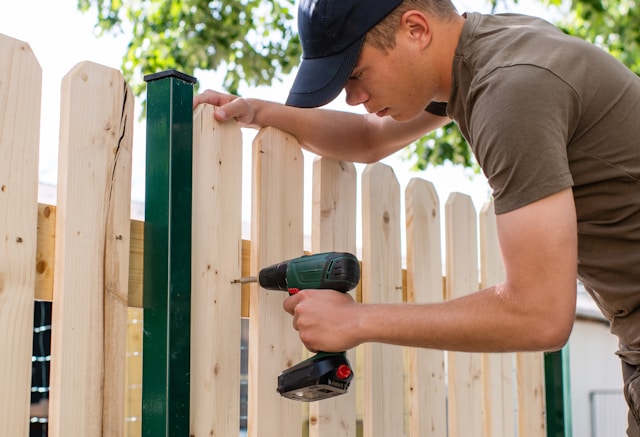
Choosing the right fence material for your property is crucial for ensuring durability, functionality, and aesthetic appeal. Each fencing material has its own advantages and drawbacks, depending on factors such as maintenance, cost, and longevity. In this guide, we’ll explore the pros and cons of popular fencing materials, including wood, vinyl, metal, chain-link, and composite options.
1. Wood Fencing
Pros:
- Classic Appeal: Offers a natural and traditional look that complements various architectural styles.
- Customizable: Can be stained or painted to match your property’s aesthetic.
- Provides Privacy: Solid wood fences offer excellent privacy and noise reduction.
- Versatile Designs: Available in different styles, including picket, board-on-board, and lattice designs.
Cons:
- High Maintenance: Requires regular staining, painting, or sealing to prevent rot and warping.
- Vulnerable to Weather: Prone to moisture damage, termites, and decay if not properly treated.
- Lifespan: Typically lasts 10-20 years with proper care.
2. Vinyl Fencing
Pros:
- Low Maintenance: Does not require painting or staining and can be easily cleaned with soap and water.
- Durable: Resistant to moisture, rot, and pests.
- Variety of Styles: Available in multiple colors and designs to suit different preferences.
- Long Lifespan: Can last 20-30 years with minimal maintenance.
Cons:
- Higher Initial Cost: More expensive than wood fencing upfront.
- Limited Repairs: If damaged, entire panels may need replacement rather than individual sections.
- Appearance: Some homeowners find vinyl fencing less natural-looking than wood.
3. Metal Fencing (Aluminum, Steel, Wrought Iron)
Pros:
- Durable & Secure: Offers excellent security and is resistant to weather conditions.
- Low Maintenance: Aluminum does not rust, while steel and wrought iron can be coated to prevent corrosion.
- Aesthetic Appeal: Wrought iron and decorative metal fences add an elegant and sophisticated look to properties.
- Longevity: Can last 50+ years with proper maintenance.
Cons:
- Higher Cost: Wrought iron and steel fences can be expensive, both in materials and installation.
- Rust Potential: Steel and wrought iron require protective coatings to prevent rusting.
- Limited Privacy: Typically consists of open designs that don’t provide full privacy.
4. Chain-Link Fencing
Pros:
- Affordable: One of the most cost-effective fencing options.
- Durable & Weather-Resistant: Can withstand harsh weather conditions without significant wear.
- Low Maintenance: Requires minimal upkeep and does not rot or rust easily.
- Good for Security: Offers a strong barrier, especially with added security enhancements like barbed wire.
Cons:
- Minimal Privacy: The open weave design does not provide much coverage unless privacy slats or vines are added.
- Less Aesthetic Appeal: More functional than decorative, which may not suit all residential properties.
- Limited Customization: Fewer style options compared to other materials.
5. Composite Fencing
Pros:
- Eco-Friendly: Made from a combination of recycled wood and plastic.
- Low Maintenance: Resistant to rot, termites, and moisture damage.
- Customizable Look: Mimics the appearance of wood without requiring frequent maintenance.
- Durability: Can last up to 30 years or more with little upkeep.
Cons:
- High Initial Cost: More expensive than traditional wood or vinyl fencing.
- Color Fading: Over time, composite fencing can fade due to UV exposure.
- Limited Availability: Not as widely available as other fencing options.
Which Fence Material Is Right for You?
The best fencing material depends on your priorities:
- For privacy: Wood, vinyl, and composite are excellent choices.
- For low maintenance: Vinyl, aluminum, and composite require minimal upkeep.
- For security: Metal (steel, aluminum, or wrought iron) and chain-link provide strong barriers.
- For affordability: Chain-link and wood are budget-friendly options.
- For aesthetics: Wood, wrought iron, and composite offer attractive designs.
Fence Installation Services: Why Professional Installation Matters
While some homeowners opt for DIY fence installation, hiring professional fence installation services ensures a seamless and durable result. Experienced installers help with:
- Proper Planning & Permits: Professionals ensure compliance with local regulations and property boundaries.
- High-Quality Installation: Expert craftsmanship reduces the risk of improper installation, which can lead to sagging, warping, or early deterioration.
- Efficient & Timely Completion: Professionals complete installations faster and with fewer mistakes compared to DIY projects.
- Material Expertise: Contractors help select the best materials for your needs and budget.
- Warranty & Maintenance Advice: Many fencing companies offer warranties and guidance on long-term care.
Investing in professional fence installation enhances durability, boosts property value, and saves homeowners time and effort.
Final Thoughts
Each fence material has its unique benefits and drawbacks, making it essential to consider your needs, budget, and maintenance preferences before making a decision. Whether you prioritize privacy, durability, or aesthetics, selecting the right fencing material ensures that your investment enhances your property for years to come. Additionally, hiring a professional fence installation service can further ensure that your new fence is installed correctly, securely, and in compliance with local regulations.