His objection has quietly moved from impossibility, to whether the result counts as a real mammoth, to whether it should be done at all. Those are three different arguments.
Adam Rutherford has made his position on mammoth de-extinction unusually plain. He has written that reviving the woolly mammoth is impossible, not merely unethical. The force of that claim comes from its certainty. It doesn’t hedge, and certainty reads as scientific realism. Mammoths are extinct, their DNA is fragmented, and no living cell or frozen embryo waits to be revived. The conclusion seems to follow on its own.
Set aside whether he is right. The more revealing question is what happens to the argument as the science moves.
As the science advances, the argument retreats, and it retreats in a telling direction. The original claim was about possibility: it cannot be done. As gene editing has advanced, the objection has shifted toward definition, and the new claim is that whatever is produced would not be a real mammoth. Press that point, and the objection turns ethical: it should not be done at all. Three distinct claims, offered as though they were one.
They are not the same claim. Possibility, identity, and permission are separate questions, and they fail in separate ways. Impossibility is an empirical claim that evidence can erode. Whether something counts as a real mammoth is a question of taxonomy and definition. Whether it should be done is a moral judgment no laboratory result can settle. Bundling the three lets a weakening empirical claim quietly borrow credibility from a separate ethical one.
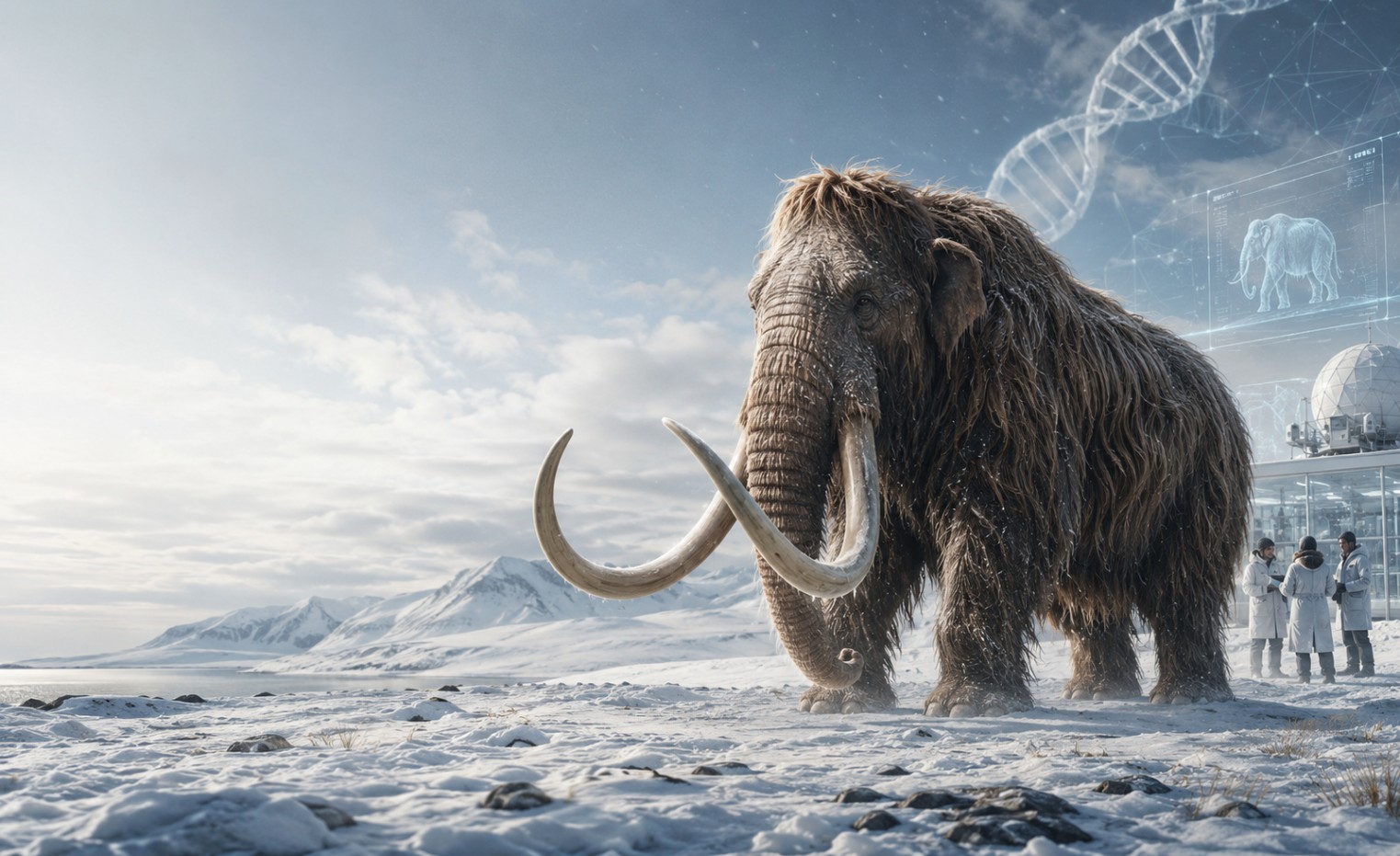
The empirical claim is the one under pressure. Modern projects take a different route from the popular image. Rather than reconstructing a mammoth from a block of ice, they identify the traits that let mammoths survive the Arctic, cold tolerance, fat metabolism, hair, and edit those into the Asian elephant, the mammoth’s closest living relative. The honest objection has shifted from whether the work can proceed to whether the result counts as a mammoth.
That objection concerns categories rather than capability. And biology has never respected clean categories. Species blur at the edges, populations drift genetically, and hybridization is ordinary in nature. Conservation already works with animals that differ genetically from their ancestors through managed breeding and genetic rescue. Insisting that an organism be a perfect genetic replica to carry any ecological value is an oddly rigid standard, and not one the field applies elsewhere.
Whether a cold-adapted, mammoth-like elephant could actually perform the ecological role mammoths once played is a real and open question, and it may turn out it cannot. That is a matter for evidence rather than a fantasy beyond the reach of biology, and it is a very different debate from whether the science can work at all.
This is where sweeping declarations of impossibility tend to age badly. Gene editing was speculative within living memory. Genome sequencing once cost billions and now costs almost nothing. Synthetic biology moved from theory to routine practice in a single generation. In fast-moving fields, “never” is the prediction most often overtaken by events.
Skepticism toward de-extinction companies remains warranted. They have every incentive to oversell, so timelines should be scrutinized, technical claims independently verified, and the public kept wary. But skepticism that refuses to update stops being skepticism and becomes commitment to a prior conclusion. An argument that survives by relabeling itself is being protected rather than tested.
The strongest version of Rutherford’s case was probably never about possibility. His real objection is that mammoth de-extinction should not happen, and that is a serious argument that deserves a hearing on its own terms. The trouble is that it traveled into public on the back of an impossibility claim, and the impossibility claim is the one now cracking.
Whether the mammoth should be brought back is a debate worth having. The claim that nature forbids the attempt is the part of his case that has worn least well.