Gold has always carried a reputation for stability, but the recent surge in ultra-wealthy buyers has very little to do with price charts or market forecasts. For this class of global investors, gold represents something deeper than a commodity. It has become a psychological anchor in a world where traditional financial structures feel increasingly fragile. And no one articulates that shift with more clarity than Alex Chiniborch, the man building one of the most ambitious multi-ton reserves of this era.
For years, wealth managers assumed that UHNW investors made decisions through data alone. Yet the world’s largest family offices, sovereign funds, and private capital groups have been revealing a different truth. Gold is no longer a trade. It is a response to a growing emotional and structural tension. According to the World Gold Council, demand from private wealth above the ten-million-dollar threshold is at its highest level in over a decade. But the motivation behind these purchases cannot be explained by economics alone.
There is a powerful psychological layer operating beneath the surface. The ultra-wealthy see patterns before the public does. They travel differently, read differently, plan differently. They hear the tone of global conversations shift long before the headlines catch up. Their relationship with gold is built on these observations rather than fear. It is rooted in recognition. They are not reacting. They are preparing.

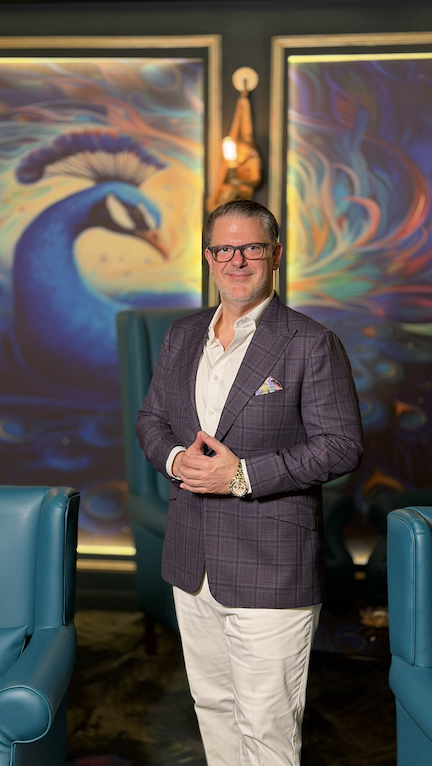
Alex Chiniborch describes this mindset as a “quiet recalibration” taking place among the world’s most sophisticated capital. Investors who once spent their time chasing yield now spend their time rebalancing toward assets they can physically verify. This is not nostalgia for old forms of wealth. It is a response to an undeniable truth: every modern system depends on trust, and trust is weakening across institutions, currencies, and markets.
When you speak to people who control hundreds of millions—or billions—their reasoning is never emotional. It is deeply logical. The psychology is built on three powerful internal drivers:
First, there is the desire for sovereignty. True wealth demands control, and gold offers a level of independence that few assets can replicate. It cannot be frozen by a bank, erased by an algorithm, or diluted by a monetary policy decision made behind closed doors.
Second, there is legacy. For the ultra-wealthy, wealth is not a number. It is a responsibility. Gold becomes the anchor they pass forward. It sits in vaults not as decoration, but as continuity. It symbolizes stability that survives elections, cycles, and crises.
Third, there is clarity. In a world dominated by digital speculation, derivatives, leveraged products, and opaque financial instruments, gold offers a rare form of simplicity. It does not need explanation. It does not need marketing. It does not need trust. It simply is.
This framework is what fuels the modern shift that Alluca Group has captured so precisely. Chiniborch’s positioning in the market speaks to this new psychology. He is not selling metal. He is guiding a global class of investors back to the principles of grounded wealth. His conversations with clients rarely start with price forecasts. They start with intentions—what the client wants to protect, preserve, and pass on.
The ultra-wealthy are not buying gold because the market is uncertain. The market has always been uncertain. They are buying gold because the world has reached a point where owning something undeniably real feels more strategic than owning something theoretically valuable.
Gold has become the quiet expression of confidence in an era where confidence is disappearing. It is the private language of investors who want to build on truth rather than trends. And as more global wealth shifts toward tangible certainty, voices like Alex Chiniborch are becoming central to shaping how the next generation understands permanence.
For the ultra-wealthy, gold is no longer a hedge. It is a statement. And that statement is growing louder with every ton being accumulated behind closed doors.