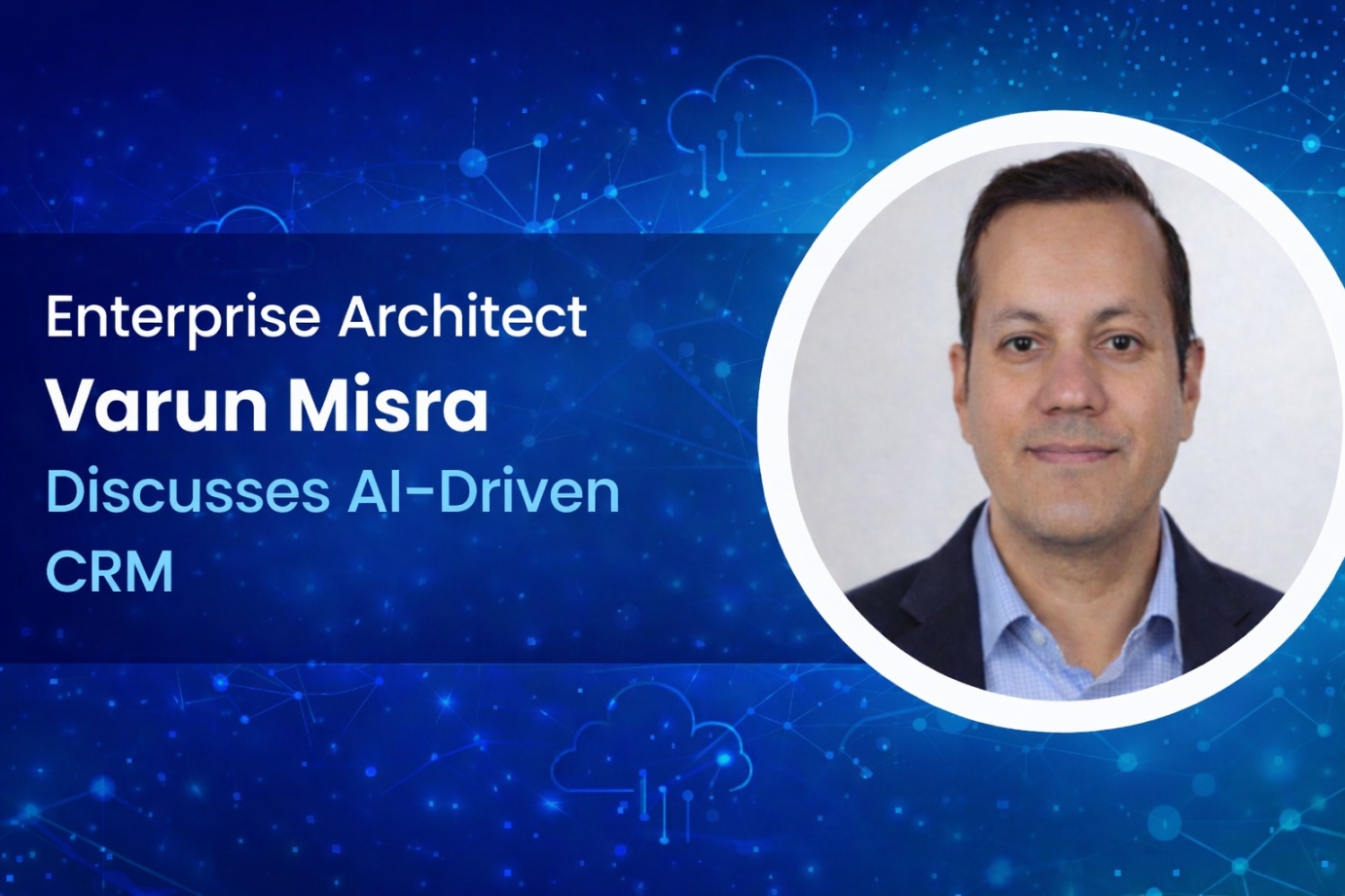
Enterprise technology is evolving at a remarkable pace as companies shift toward cloud platforms, artificial intelligence, and integrated data ecosystems. At the center of this transformation are technology leaders who design and guide the systems that power modern digital organizations. One of them is Varun Misra, Director and Technical Architect at Salesforce, with more than 15 years of experience in enterprise CRM architecture, cloud platforms, and large-scale digital transformation.
Based in California, Misra has worked across global organizations including Deloitte Digital and Infosys, leading complex implementations and mentoring engineering teams around the world. In this interview, he shares insights on the evolution of CRM systems, the rise of AI driven enterprise platforms, and the skills needed to build scalable technology systems in today’s rapidly changing digital landscape.
You have over 15 years of experience in the Salesforce ecosystem. How has the role of enterprise CRM evolved during that time, and what major shifts have you seen in how organizations use these platforms?
Over the past 15 years, CRM has evolved from a system of record into a system of intelligence. Early in my career, the primary focus was on building stable, high-volume solutions within strict platform constraints for enterprise environments. Organizations mainly used CRM platforms to store customer data, track interactions, and support basic sales and service operations.
Today we are entering the era of the Agentic Enterprise. Organizations are no longer just storing customer data. They are building intelligent systems capable of automating complex interactions, handling thousands of customer inquiries, and scheduling services without human intervention. Modern CRM platforms are increasingly becoming the operational backbone of digital enterprises.
Another major shift is the integration of artificial intelligence and real time analytics directly into these platforms. Instead of simply recording what has happened, CRM systems now help organizations predict customer needs, automate workflows, and guide decision making. This transformation is fundamentally changing how companies approach customer engagement, operational efficiency, and long-term business strategy.
As a Director and Technical Architect at Salesforce, you work closely with enterprise systems and cloud platforms. What are the biggest challenges companies face when implementing large-scale CRM or cloud transformation projects?
The biggest challenge in large-scale CRM and cloud transformation projects is not necessarily the technology itself. In most cases, the real difficulty lies in data fragmentation and organizational complexity. Many large enterprises operate with dozens of legacy systems, regional databases, and independently managed platforms that have evolved over many years.
When organizations attempt to modernize their systems, they often discover that critical business data is scattered across multiple environments. Establishing a true single source of truth without disrupting existing operations becomes a major engineering and governance challenge.
Another key difficulty is aligning business processes across multiple departments and regions. Large organizations frequently have different operational models, compliance requirements, and regulatory constraints. Successful transformations require designing real time data layers and integration frameworks that connect these systems while maintaining strict security, regulatory compliance, and operational continuity. Without a strong architectural strategy and data governance model, even the most advanced cloud platforms cannot deliver their full value.
You have led complex implementations across Sales Cloud, Service Cloud, Marketing Cloud and Data Cloud. How do you approach designing scalable architectures that remain flexible as businesses grow?
Designing scalable enterprise architecture requires moving beyond rigid off the shelf implementations and instead creating modular ecosystems that can evolve with the organization. My approach focuses on building architectures that separate core platform capabilities from integration layers and customer-facing applications.
By designing systems with modular components, organizations can integrate predictive intelligence, automation, and telemetry directly into the architecture while maintaining flexibility. This allows enterprises to support tens of thousands of users across multiple regions without creating performance bottlenecks or operational dependencies.
Another important principle is designing with future growth in mind. Enterprises constantly adopt new technologies, digital channels, and operational models. Architectures should therefore anticipate new integrations and allow services to scale independently.
When done correctly, this approach allows organizations to innovate faster while maintaining stability across critical enterprise systems.
Artificial intelligence is becoming deeply integrated into enterprise platforms. How do you see AI agents and tools such as Salesforce Agentforce shaping the future of customer engagement and business automation?
AI agents represent the next major evolution in enterprise automation. What began as experimental pilots is now becoming production scale infrastructure across many industries.
Today AI powered systems are capable of handling a significant portion of customer interactions, including answering inquiries, scheduling appointments, and guiding users through complex service workflows.
Technologies such as Retrieval Augmented Generation allow AI systems to ground their responses in authoritative enterprise data rather than relying solely on generative models. This ensures that interactions remain accurate, compliant, and aligned with business rules.
As these systems mature, AI agents will increasingly function as intelligent collaborators within organizations. Rather than replacing human teams, they will augment productivity by handling repetitive tasks, analyzing large volumes of data, and providing contextual recommendations.
The organizations that succeed with AI will be those that design these systems responsibly, with strong governance frameworks that ensure transparency, reliability, and operational accountability.
Your role involves both technical leadership and mentoring development teams. What qualities do you believe define a strong technology leader in large enterprise environments?
A strong technology leader must be able to bridge the gap between high level business strategy and deep technical execution. In enterprise environments, architectural decisions often carry significant financial, operational, and regulatory implications. Leaders must therefore provide clear technical direction while helping executives understand the long-term impact of those decisions.
One of the most important qualities is technical accountability. Leaders must be able to take ownership of complex architectural decisions and provide confidence when organizations undertake large scale initiatives.
Equally important is the ability to build strong engineering cultures. Effective leaders mentor teams, encourage innovation, and create environments where engineers can continuously learn and improve their skills. In rapidly evolving areas such as artificial intelligence and enterprise platforms, maintaining a culture of continuous learning is essential for long term success.
You have worked with global teams across several organizations including Deloitte Digital and Infosys. How has that international experience influenced the way you manage projects and collaborate across different cultures and time zones?
Working across global organizations has reinforced the importance of designing solutions that are globally consistent while remaining locally adaptable. Large enterprises operate across multiple countries, each with different regulatory requirements, operational processes, and customer expectations.
In several large-scale initiatives, I have worked on service models that unified operations across nearly one hundred countries within a single data driven ecosystem. Managing complexity at that scale requires strong automation frameworks and well-defined operational processes.
International collaboration also requires thoughtful project management and communication practices. Teams working across time zones and cultural contexts must rely on clear documentation, transparent decision making, and well-structured governance models.
When organizations build systems and processes that support global collaboration, they are able to leverage talent from across the world while maintaining consistent operational standards.
Many organizations struggle with data strategy and customer data integration. What practical steps should companies take to ensure their CRM data actually drives meaningful business decisions?
For organizations to extract real value from their CRM systems, the first priority is establishing a reliable and unified data foundation. Many companies operate with fragmented datasets across multiple systems, which leads to inconsistent reporting and limited visibility into customer behavior.
A practical first step is implementing strong data integration and synchronization frameworks that ensure consistency between core enterprise systems and external platforms. Organizations should also invest in clear data governance policies that define ownership, data quality standards, and security controls.
Once organizations achieve reliable data consistency, they can begin to leverage real time analytics and predictive insights. This enables leadership teams to move beyond reactive reporting and instead make proactive decisions based on reliable information.
When CRM data is properly integrated and governed, it becomes a powerful strategic asset that drives customer engagement, operational efficiency, and long-term business growth.
For engineers and architects who want to build a career in cloud platforms and enterprise architecture, what skills and certifications do you believe are most valuable today?
Technical fundamentals remain essential for anyone pursuing a career in enterprise architecture. Architects must understand distributed systems, data integration patterns, security models, and cloud infrastructure. Certifications that emphasize enterprise scale architecture, security, and multi cloud integration continue to be highly valuable.
However, as enterprise platforms evolve, architects must also develop expertise in artificial intelligence, data platforms, and automation frameworks. Understanding how AI systems operate, how data pipelines are structured, and how governance frameworks are implemented is becoming increasingly important.
Beyond certifications, successful architects cultivate strong problem-solving skills and a deep understanding of business processes. Enterprise architecture is not only about technology. It is about designing systems that support complex organizational needs while enabling innovation and long-term scalability.
Continuous learning and adaptability are essential, because the pace of change in enterprise technology continues to accelerate.
From the editor…
As enterprises continue to expand their digital infrastructure, the role of technology architects is becoming increasingly strategic. Leaders like Varun Misra are shaping how organizations design scalable cloud systems, integrate artificial intelligence, and turn complex data ecosystems into real business value. His experience across global enterprises highlights a clear trend: the future of enterprise technology will depend on strong architecture, responsible AI implementation, and teams capable of adapting to constant innovation.