
Author: Kartik Jain
Abstract
Artificial intelligence (AI) is shifting out of centralized cloud solutions and onto edge-based devices, which are expected to deliver faster responses, better privacy and network requirements. Nevertheless, with this change, there are new challenges to sustainability. Edge AI allows intelligent operations on local devices including smartphones, wearables, and home appliances, however, with each interaction, it requires some amount of computation and billions of devices together demand considerable amounts of energy. Although the recent development of low-power AI chips and optimized architectures brings down the consumption per device, the environmental cost is still in the manufacturing and supply chain of the chip, as well as in the lifecycle management. Moreover, as its devices are getting more powerful, the general use of these devices tends to rise, which neutralizes the improvement of efficiency. This paper is a critical analysis of sustainability implications of edge AI that explores hardware innovations and systemic issues in general. The study identifies the trade-off between technology advancement and environmental sustainability through an extensive overview of the latest changes in energy efficient chip design, on-device intelligence and responsible implementation of AI. The results indicate that to ensure that the goal of sustainability becomes truly sustainable, a comprehensive approach should be used: cleaner production, energy-conscious design, and the policies to consider the lifecycle of AI devices in their entirety. The analysis of these dimensions gives the article a roadmap of how to integrate intelligence at the edge without sacrificing environmental objectives and is informative to engineers, policymakers, and researchers who are at the intersection of AI and sustainability.
Keywords
Edge AI; Energy Efficiency; Sustainable Computing; Semiconductor Design; Environmental Impact; On-Device Intelligence
1.Introduction
Artificial intelligence (AI) has grown fast as a niche of computer science to being a transformative technology that is present in our lives. Personal assistants on mobile devices and smart home devices as well as industrial monitoring systems are becoming more and more common at the edge, i.e., at the local devices and sensors that are directly exposed to users or the surrounding (Tuan and Yonghan, 2025; Ollivier et al., 2022). Such a transition of centralized cloud computing to edge AI is likely to have many benefits, such as a decrease in response time, improved data privacy, and a less reliance on energy-consuming data centers (El Jarroudi et al., 2024; Zhang et al., 2026). But the fast spread of AI on the edge also poses very important questions regarding the costs of this technological increase in the environment and sustainability (Esho et al., 2026; “Improving Cloud/ Edge Sustainability Through Artificial Intelligence,” 2023).
Edge AI devices are capable of complicated calculations that allow taking decisions in real time without sending data to centralized servers all the time (Tuan and Yonghan, 2025; Tu et al., 2023). As an example, wearable health monitors are able to process biometric at the device level and smart cameras are able to identify anomalies in real-time, decreasing the latency and network traffic (Shafique et al., 2021). Although these features enhance the user experience and productivity, they need spurts of computing power that feed on battery or local power stations. When multiplied across billions of devices, the energy use of this system becomes considerable, and that is why the efficiency of each device alone and the overall environmental impact of the mass use becomes even more significant ( Edge AI for Internet of Energy, 2024; Zhang et al., 2026).
A partial solution is presented by the emergence of special and energy-efficient AI chips. The chip architecture innovations such as neural engines, which are low-power inference-oriented, dynamic task allocation, and model compression make it possible to utilize devices to run intelligent functions and consume less energy (Ollivier et al., 2022; Shafique et al., 2021). These technological developments have made smart sensors and household appliances as well as wearables last longer on smaller power sources, which promotes the idea of a sustainable, intelligent ecosystem. Though, there is no assurance of transferring efficiency gains at the device level to achieve sustainability at the systemic level. Advanced semiconductors have energy-intensive production, have complicated supply chains, and require large amounts of water (Esho et al., 2026; “Edge AI for Internet of Energy,” 2024). Consequently, even the low-power consumption-based devices can be associated with a significant hidden environmental cost.
Moreover, there is the so-called rebound effect that makes the narrative of sustainability hard to follow. The more able and energy-efficient a device is, the more users will tend to use it and require more automation, smart functions, and constant availability (El Jarroudi et al., 2024; “Improving Cloud/Edge Sustainability Through Artificial Intelligence), 2023). The resulting rise in demand is able to compensate the energy savings by improving the technology, which is why it is necessary to consider AI as a whole when assessing its impact on the environment. Proper sustainability will instead entail not just dealing with the performance of the device but also with the manufacturing process, user habits, and lifecycle (Tuan and Yonghan, 2025; Tu et al., 2023).
The current study will seek to investigate the sustainability issues concerning the edge AI, both in the technological advances that minimize the use of energy and the systemic factors and impacts on the environment (Zhang et al., 2026; Ollivier et al., 2022). The research aims to offer a complete insight into the trade-offs and opportunities of edge AI by examining recent advancements of low-power AI chips, on-device intelligence, and responsible AI deployment (Shafique et al., 2021; Tu et al., 2023). The implication of the study is also on the policy, industrial design, and environmental management with recommendation of ways of incorporating AI into the normal lives in a responsible manner (Esho et al., 2026; “Edge AI for Internet of Energy,” 2024).
Finally, it is aimed at breaking the silence of the focus on efficiency and taking into account how the intelligence at the edge can be balanced with sustainable practices. Critically evaluating the pledges, as well as the constraints, of the existing technologies, this article adds to the current discussion on the environmental impact of AI and provides the direction in which engineers, policymakers, and researchers need to take to make sure that the advantages of edge AI do not come at the unacceptable environmentally cost (El Jarroudi et al., 2024; “Improving Cloud/Edge Sustainability Through Art.
2. Literature Review
The fast nature of the artificial intelligence (AI) technologies has brought about a surge of scholarly interest, especially on the energy use and environmental impact of the technologies. Due to the move by AI systems to be less centralized and more of an edge environment based on decentralized infrastructures, researchers have started to examine the prospects as well as problems linked to this transition. According to the literature, there is a complicated relationship between efficiency benefits, innovation of hardware, and sustainability issues on a wider basis.
2.1 The energy used by AI systems
AI systems are resource-consuming in nature, as they would demand a lot of computational power to train as well as during inference. Even though most of the initial discussion was centered on massive cloud-based designs, according to the recent findings, more energy consumption is dispersed among the edge devices (Esho et al., 2026). This decentralization makes the workload of the data centers to be transferred to the billions of interconnected devices, which is localised to do the computations.
Studies point at the fact that even lightweight inference processes scaled over large groups of devices cause a significant energy consumption in the world (Tu et al., 2023). Besides, constant power consumption, which is typically in the case of smart devices in real-time monitoring, further increases the energy consumption. Ollivier et al. (2022) argue that sustainable AI should consider both centralized and distributed processing environments since the cloud efficiency is insufficiently considered in the growth of the edge deployments.
2.2 Edge AI vs. Cloud Computing Efficiency
Among the key points that support edge AI, one can mention the opportunity to lower the energy usage, as it will minimize the data transmission and latency. The ability to process the data inside the edge device means that the edge devices do not have to continuously communicate with the remote servers thus lowering the network energy costs (Tuan & Yonghan, 2025). It is especially useful when there is a need of a real-time response, e.g. autonomous systems and medical monitoring.
Nonetheless, the literature is slightly different. Although edge AI will decrease the network dependency, it will create new power requirements at the hardware. In line with the article, Improving Cloud/Edge Sustainability Through Artificial Intelligence (2023), the hybrid model of balancing both the edge and cloud resources is the best way to attain the optimal sustainability. It implies that there is no single paradigm that would provide the optimal results; however, a combined system that is dynamically distributed in terms of the allocation of tasks on energy efficiency could be the most effective.
Also, Zhang et al. (2026) suggest carbon-aware frameworks, which change the process of calculations depending on the availability of energy and its environmental footprint. These strategies show how it is possible to manage the resources in an intelligent way, yet there is a lack of their application in the real world systems.
2.3 Hardware Innovations and Low-Power AI Chips
Semiconductor technology is an essential element of edge AI since it allows using energy-efficient technologies. Neural processing units (NPUs) are specialized processors that are intended to process AI loads using little power. Shafique et al. (2021) explain the cross-layer optimization methods which are hardware and software design-based methods used to improve the performance and energy efficiency.
Other techniques that have found extensive applications to minimize the computational needs include model compression, quantization, and dynamic voltage scaling (Ollivier et al., 2022). These innovations enable the devices to ensure that they do complex operations and at the same time consume little energy and are hence applicable in battery powered environment.
Although these improvements have been made, the literature highlights that the improvement of efficiency can be seen to be rather incremental as opposed to transformative. According to Tu et al. (2023), although datasets and benchmarking tools have enhanced the process of evaluating the energy efficiency, there are no standardized measures that can be used to compare one system to another. This is a weakness that prevents the determination of actual sustainability of the emerging technologies.
5.4 Non-Efficiency Sustainability Problems.
Although a lot of the research works is aimed at enhancing the efficiency of devices, a number of studies indicate that the complete lifecycle of AI systems needs to be taken into account. The manufacturing of semiconductors is an energy-consuming process, with material extraction, fabrication, and transportation being some of the processes (Esho et al., 2026). Such upstream operations make AI technologies have a substantial impact on the general environmental footprint.
Moreover, there are other problems such as disposal and recycling of electronic equipment. The growing need of AI-based devices makes the electronic waste production turn faster and provokes the issues of resources consumption and environmental deterioration. According to Edge AI for Internet of Energy (2024), there is the necessity of the sustainable lifecycle management, such as the creation of the recyclable materials and the models of the circular economy.
The other problem that is of critical concern is the use of non-renewable energy in most of the manufacturing activities. The effectiveness of energy efficient devices will not be realized unless a shift to clean energy is made, because the carbon emissions used in the production of these devices will negate the positive effects of these energy saving devices. This is an indication of the need to match technological innovation with the overall environmental policies.
2.5 Edge AI in Sustainable Systems.
Edge AI has been found to have great potentials in ensuring sustainability in different fields. In the agricultural sector, AI-based sensors will allow accurately tracking the state of the soil and water consumption, as well as crop health, which will eliminate waste of resources (El Jarroudi et al., 2024). In the same way, within the context of energy systems, edge AI can help to optimize the distribution of power in real-time and increase efficiency and minimize losses (Tuan & Yonghan, 2025).
Through these applications, it can be seen that edge AI has a dual contribution to environmental problems as well as a solution to them. AI can be used to sustainability through the fact that it will allow smarter management of resources. Nonetheless, the overall effect is determined on the nature of these technologies in their design, implementation and administration.
Moreover, such new frameworks like CarbonEdge can be oriented to implementing the environmental considerations into the operation of AI. The systems offered by Zhang et al. (2026) are adjusted to the carbon emissions and can be considered a step in the direction of environmentally conscious computing. On the one hand, these solutions are prospective, at the same time, they are only developing and have to be proven.
2.6 The Recovery Effect and Demand that is Growing.
Another theme that is being replicated in the literature is the rebound effect in which the gains of efficiency are used to increase the usage. The further development of edge devices with more features and lower power consumption will make customers more inclined to use new functions and will overuse AI-based functionality (El Jarroudi et al., 2024). This high demand will offset the energy conservation that has been realized due to technological change.
The article on Cloud/Edge Sustainability Improvement With Artificial Intelligence (2023) points out that because of the lack of regulatory measures or user awareness, efficiency gains are not necessarily going to result in lower overall energy consumption. Instead, they can promote the spread of AI applications, which will further bring to the environment an even greater load.
This phenomenon suggests that behavioral and economic aspects of sustainability have to be taken into account during the assessment of sustainability. The policies and incentives should be introduced to supplement technological solutions to encourage responsible usage.
5.7 Research Gaps and Future Directions.
Although the advancement has been great, there are some gaps in the literature that need to be filled in the process of conducting further research. To begin with, it does not have thorough lifecycle analysis that takes into consideration both the manufacture and the deployment of edge AI systems. A fragmented view of overall sustainability has been left by most studies that either emphasise on hardware efficiency, or application level benefits.
Second, there are no uniform assessment measures so it is hard to compare the various ways. According to Tu et al. (2023), the creation of a set of standardized benchmarks is a key to the further progress in the research in the given direction.
Lastly, the policy and governance structures that can be used to curb the environmental effects of AI are not well explored. Although technical solutions are not poorly documented, they are mostly justified by regulatory support and collaboration between the industry.
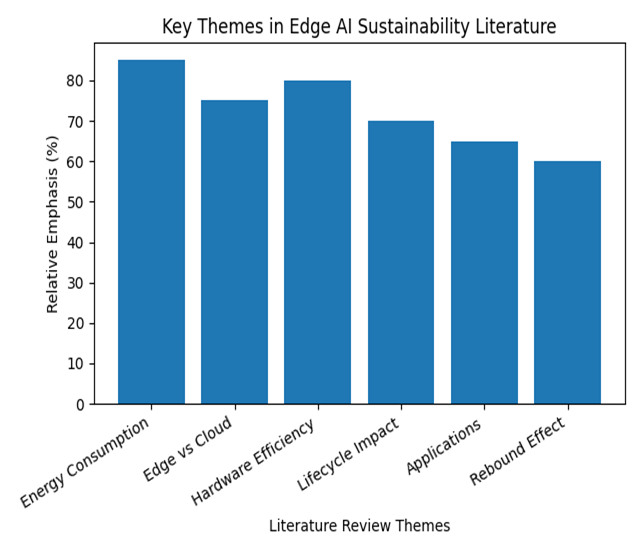
Figure 1: Thematic Analysis of Sustainability Challenges in Edge Artificial Intelligence Research
Short note on the graph
How people write about edge AI sustainability, the graph it show a few main themes. Energy use and how well hardware works, these two areas get the most notice, which mean the focus is really on making devices do more with less power. Lifecycle impact and the rebound effect, them topics are not talked about as much. This indicate there are some things current research just don’t cover fully yet. So, even if the tech side of things is pretty well understood, the bigger environmental questions they still need more work.
3. Methodology
This study adopt a qualitative, literature-based research design for looking at the sustainability problems associated with artificial intelligence (AI) at the edge. Given the topic it cover, which is both conceptual and interdisciplinary, a systematic review and thematic analysis approach been used to pull together existing knowledge on energy efficiency, hardware innovation, and environmental impact in edge AI systems.
3.1 Research Design
The research follow a descriptive and analytical framework, it focus on evaluating existing academic and technical literature instead of collecting new data. This way of doing things is good for finding patterns, trends, and also gaps in the current research about edge AI sustainability. By bringing together results from many studies, the method help us get a full picture of both the new tech stuff and the bigger environmental effects.
3.2 Data Sources
The study it rely on secondary data, which come from many reliable academic and technical places. These include peer-reviewed journal articles and also conference papers, and preprints from places that keep recognized research. Key sources got picked because they were important for edge AI, energy efficiency, and sustainability. The data set include recent publications, mostly from 2021 to 2026, so the analysis show what’s happening right now in the field.
The references in this study cover research on energy-efficient AI hardware and also edge computing frameworks, sustainable system design, and even how it get used in agriculture and energy systems. These sources give both ideas about what’s going on and real proof, which become the base for the analysis in this paper.
3.3 Selection Criteria
To make sure the literature was good and mattered, specific criteria for including things got applied. Studies were picked based on these factors:
- They had to be directly about edge AI or distributed AI systems.
- Their main point was energy efficiency, sustainability, or how it affect the environment.
- They were published recently, between 2021 and 2026.
- There was enough detail on the methods or the ideas behind them.
Studies that didn’t talk about sustainability or wasn’t clearly important to edge computing got left out. Also, any sources that showed up more than once were found and taken out so the data set stayed correct.
3.4 Data Analysis Technique
A thematic analysis approach were used for looking at the literature that got picked. This involve going through each source carefully and putting the main findings into themes that came up often. The main themes that got found include:
- Energy use in AI systems.
- How efficient edge computing is compared to cloud computing.
- New hardware and chip designs that use less power.
- The whole life cycle and how it impact the environment.
- Benefits for sustainability that come from specific applications.
- The rebound effect and also how demand keeps going up.
Each theme got analyzed to find patterns, things that were similar, and also contradictions across the studies. This process let us combine different ideas into one clear framework, which get shown in the literature review and the sections that come after.
3.5 Reliability and Limitations
To make things more reliable, the study use many sources and check findings against each other to be sure they were consistent. But, there is some limitations that must be said. First, because it rely on secondary data, the analysis depend on how good and broad the existing research is. Second, AI tech changes so fast it may make some findings old as new things come out. Last, there is no standard way to measure energy efficiency and sustainability in AI systems, and this make it hard to compare results from different studies.
Even with these problems, the method give a strong base for understanding the sustainability challenges of edge AI. By using systematic ways to pick studies together with thematic analysis, this study offer a structured and full look at the topic.
Table 1: Summary of Research Methodology
| Component | Description |
| Research Design | Qualitative, literature-based analytical study |
| Data Sources | Peer-reviewed journals, conference papers, and technical reports (2021–2026) |
| Selection Criteria | Relevance to edge AI, sustainability focus, recent publications |
| Data Type | Secondary data from existing studies |
| Analysis Method | Thematic analysis (identifying key patterns and themes) |
| Key Themes | Energy consumption; Edge vs cloud; Hardware efficiency; Lifecycle impact; Applications; Rebound effect |
| Reliability Approach | Cross-referencing multiple academic sources |
| Limitations | Dependence on existing studies; lack of standard metrics; rapid technological evolution |
4. Results
This section it lay out the main things we found from looking at all the papers about edge AI and how it fit with being sustainable. The results, they are grouped by the big ideas we picked out in the methods part of this work: how much energy it use, how well the system run, new hardware, what happen across its whole life, the good things it bring, and this idea of the rebound effect. We just want to show the patterns and what we learn without getting too deep into explaining everything.
4.1 Energy Consumption Trends
When you look at the studies, energy use remain a big worry for everyone. Edge AI helps by not sending data all the time to big cloud servers, but it just move the work to devices locally. This change mean energy get used in many places, with billions of devices adding to how much power we need overall.
Many studies they say that even if each local process run efficient, it still add up to a lot of energy when you have so many devices. Things that run all the time, like checking things in real-time or listening to voice or looking at pictures, it make power use go even higher. The studies show that while edge AI cut down on energy used by networks, it don’t get rid of the total energy problem; it just move it around.
4.2 Edge vs. Cloud Efficiency Trade-offs
A big point we found is how edge and cloud computing balance out when it come to being efficient. Edge AI really good at making things faster and not relying on the network, which means systems respond quick. But this good thing, it mean more computing happen right on the device.
The papers consistently show that just edge or just cloud computing, neither one give the best answer for being sustainable. Instead, systems that mix both, moving tasks between edge and cloud as needed, these seem to be the most efficient way. These kind of systems they can use less energy by doing urgent tasks locally while sending the bigger computing jobs to central servers when that make sense.
4.3 Advances in Energy-Efficient Hardware
There been good progress made in making AI hardware that use less power. The findings they show that special processors, like neural processing units or better chip designs, help a lot to cut down energy use. Things like making models smaller, quantizing data, and only turning on parts of the processor when needed, these all help make things more efficient.
These new ideas let edge devices do hard AI work without using much energy, making batteries last longer and letting things run all the time. But, the results also tell us that these improvements often small steps. While they make performance better, they don’t fix the bigger environmental issues that come with using these systems everywhere.
4.4 Lifecycle and Environmental Impact
It’s not just about how efficient it runs, the findings also say it very important to think about the whole life of AI devices. Making semiconductors, this been named a big reason for environmental problems, using lots of energy, water, and digging up resources.
The analysis it show that if you only look at how well a device work, you might not see the real cost to the environment. Things like how they built, how they get moved around, and what happen when they die, these all play a big part in how sustainable they are overall. Even with this, looking at the whole life of a device still not talked about enough in many of the current papers.
4.5 Application-Driven Sustainability Benefits
Edge AI really show promise in helping with sustainable ways across different areas where it get used. In farming, a example been smart sensors that use water better and watch how crops doing. For energy systems, edge AI helps to make power distribution efficient in real-time, cutting down on waste and making the system more reliable.
These uses they show the good things edge AI do for sustainability. By letting us manage resources better, AI tech can help deal with environmental problems. But how much good it does depend on how widely it used and how efficient the systems under it are.
4.6 Evidence of the Rebound Effect
The findings also confirm that the rebound effect it happen in edge AI systems. As devices get more energy-efficient and can do more, people want more advanced features. This make more people use them and use them more often, which can cancel out the energy saved by the new tech.
The papers say that it easier to get and more convenient, which drives this trend, and it mean total energy use go up even when each device use less. This suggest that just making technology better is not enough to hit sustainability goals without thinking about what people do and how the whole system work.
4.7 Identified Gaps in Current Research
The analysis it found some holes in what we know right now. First, there not many good ways to check how sustainable edge AI systems are through their whole life. Second, there no standard way to measure things, so it hard to compare different tech and methods.
Also, environmental worries not often put into how systems are designed and rolled out. Some papers they talk about carbon-aware ways to do things, but not many people use them. The findings they show we need to look at things more fully, mixing new tech with thoughts about the environment and rules.
Table 2: Summary of Key Findings on Edge AI Sustainability
| Theme | Key Findings | Implication |
| Energy Consumption | Distributed energy use across billions of edge devices | Increases total global energy demand despite local efficiency |
| Edge vs Cloud Efficiency | Hybrid models outperform standalone systems | Need for balanced architecture for sustainability |
| Hardware Innovation | Low-power chips and optimization techniques improve efficiency | Incremental gains, not complete solution |
| Lifecycle Impact | Manufacturing and disposal contribute heavily to environmental cost | Full lifecycle assessment is necessary |
| Applications | Improved resource efficiency in agriculture and energy systems | Edge AI can support sustainability goals |
| Rebound Effect | Increased efficiency leads to higher usage and demand | May offset energy savings |
| Research Gaps | Lack of standardized metrics and lifecycle frameworks | Limits accurate sustainability evaluation |
5. Discussion
Edge AI, it show us a real puzzle for sustainability: it cut down how much we rely on big central data centers, but then it spread out energy use to billions of devices all at once. This really align with earlier studies that say decentralized AI systems just move the environmental problems around, they do not make them disappear (Ollivier et al., 2022; Esho et al., 2026). So, looking at how sustainable something is, you cannot just look at how efficient one device is with its computing.
A big thing that come out of these results is that mixed computing systems, like ones using both edge and cloud together, give us the best way to save energy. These kind of systems they cleverly decide where to send tasks based on how fast they need to be, how much computing power they demand, and what energy is available, which back up what was found before about putting cloud and edge together (Tuan & Yonghan, 2025; “Improving Cloud/Edge Sustainability Through Artificial Intelligence,” 2023). This really just make it clear that AI sustainability it need a whole system to manage it, not just better parts in isolation.
The study also say that better, low-power chips are good, but they are not enough by themselves. Even though these efficient chips use less power per device, the environmental cost from making them and getting the materials, that remain a big deal (Shafique et al., 2021; Esho et al., 2026). This point to a gap that keep showing up between how well something run and how sustainable it is over its whole life, suggesting new ideas for the future must fix both problems at the same time.
Also, a big problem that come up is the rebound effect. When things get more efficient, people often use them more, and this make overall demand higher, which can cancel out any energy saved. This happen a lot with AI systems; when they get better, more people start using them, and they run all the time (“Edge AI for Internet of Energy,” 2024). Because of this, making technology more efficient also need changes in how people act and what policies are in place so we can actually get real sustainability.
All these evidence suggest edge AI can help with sustainability, but only if it part of bigger plans that think about what happen over a product’s whole life, how the system is built, and what users do (Zhang et al., 2026; El Jarroudi et al., 2024).
6. Conclusion
How this study look at the problems with artificial intelligence (AI) at the edge, especially with how it use energy and its impact, this involve checking hardware, how long it last, and what it do to the environment. The study findings show that edge AI have clear benefits like cutting down lag and making things faster, plus it need less of the big cloud servers. But this don’t mean it automatically make less harm to the planet. What happens instead is that computing power get spread out to billions of devices all over the place. This make a very complicated energy picture that’s hard to track (Esho et al., 2026; Ollivier et al., 2022).
One big thing this analysis points out is that hardware that use less energy, like special AI chips and better models, they did improve how individual devices work. But this not enough to fix the bigger problems with sustainability. The way these things get made, the resources pulled from the earth, and how they get thrown out later, this still add a lot to the AI system’s footprint. Many times these impacts are bigger than any energy savings you get from running them (Shafique et al., 2021). Then there is the rebound effect mentioned in the research, which means when things get more efficient, it could accidentally make people use even more AI devices and so total energy use goes up (El Jarroudi et al., 2024).
The study also point to how important hybrid computing and frameworks that think about carbon are. These systems try to balance where the work get done between edge devices and cloud systems, depending on where energy is available and what the environmental impact looks like (Zhang et al., 2026). But these kind of solutions, they still pretty new. They need more work and some standard rules and policy support before they can be used on a big scale.
To make edge AI truly sustainable, it mean we have to move past just making things efficient and start looking at the whole life of the product. This include making semiconductors in a sustainable way and getting better recycling systems in place. It also mean we need to put environmental concerns right into how AI systems get designed and used. Without these wide-ranging plans, the environmental cost of AI getting used everywhere might keep growing, even with all the new tech stuff coming out. So, future research should really focus on creating standard ways to measure sustainability and setting up governance rules that make sure tech progress and environmental responsibility, they go together (Tuan & Yonghan, 2025; “Improving Cloud/Edge Sustainability Through Artificial Intelligence,” 2023).
7. References
- Esho, E. O., Akinyelu, A. A., & Dinis, M. A. P. (2026). Sustainable generative AI and quantum computing: Environmental impact assessment. Frontiers in Sustainability, 7. https://doi.org/10.3389/frsus.2026.1726832
- Tuan, N. A., & Yonghan, A. (2025). Edge AI for smart energy systems: A comprehensive review. IntechOpen. https://doi.org/10.5772/intechopen.1011425
- Tuan, N. A., & Yonghan, A. (2025). Edge AI for smart energy systems: A comprehensive review. In Edge Computing – Latest Advancements. https://doi.org/10.5772/intechopen.1011425
- El Jarroudi, M., Kouadio, L., Delfosse, P., et al. (2024). Leveraging edge artificial intelligence for sustainable agriculture. Nature Sustainability, 7, 846–854. https://doi.org/10.1038/s41893-024-01352-4
- (2023). Improving cloud/edge sustainability through artificial intelligence: A systematic review. Journal of Parallel and Distributed Computing. https://doi.org/10.1016/j.jpdc.2023.02.006
- (2024). Edge AI for Internet of Energy: Challenges and perspectives. Internet of Things Journal. https://doi.org/10.1016/j.iot.2023.101035
- Ollivier, S., Li, S., Tang, Y., et al. (2022). Sustainable AI processing at the edge. arXiv preprint arXiv:2207.01209. https://doi.org/10.48550/arXiv.2207.01209
- Shafique, M., Marchisio, A., Putra, R. V. W., & Hanif, M. A. (2021). Towards energy-efficient and secure edge AI: A cross-layer framework. arXiv preprint arXiv:2109.09829. https://doi.org/10.48550/arXiv.2109.09829
- Tu, X., Mallik, A., Wang, H., & Xie, J. (2023). DeepEn2023: Energy datasets for edge artificial intelligence. arXiv preprint arXiv:2312.00103. https://doi.org/10.48550/arXiv.2312.00103
- Zhang, G., Guo, W., Tan, Z., & Jiang, H. (2026). CarbonEdge: Carbon-aware deep learning inference framework for sustainable edge computing. arXiv preprint arXiv. https://doi.org/10.48550/arXiv.2603.27420