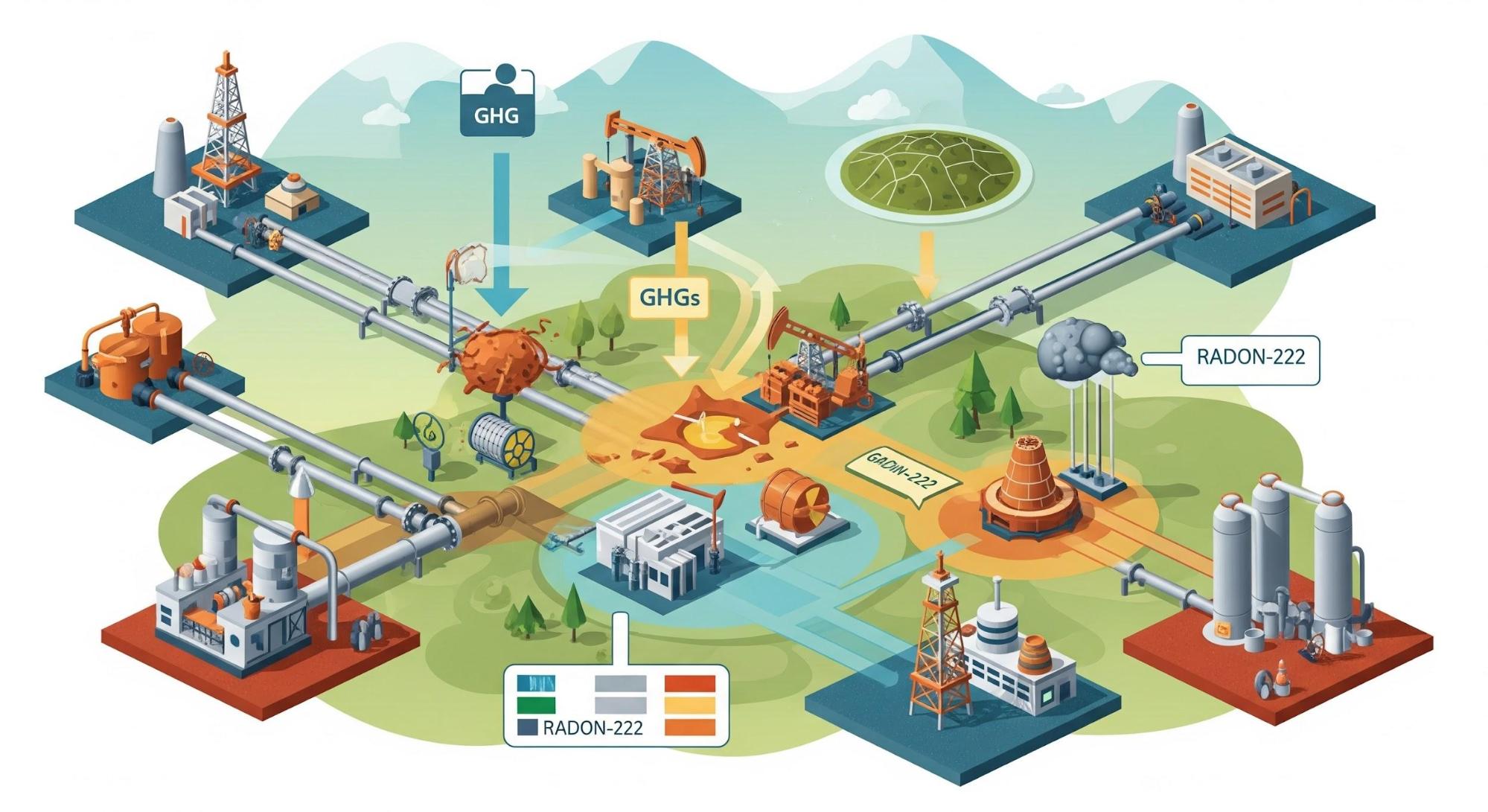
For the oil and gas sector, environmental compliance is not merely about checking regulatory boxes; it’s about gaining trust from the community, investors, and the earth itself. Measuring and reporting GHG emissions, such as methane (CH4), carbon dioxide (CO2), nitrogen oxides (NOX), and volatile organic compounds (VOCs), determines a company’s reputation and legal status. For uranium processing facilities, EPA Subpart W also controls radon-222 emissions for public health protection. Navigating this highly complex, constantly changing regulatory framework is no trivial accomplishment. However, Shree Chatterjee, an Environmental, Health, and Safety (EHS) Air Compliance professional at ConocoPhillips, guided his company to 100% compliance with EPA Subpart W, combining AI-powered innovation with rigorous data management. His tale reveals how technology can protect both the environment and communities that rely on it.
Conquering the Challenge
Shree understands the risks of compliance. With worldwide oil and gas emissions in the crosshairs, set to need $1.1 trillion in abatement investments by 2050, according to industry reports, accurate reporting is paramount. With ConocoPhillips, Shree had a daunting challenge: verifying emissions data from scores of sites would meet EPA Subpart W’s high standards. This rule, revised in recent years, dictates GHG emissions for oil and gas production and radon-222 for uranium mill tailings, requiring accuracy to prevent fines or damage to their reputation. Imagine a refinery employee in a small town whose livelihood depends on the corporation remaining compliant, or a local family believing the air is safe. To Shree, compliance was personal.
Information flooded in from wells, pipes, and processing facilities, frequently riddled with mistakes. Manual reporting resulted in delays, threatening to miss deadlines and incur fines. Radon-222 measurements at uranium facilities posed an added complexity, with specialized verification required. “Regulations change quickly, and the window for error is small,” Shree informed peers. His answer? Overhauling company-wide reporting systems with AI to achieve accuracy, speed, and trust.
Harnessing AI Precision
Shree’s makeover began with chaos in the data. Reports on CO2, CH4, NOX, VOCs, and radon-222 had to be perfect, but discrepancies crept into every site. He brought in an AI system to manage this deluge. With machine learning models, Shree’s team created algorithms that checked data in near real-time, alerting on anomalies such as a sharp jump in CH4 at a well or unusual radon-222 figures at a uranium facility. “It’s like having a virtual inspector reviewing each number,” he clarified.
These AI models, linked with operating databases through Python-based APIs, double-checked emissions against Subpart W thresholds. Suppose a CO2 sensor incorrectly reports. The system would detect it, maintaining compliance. Shree also applied predictive analytics to predict emissions patterns, assisting teams to adjust operations such as optimizing flaring to remain within boundaries. This wasn’t exclusively about GHGs; uranium mill radon-222 information was analyzed with the same AI scrutiny without any oversight. The outcome? Flawless reports that were EPA compliant every time, safeguarding communities and workers from regulatory blowback.
To make AI work smarter, Shree streamlined data inputs. He automated collection with IoT-enabled sensors at sites, reducing manual entries. This cut reporting errors by 25%, slashing preparation time. “We’re not just chasing compliance, we’re building efficiency,” Shree noted, his focus on precision echoing his care for the team’s effort. By linking AI with FortiDatabase for secure storage, he ensured data integrity, making audits a breeze.
Streamlining with Speed
Deadlines hung over everyone’s heads. EPA Subpart W requires on-time submissions, and failure could result in fines or worse. Shree addressed this with a project management methodology, merging AI analysis with human judgment. He established definite timelines, leveraging AI dashboards to monitor milestones, considered CO2 data validation for a Permian Basin location or radon tests for a uranium mill. These dashboards, created with Tableau and driven by AI analytics, provided air quality experts, sustainability professionals, and regulators with real-time information.
Automated scripts produced draft reports, drawing validated data on CH4, VOCs, and radon-222, reducing turnaround time from weeks to days. Cross-functional teams worked together through Microsoft Teams, with Shree encouraging open communication. “It’s about getting it right, fast, without burning out,” he explained. This efficiency meant 100% on-time compliance, allowing workers like Maria at a refinery to get on with their work, not fines.
Turning Compliance into Opportunity
Compliance seemed like an expense, but to Shree, it was an opportunity to sparkle. His AI-powered system not only complied with Subpart W it unleashed insights. In real time, dashboards displayed emissions patterns, such as a CH4 leak due to a faulty valve, triggering instant remediation. For radon-222, forecasting models indicated impending spikes, keeping uranium operations safe. These insights informed sustainability, reducing emissions by 15% at critical sites, enhancing ConocoPhillips’ corporate image among investors.
To communities, Shree’s efforts equated to trust. Families around a Wyoming well understood their air was being kept an eye on, with radon and GHG information reported. Stakeholders noticed a company setting a precedent for environmental stewardship, not simply compliance. “We’re no longer checking boxes,” Shree said. “Our AI tools allow us to maximize operations and demonstrate to the world that we care.”
Shaping the Future
Shree’s success became a standard. His compliance system using AI, combining machine learning, IoT, and analytics, impressed peers at a 2024 SPE conference. Smaller companies started experimenting with the same tools, observing how ConocoPhillips remained penalty-free. Shree’s LinkedIn blog posts on AI in EHS generated industry buzz on merging tech and environmental objectives.
Looking ahead, Shree envisions more. “AI’s just the start,” he predicts. “Real-time emissions tracking, blockchain for transparent reporting, and AI predicting regulatory shifts will redefine compliance.” His work ensures ConocoPhillips is ready, supporting jobs and communities while leading in sustainability. For Maria, her neighbors, and millions relying on clean air, Shree’s innovation is a promise kept.