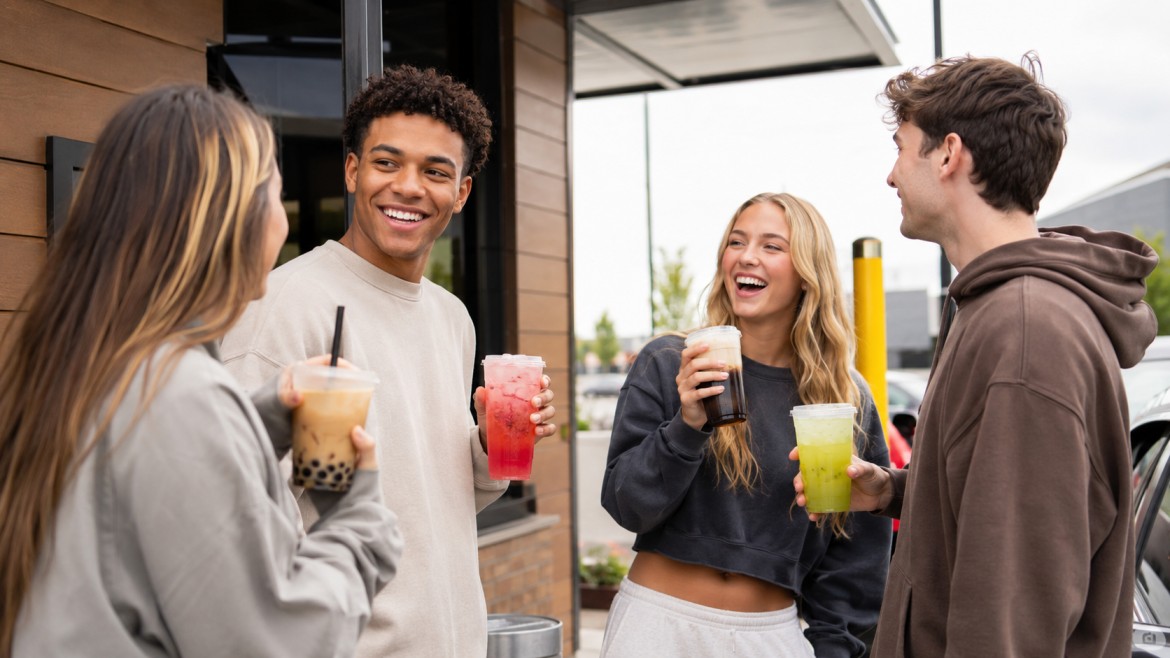
A growing number of Americans are visiting fast-food restaurants for something other than burgers, fries or tacos. The latest competition among major chains is taking place in the drinks menu, where colorful refreshers, customized sodas, cold foams and popping boba are becoming increasingly common.
The shift is being driven largely by younger consumers who see beverages as affordable treats that can be personalized, photographed and shared online. Research cited by Food & Wine found that Gen Z interest in customizable drinks rose 42 percent over the previous year. The same report said 40 percent of Americans make small indulgent purchases because larger discretionary expenses feel less affordable.
That combination has created an opportunity for fast-food companies. A specialty drink may provide the feeling of a small luxury without the price of a restaurant meal, concert ticket or weekend trip.
McDonald’s entered the market nationally in May 2026 with six new specialty beverages, including fruit refreshers and crafted sodas. Some include cold foam, freeze-dried fruit or popping boba, ingredients more commonly associated with coffee shops and dedicated beverage chains. The launch followed experiments conducted through CosMc’s, a beverage-focused concept that McDonald’s closed after operating a small number of U.S. locations.
Taco Bell is following a similar path through its Live Más Café locations. The cafes serve specialty coffees, energy drinks and fruit-based beverages alongside the chain’s regular food menu. In May, Taco Bell added permanent cold-brew drinks with flavored cold foams at participating cafe locations in California, Nevada and Texas.
Other chains have also expanded beyond standard fountain drinks. Burger King has experimented with frozen beverages and foam toppings, while beverage customization has long been central to brands such as Sonic and Starbucks. The result is a fast-changing market in which a drink can be the main reason for a visit rather than an addition to a meal.
The trend also reflects a broader change in how consumers think about beverages. Drinks are increasingly selected for a particular purpose, such as energy, relaxation, nutrition or a quick afternoon reward. Market research firm Circana has identified functional beverages, drinks used as snacks and personalized choices as important areas of current consumer demand.
For fast-food companies, the appeal is clear. Drinks can be changed frequently, offered in seasonal flavors and customized without requiring an entirely new kitchen operation. They also give restaurants another way to compete for customers outside traditional lunch and dinner hours.
Whether every brightly colored soda or fruit refresher becomes a permanent menu item remains uncertain. The wider change appears more durable. America’s fast-food visit is no longer always built around the meal. Increasingly, it starts with the cup.