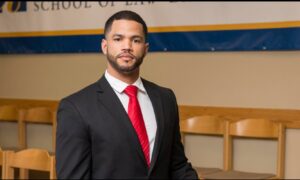
A clinic based in Nebraska presents an alternative solution to the typical invasive surgeries and medication regimens for joint pain and sports injuries. Daniel Meinke stands at the forefront as the Board-Certified Family Nurse Practitioner who established One Natural Health in Lincoln, Nebraska.
Through his personal healing journey Daniel Meinke has enabled thousands of patients to bypass orthopedic surgery by introducing them to modern treatments such as Stem Cell Therapy, A2M injections, and Platelet-Rich Plasma (PRP) treatments.
During this exclusive interview session Meinke discusses the distinct features of regenerative therapies while detailing their operational mechanisms and sharing patient success stories which demonstrate a groundbreaking shift in pain management and healing practices that avoid surgical procedures and long-term medication.
Daniel, you’ve built One Natural Health around the idea of avoiding surgery and long-term medications. What inspired your shift into regenerative medicine like Stem Cell Therapy, A2M PRP, and PRP treatments?
Great question, Monica. My start in regenerative medicine came from my own experience. I had joint instability around my spine that started in my teenage years and worsened severely into my 30s, to the point that I was offered spine surgery before the age of 35. Traditional medicine and orthopedics offered me little more than pills for symptom control. And while surgery and medical prescriptions have their place, this is not what our body was truly designed for, to move.
I have ventured into bigger treatments of A2M PPR and bone marrow derived stem cell therapy because these therapies help patients heal with less trips to the office than traditional PRP, and we all value our time so dearly now. I want to get my patients better faster so they can enjoy life without pain.
That’s a powerful personal story. It must really shape how you connect with your patients and their frustrations.
For readers unfamiliar with these options – how would you explain the core differences between Stem Cell Therapy, PRP, and A2M injections?
PRP (Platelet-Rich Plasma) is concentrating the growth factors from your own blood to help you heal. These growth factories tell the body to fix the old injury. A2M (Alpha 2 Macroglobulin) is in addition to the PRP injection. The A2M component provides protection from inflammation and arthritis, using proteins that help us to rebuild cartilage and control inflammation. When we are young these proteins help us repair and maintain our joints, but when we age these proteins have trouble keeping up with the breakdown of tissues. A2M with PRP injections provide a flood of these proteins to the injury, taking down the arthritis and inflammation. When we combine the PRP (to help repair and rebuild) with the A2M (to stop the inflammation) we see that A2M with Platelet Rich Plasma may be the future of PRP therapy.
Stem Cell Therapy using your own bone marrow goes far deeper than PRP or A2M. Your bones are rich in stem cells, because our bones are where we form healing stem cells for our entire body. These stem cells can turn into cartilage, tendon, or muscle tissue throughout the entire healing process. Stem Cell Therapy patients have seen amazing healing continue for extended periods of time after a single injection. Some injuries will still be repairing 4 months, 8 months, even 12 months after a patient’s first injection of Stem Cells.
That really helps clarify it. I didn’t realize A2M and PRP could be layered together like that – it sounds like a very targeted and strategic approach.
When it comes to joint issues such as ‘bone on bone’ arthritis, how do you determine whether a patient is best suited for PRP, A2M, or Stem Cell Therapy?
It starts with listening – really listening – to the patient. I look at how far the arthritis has progressed, how much pain they’re in, and how they’ve responded to other treatments. PRP can fix many joints, and at minimum PRP lets patients function and hopefully not need a joint replacement. For patients who want less office visits or are near bone on bone, A2M is much better, especially for arthritis hips, knees, and shoulders.
If we know the patient is bone and bone, and we know precisely where the injections are needed, Stem Cell Therapy using bone marrow is the strongest option by far. It often takes just one treatment of stem cells to complete the majority of the healing process.
I want to give the best healing options for my patients, so if its hard to decide which therapy is best, we do a test injection of ozone therapy, to understand more about the extent of the injury with minimal financial cost for the patient.
We also do comprehensive injections. If there are 10 supporting ligaments to be treated for the joint and a provider injects only 5 out of 10, you can imagine the results are not ideal. I was trained in the art of prolotherapy, meaning we fix the entire area comprehensively, and where other therapies have failed a patient in the past, this is where comprehensive injection therapy gets them real lasting results.
I like how much attention you place on precision and listening. It’s not a one-size-fits-all solution, clearly.
Can you share an example of a patient who was able to avoid orthopedic surgery through one of these regenerative approaches?
I met a man who was scheduled for a total shoulder rebuild surgery. MRI showed a full thickness rotator cuff tear, plus it was a 1/2 inch wide, now that’s a big piece of tendon gone. His business involves running physical training camps with children, he’s doing drills and throwing the ball every day with theses kids, meaning he had no place being without his arm for 2 months.
We did two quick rounds of PRP. After the first PRP treatment his shoulder was so functional we had to remind him to take it easy while his body repaired and rebuilt. Letting him be with those kids on the daily, for only a couple hours of downtime to get PRP is what fills my heart, its why I do what I do.
That’s incredible. I imagine that kind of result can be life-changing – especially for someone so active.
How does A2M compare to PRP in terms of treating sports injuries and chronic inflammation? Is one more effective in certain situations?
PRP works best when all you need to do is repair ligaments, tendon tears, and simple sports injuries. A2M is more about stopping what’s breaking things down—especially in chronic joint inflammation or arthritis. For athletes that are in the off season, PRP is a go-to, but when athletes have a long sports season ahead and they are going to keep inflaming the area because they can’t take off a few weeks, A2M protects the joint while the PRP component rebuilds.
In chronic inflammation its about the severity of the joint. Most shoulders will do good with PRP alone. But any severe joint, whether a shoulder, back, or especially hips and knees, PRP with A2M is superior, longer lasting, and requires less office visits than PRP alone.
Interesting distinction. It makes sense that athletes would need more than just repair—they need something that helps them keep going under pressure.
Stem Cell Therapy in Nebraska is gaining attention—how accessible and affordable have you made it for patients in your community, and what should they expect from the process?
Patients are often surprised to learn Stem Cell Therapy is far less than the cost of a high deductible surgery. A recent patient elected for a hip replacement that cost them $10000 with good health insurance, which did note even include their costs of pre-op appointment, bloodwork labs, multiple visits to the ortho clinic, imaging costs that were a couple thousand, physical therapy, pain meds, and two weeks out of work.
Where for us Stem Cell Therapy is outpatient, takes only a couple hours, and most patients walk out without any downtime. We are also excited for more affordable options of Cell Therapy such as umbilical derived cells, which can be a far more comfortable and quicker treatment for patients. Patients can ask us about this type of therapy, which will depend on the rules and regulations that come down the pipeline in the United States.
That’s reassuring. I think many people assume these advanced therapies are out of reach financially, but it sounds quite manageable.
You mention that many patients have already seen multiple providers before finding relief at One Natural Health. Why do you think your protocols succeed where others fall short?
A lot of places focus just on the pain or the joint. We focus on why the pain is there—and how to activate the body’s ability to heal, meaning we empower the patients. That means treating not just the spot of pain, but the supporting tissues: ligaments, tendons, fascia, even the nerves. Our injections are comprehensive, which a lot of needle pokes are not for everyone and every patient, but its part of what makes the difference where other clinics may not get results with PRP and Stem Cell Therapy. And I’m someone who’s been on the patient side. I know what it’s like to feel brushed off or told surgery is the only answer.
That comprehensive approach really stands out. It’s no wonder you’re getting results that others might miss.
Looking ahead, where do you see regenerative medicine headed, and what emerging treatments are you most excited to bring to Nebraska patients in the coming years?
Regenerative Medicine will advance as we combine therapies, for example, our patients already don’t just do PRP alone, but nearly all of them do Ozone Therapy and Hyperbaric Oxygen, and we see a big difference in their recovery.
Among types of treatments, A2M with PRP is a powerhouse of long lasting healing, so we are pushing beyond traditional boundaries with A2M PRP. The future will also combine patient derived platelets – stem cells with components such as peptides and other therapies that we source from outside the human body. We are also excited for combinations of platelet therapy such as intravenous PRP which we’ve done at One Natural Health, for not just orthopedics, but even in chronic disease. We love to find new methods and be the pioneer for other clinics. We’re very excited for what the future will hold in regenerative medicine.
It’s exciting to hear how far this field can go. Your clinic is clearly ahead of the curve.
From the editor…
The medical field keeps advancing which provides patients seeking true healing with continually expanding treatment options. One Natural Health led by Daniel Meinke demonstrates that recovery from chronic pain and degenerative joint conditions can achieve natural and enduring results through a combination of scientific research and compassionate holistic understanding. Patients dealing with bone-on-bone arthritis who wish to avoid surgery or those recovering from sports injuries find a powerful alternative in Meinke’s regenerative health approach. The future of orthopedic care may very well be rooted in Nebraska.
Learn more about One Natural Health and follow up with Daniel Meinke at www.onenaturalhealth.com or connect via Instagram or Facebook.