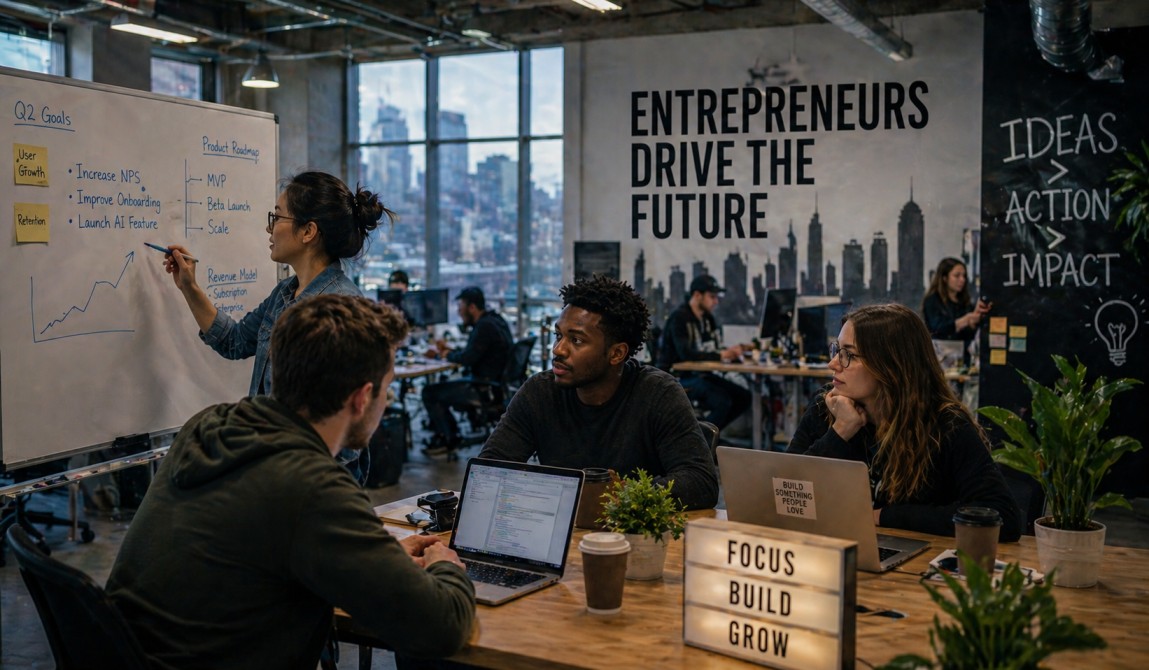
Entrepreneurs across the United States are facing a mixed landscape in 2026, shaped by tighter funding conditions, rapid advances in artificial intelligence, and shifting consumer demand. While startup formation remains resilient, founders are being pushed to operate more efficiently and prove revenue earlier than in previous years.
Venture capital investment has slowed compared to the peak years of 2021 and 2022. According to industry reports, investors are now focusing on profitability and sustainable growth rather than rapid scaling at any cost. Early-stage startups are still attracting funding, but later-stage rounds have become harder to secure, with valuations under pressure. This has led many founders to cut costs, reduce hiring, and prioritise core products.
At the same time, artificial intelligence is driving a new wave of opportunity. Startups building AI tools, particularly in enterprise software, healthcare, and marketing technology, are seeing strong investor interest. The rise of generative AI, following the momentum created by companies like OpenAI and Google, has lowered barriers for new entrants while also increasing competition. Founders are racing to integrate AI into their products to stay relevant.
The labour market is also shifting. After widespread layoffs in the tech sector in 2023 and 2024, many experienced workers have moved into startups or launched their own ventures. This has increased the talent pool available to early-stage companies, though competition for top technical talent remains strong, particularly in AI and data science roles.
Regulation is becoming a bigger factor. US policymakers are actively debating how to manage AI risks, data privacy, and competition in the tech sector. While no single federal framework fully governs AI yet, increased scrutiny is creating uncertainty for startups operating in sensitive areas such as fintech, health tech, and data platforms.
Consumer behaviour is adding another layer of complexity. High interest rates and cost-of-living pressures have made customers more selective, forcing startups to clearly demonstrate value. Subscription fatigue is growing, and businesses are finding it harder to retain users without strong differentiation.
Despite these challenges, entrepreneurship in the US remains strong. New business applications continue at historically high levels, supported by digital tools, remote work, and easier access to global markets. Many founders are building leaner, more focused companies, aiming for long-term sustainability rather than short-term hype.
The current environment is less forgiving than a few years ago, but it is also more disciplined. For entrepreneurs who can adapt quickly, manage costs, and leverage emerging technologies like AI, the next phase of growth in the US startup ecosystem is already taking shape.