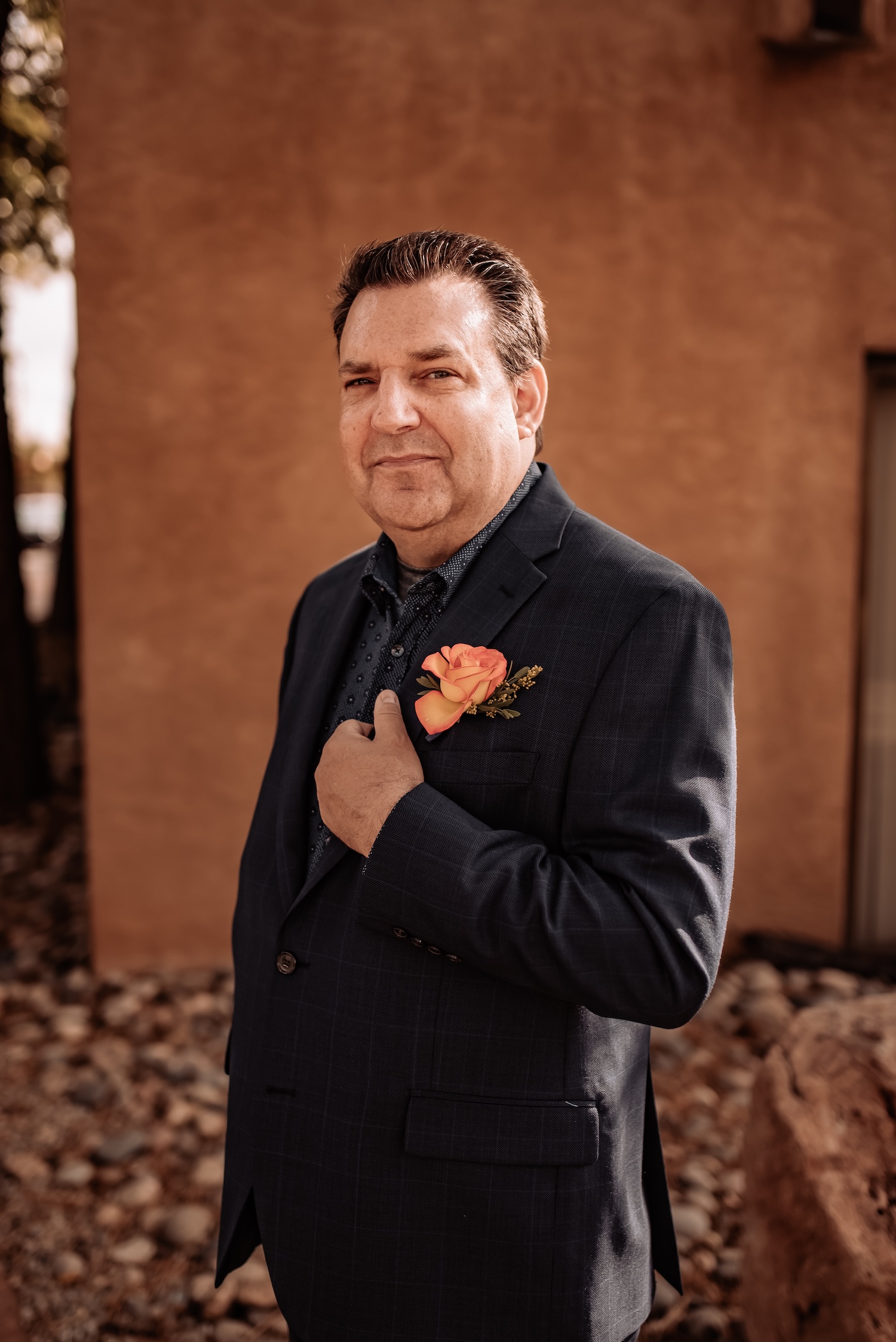
Christopher Leroi has built his career around a belief that leadership is most effective when it helps people move through complexity with dignity, clarity, and trust. Across more than two decades in law, public advocacy, mediation, policy work, and nonprofit leadership, his professional path reflects a consistent commitment to service rather than status. As a former judge, prosecutor, public policy director, certified mediator, and advocate for vulnerable communities, he has worked where legal systems, human conflict, and institutional responsibility often intersect. That range of experience has shaped his view that ethical leadership is not defined by authority alone, but by the ability to listen carefully, make principled decisions, and guide people toward durable solutions.
Christopher Leroi’s Foundation in Leadership and Law
The foundation of Christopher Leroi’s leadership philosophy was formed in the legal profession, where decisions often carry consequences for individuals, families, organizations, and communities. As a Christopher Leroi attorney profile reveals, his work has included courtroom practice, public advocacy, legal content, disability policy, mediation, and coalition-building across government, nonprofit, and community sectors. That breadth matters because law, at its best, is not simply a technical discipline. It is a public-facing profession that requires judgment, restraint, empathy, and an ability to see the people behind the dispute.
His background as a former judge and prosecutor gave him a close view of adversarial systems, including both their strengths and their limitations. Litigation can be necessary, particularly when rights must be protected or accountability must be enforced. But it can also intensify conflict, narrow communication, and leave parties with outcomes they had little role in shaping. Christopher Leroi’s later work in mediation reflects a recognition that many disputes benefit from a different kind of process, one rooted in collaborative problem solving, active listening, and practical resolution.
That orientation is also visible in his nonprofit leadership. At The Arc of New Mexico, he worked with legislators, stakeholders, and community members to advance rights-based initiatives and amplify the voices of underserved populations. His leadership there required more than policy knowledge. It demanded coalition-building, strategic communication, and a capacity to align legislative priorities with grassroots needs. Those experiences reinforced an important leadership lesson: lasting change depends on trust, not command.
How Judicial Experience Shapes Effective Conflict Resolution
Being a judge enables a legal expert to learn a lot about solving conflicts. This role requires being patient, impartial, disciplined, and respecting the procedure. Christopher Leroi uses what he learned in his mediation style. He also considers human factors and prepares for negotiations by collecting all necessary information: documents, doctors’ opinions, experts’ comments, and results of previous negotiations.
Apart from that, he understands the importance of understanding emotions in mediation. Facts are important in cases, but many problems are not caused by the facts. This type of mediation implies that even if the legal aspects of a case are perfect, the process can still fail if feelings present such as fear, sorrow, distrust, or a feeling of unfairness. The task of the mediator here is to avoid ignoring emotions.
Judges have rich experience in this. The judge knows that listening is not the same as agreeing. Christopher Leroi tries to prove this case when conducting mediation sessions. He uses the process of listening to participants and making sure everybody understands each other before switching to negotiations.
Also, the process should be guided and focused. Christopher Leroi makes mediation participants understand every step of the way to success when negotiating.
The Connection Between Nonprofit Leadership and Mediation
The connection between nonprofit leadership and mediation is stronger than it may appear. Both require a commitment to serving people in moments of need. Both involve competing interests, limited resources, and the challenge of building trust among stakeholders who may see the problem differently. Christopher Leroi’s experience in nonprofit leadership, particularly in disability advocacy and public policy, has shaped his understanding of what it means to lead with empathy while still pursuing concrete results.
At The Arc of New Mexico, his work involved legislative engagement, stakeholder communication, strategic outreach, and advocacy for inclusive policy. That kind of organizational leadership demands both moral clarity and practical flexibility. A nonprofit leader must understand the mission, but also the systems, relationships, and negotiations required to advance that mission. This experience aligns closely with mediation, where the goal is not abstract harmony, but workable resolution.
Servant leadership is central to this connection. In practice, servant leadership does not mean avoiding hard decisions or trying to please everyone. It means understanding leadership as a responsibility to elevate the needs of others while maintaining integrity and accountability. Christopher Leroi’s career reflects that orientation, from advocating for vulnerable communities to helping parties navigate disputes with respect and professionalism.
Mediation, like nonprofit leadership, also requires awareness of power dynamics. Christopher Leroi emphasizes the importance of ensuring that each participant has a meaningful opportunity to contribute. In cases where one party may feel disadvantaged, the mediator must be attentive to whether that person’s voice is being overshadowed. This is not only a matter of civility. It is a matter of fairness. Durable agreements are more likely when participants believe the process was balanced and respectful.
Ethical Decision-Making in Today’s Complex Organizations
Modern organizations face conflict in many forms: leadership transitions, employment disputes, governance disagreements, stakeholder tension, regulatory pressure, cultural change, and competing priorities. In these moments, ethical leadership becomes more than a value statement. It becomes a practical operating principle. Leaders must decide not only what outcome they want, but how that outcome is reached.
Christopher Leroi’s career offers a useful model for ethical decision-making under pressure. His experience across law, the judiciary, mediation, and public advocacy has required him to balance rules with human realities. That balance is essential for any leader navigating complex organizational challenges. Decisions made in conflict often leave lasting impressions, not only because of the result, but because of whether the process felt transparent, fair, and respectful.
Alternative dispute resolution has become increasingly important because organizations recognize the cost of unresolved or poorly managed conflict. Litigation may settle legal questions, but it does not always repair trust or preserve relationships. Mediation can offer a more constructive path by allowing parties to retain greater control, reduce expense and delay, and create agreements that reflect mutual participation. Christopher Leroi notes that mediated agreements tend to be more durable because they are mutually constructed rather than imposed. That insight applies well beyond legal disputes.
Ethical leadership also requires patience. Christopher Leroi describes patience as essential because many disputes cannot be resolved through logic alone. People need time to process information, adjust expectations, and work through emotional resistance. This is a leadership lesson executives often underestimate. Urgency may be necessary, but rushing people through conflict can lead to fragile agreements or hidden resentment. A patient process, by contrast, can create room for genuine alignment.
The Future of Collaborative Leadership
The future of executive leadership will emphasize mediation skills, even for executives who never officially acted as mediators. Companies become more complicated, interconnected, and reliant on other departments which makes traditional leadership ineffective because only influence, trust, and adaptability can provide good results nowadays. Cooperation does not qualify as a soft skill anymore but becomes strategic.
Christopher Leroi states that law, rules, and procedures may differ in different states but the human aspect of conflict is the same everywhere. Communication, perception, and trust create results.
For specialists who find themselves in highly conflicted situations there is useful advice. Prepare very well but don’t turn the conflict into papers. Listen carefully before persuading. Define success in a practical way. Divide the problem into smaller ones. Address power dynamics. Shift the focus from the past to the future. And never confuse winning the argument with solving the problem.
This is particularly true for companies undergoing serious transformations. It may be a new business structure, a new message delivered by a nonprofit, or an internal dissension within the team. The ability to reach a consensus can affect the result of any transition in a negative or a positive way.
Christopher Leroi demonstrates that leadership, law, and service can empower one another. Being an attorney, a former judge, a mediator, a public policy professional, and a nonprofit leader, he holds a strong belief that conflicts should not lead to a permanent division.
At the time when many people, companies, and organizations have a problem finding a way out from a conflict, Christopher Leroi provides a specific approach to leadership that is based on ethics, empathetic leadership, service leadership, and collaborative problem-solving.