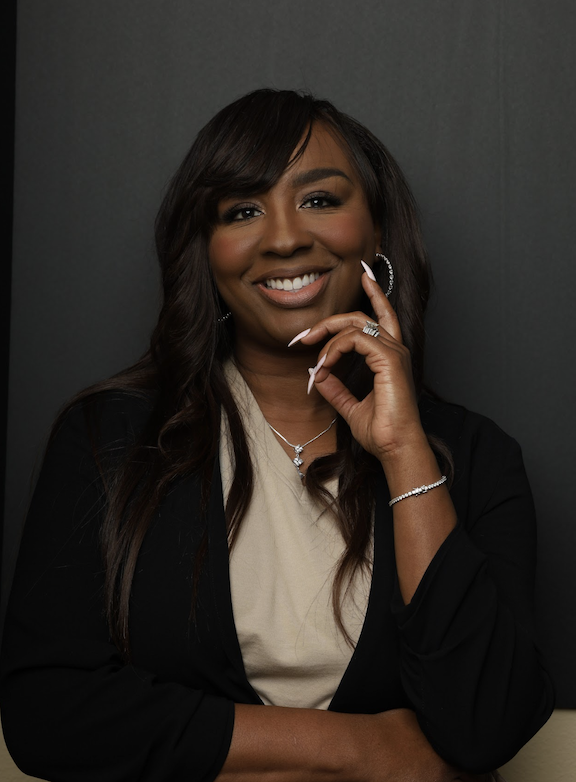
For most of the group home industry, success has long been measured in miles driven. When a problem arises, owners are expected to be nearby, available, and ready to intervene in person. Physical presence has been treated as a proxy for control, and exhaustion as the cost of doing business.
Katrina Robinson has built her work in direct opposition to that assumption.
As the founder of Group Home on Autopilot, Robinson is advancing a model of ownership that prioritizes systems over proximity and judgment over constant intervention. Her 2026 service offering formalizes this approach, positioning remote coaching not as a convenience, but as a competitive advantage. Rather than teaching owners how to be everywhere at once, Robinson teaches them how to design operations that do not require it.
Why Remote Ownership Is Still Rare
The reluctance to teach remote group home ownership is not accidental. It is easier to tell people to be on-site. It avoids nuance. It gives coaches a safety net when problems arise.
“If something goes wrong, the default advice is always ‘go over there,’” Robinson says. “That’s the easy answer.”
Easy, however, is not the same as scalable.
Robinson watched this dynamic play out long before she began coaching others. She saw well-intentioned owners build what were technically successful homes but practically exhausting jobs. Physical presence became the solution to every problem, until the business consumed the owner entirely.
That outcome was never her goal.
“I wanted a business,” she explains. “Not a role I couldn’t step away from.”
Remote ownership, she insists, forces discipline. When you cannot rely on showing up, you must rely on systems. And systems, once built correctly, tend to outperform constant improvisation.
The 2026 Offering: Structure Beyond the Launch Phase
Robinson’s 2026 program reflects this philosophy with unusual clarity. Rather than selling coaching as a single burst of education, she has designed a bundled offering that mirrors the real arc of group home ownership.
The program begins with her signature six-week intensive, where clients meet weekly and are given precise actions to complete in sequence. This phase focuses on setup: compliance, operations, marketing workflows, and decision frameworks that anticipate problems before they appear.
But the program does not stop at launch.
The expanded offering includes 90 days of continued one-on-one mentorship, delivered biweekly. This period is intentional. It is when most new owners encounter their first real tests: resident conflicts, boundary-setting issues, unexpected stressors that are not covered in generic playbooks.
Rather than leaving clients to navigate this alone or pushing them into group forums, Robinson stays directly involved.
The program also includes a done-for-you website and a starter set of verified leads, removing two of the most common friction points that slow momentum. These additions are not positioned as shortcuts, but as ways to preserve focus during the most operationally sensitive window.
Clients retain lifetime access to Robinson’s training materials and scripts, as well as entry into a broader community of operators. The structure reflects her core belief: front-load effort, then build long-term decision confidence.
Experience, Not Scripts
One of Robinson’s sharpest competitive advantages is also the least flashy. She has actually done the work.
Before becoming a coach, she hired one, and that experience shaped everything she would later build.
“When I had real problems, I got scripted answers,” she recalls. “The coach hadn’t opened a group home before. He was trained to teach, not to operate.”
That gap between theory and reality is what Robinson aims to eliminate. Her coaching is not a recitation of best practices. It is scenario-based, contextual, and often uncomfortable in its honesty.
Clients do not come to her for reassurance. They come for clarity.
This is especially true in remote contexts, where anxiety can escalate quickly. Robinson teaches her clients not just what to do, but how to stay regulated while doing it.
“You cannot meet chaos with chaos,” she says. “You have to be the thermostat, not the thermometer.”
The phrase appears often in her coaching. It captures the emotional discipline required to manage a business you cannot physically hover over. Remote ownership, in Robinson’s model, is as much about temperament as it is about technology.
Systems as Emotional Infrastructure
The tools Robinson insists upon are practical: tenant management platforms, automated payments, centralized communication, reporting systems that surface issues early. But their deeper function is psychological.
When owners trust their systems, they stop reacting to every notification as a crisis. Decisions slow down. Responses improve. Authority becomes consistent.
This is where many programs falter. They teach tactics without addressing the emotional volatility that undermines them.
Robinson’s clients often report that the real shift happens after their first major challenge, when they realize they can respond calmly and decisively without being physically present. The business begins to feel stable rather than fragile.
That moment, Robinson notes, is when people understand why her approach is different.
A Model Built for Longevity
What makes Robinson’s 2026 offering notable is not just its comprehensiveness, but its restraint. It does not promise ease. It does not frame group homes as passive income. It treats them as serious businesses that deserve serious infrastructure.
Remote coaching, in this context, is not a gimmick. It is a forcing function.
By removing proximity as a crutch, Robinson compels owners to build businesses that can outlast their constant attention. In doing so, she is quietly redefining what professionalism looks like in a sector that has long relied on presence over process.
As more operators seek businesses that serve both financial and social goals without consuming their lives, her model feels less like an exception and more like a preview.
Distance, it turns out, may be the very thing that makes the system work.
To learn more about Katrina Robinson’s 2026 remote coaching program and how Group Home on Autopilot is structured, visit https://www.grouphomeonautopilot.com/