For years, the hospitality conversation has been dominated by scale. Bigger brands. Broader footprints. More standardized experiences designed to feel familiar no matter where a traveler lands. That approach made sense in a world where predictability was the primary form of comfort.
But something has shifted.
Today’s travelers are not just booking rooms. They are curating experiences. They want to feel connected to where they are staying, not insulated from it. And in that shift, boutique hotels are quietly reclaiming their place at the center of the hospitality conversation.
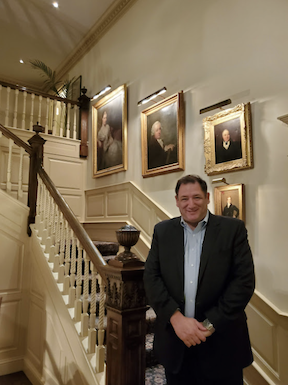
Robert Reitknecht, an award-winning hotelier and founder of HospitalityRenu, has spent more than two decades inside hotel operations watching these cycles come and go. What he sees now is not a trend, but a correction.
“Guests are no longer looking for generic excellence,” Reitknecht says. “They are looking for meaningful experiences that feel personal, intentional, and rooted in place.”
A Clear Change in Guest Behavior
The modern traveler has become more discerning, not necessarily more demanding. They are less impressed by uniformity and more drawn to originality. Large brands still offer reliability, but reliability alone no longer creates loyalty.
Boutique hotels thrive in this gap.
Guests are choosing properties that reflect the character of the destination rather than override it. They want local recommendations that feel authentic. Spaces that tell a story. Service that feels human rather than procedural.
“It’s not just about where the hotel is,” Reitknecht explains. “It’s about how deeply it’s woven into the community around it.”
This desire for connection has accelerated as travelers spend more intentionally. Fewer trips. Higher expectations. A greater emphasis on memories rather than amenities.
Boutique hotels, by design, are built to respond to this mindset. They are smaller. More agile. Closer to their guests. But success is not automatic. It requires clarity and discipline behind the scenes.
Why Simplicity Is the New Advantage
One of the biggest mistakes Reitknecht sees boutique operators make is overcomplicating their technology stack in an effort to compete with larger brands. Multiple platforms. Layered systems. Tools that promise insight but create confusion.
“The goal is not more technology,” he says. “It’s the right technology.”
For boutique hotels, that often starts with a simple, robust CRM system. One that captures guest preferences, visit history, and meaningful details without overwhelming staff. When data is easy to access and intuitive to use, it supports service rather than distracting from it.
Reitknecht encourages leaders to resist the temptation to adopt every new platform. Instead, he asks a more practical question. Does this tool make it easier for your team to know your guests?
If the answer is no, it is not an asset. It is friction.
Technology should work quietly in the background, enabling staff to focus on what matters most. Awareness. Responsiveness. Presence.
Community as a Differentiator
Where boutique hotels truly separate themselves is in their relationship with the local community. Travelers increasingly want experiences they cannot replicate at home. They want to eat where locals eat. Learn where locals learn. Explore beyond curated tourist paths.
Boutique hotels are uniquely positioned to act as connectors.
Reitknecht advises operators to form intentional partnerships with local businesses, artists, chefs, guides, and organizations. Not as transactional add-ons, but as extensions of the guest experience.
“When a hotel reflects its community, guests feel like insiders,” he says. “That feeling is powerful.”
These partnerships create stories guests share long after checkout. A recommendation that feels personal. An experience that feels discovered rather than sold. This is where boutique hotels build emotional equity that large brands struggle to replicate.
The Operational Reality Behind the Experience
While the guest-facing story is compelling, Reitknecht is quick to point out that boutique success is built on operational alignment. High staff turnover, unclear roles, and inconsistent processes quietly undermine even the most beautiful properties.
This is where his “boots on the ground” approach sets HospitalityRenu apart.
Rather than delivering generic training programs or distant recommendations, Reitknecht works shoulder to shoulder with teams inside active operations. He observes. Listens. Diagnoses. Then helps leadership align people, process, and technology around a clear service vision.
“Turnover is rarely the root problem,” he explains. “It’s a symptom.”
When staff understand expectations, feel supported, and see how their role contributes to the guest experience, engagement improves. Consistency follows. Guests feel the difference immediately.
Reitknecht’s Service Refresh Framework™ focuses on embedding repeatable behaviors that allow teams to deliver personalized service without relying on individual heroics. This structure creates freedom rather than rigidity.
Why Boutique Hotels Are Poised to Win
The resurgence of boutique hospitality is not about nostalgia. It is about relevance.
As travelers move away from one size fits all experiences, they are gravitating toward places that feel intentional. Hotels that know who they are. Properties that choose depth over breadth. Teams that deliver service with awareness rather than automation.
Boutique hotels that invest in simplicity, community integration, and internal alignment are well positioned for the next chapter of hospitality. Not because they are smaller, but because they are closer.
“Guests want to feel like they belong,” Reitknecht says. “Boutique hotels can offer that when everything behind the scenes is aligned.”
The comeback is already underway. It is happening quietly, one thoughtful experience at a time. And for operators willing to focus on clarity over complexity, the opportunity has never been stronger.
For boutique hotel leaders ready to turn that opportunity into action, visit https://www.hospitalityrenu.com/ to learn how a hands-on, human-centered service refresh can strengthen culture, loyalty, and long-term growth.