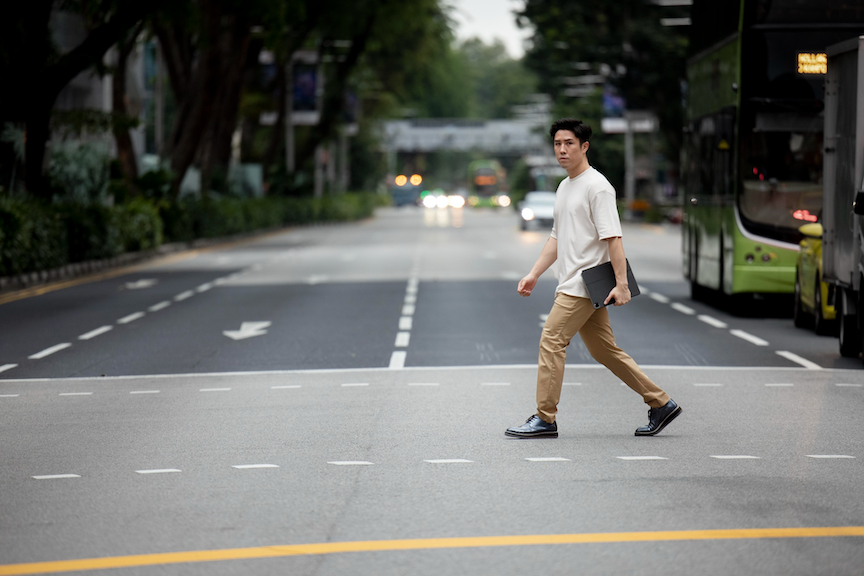
Like many cities, pedestrian danger in Salt Lake City, UT, is concentrated where rapid growth, increased traffic, and crossing design collide. Amid the highest-risk spots for pedestrian injury in the city, people are walking farther and more often, and drivers are having to make more complex turns.
Salt Lake City is full of transit corridors, mid-block crossings, commercial development increasing traffic, and busy arterials. Under these conditions, the questions following a crash typically go beyond who was at fault and begin to dive into how cities are designed.
Urban development has made cities more walkable, but it has also put pedestrians at greater risk in many cases. Salt Lake City has continually added more pedestrian infrastructure, such as crosswalk upgrades, curb extensions, and refuge islands.
However, the city also acknowledges that, while these upgrades may slow traffic and improve visibility, some crossing points still exist because people choose to cross there rather than use designated infrastructure. The disconnect between where people naturally walk and where infrastructure has been placed is a significant factor at play in complicated pedestrian injury claims.
Close calls: A concentration of danger
“The most dangerous places for pedestrians are the areas with the most conflict points,” explains Steven Jensen, attorney and partner at Parker & McConkie Personal Injury Lawyers. “Large intersections, fast-moving traffic, and corridors with frequent left or right turns can all indicate points of concern for pedestrian safety.”
Data from Salt Lake City showing pedestrian-involved crashes repeatedly illustrates that corridors such as Redwood Road and 400 South are consistent problem areas. These are not quiet neighborhood thoroughfares, but places where traffic volume and visibility are ongoing concerns.
“Crosswalks can be especially dangerous or even fatal, especially when placed across wide roads or in places where drivers may not be expecting people to appear,” says Jensen. The Salt Lake City data report explains that many pedestrian-involved accidents result from a failure to yield and that a substantial number occur around crosswalks.
“What this means is that crosswalks are not necessarily a completely safe crossing point if the street design encourages speed or leaves drivers not enough time to react,” says Jensen.
An attorney’s point of view
From an attorney’s perspective, a pedestrian crash is not just about who hit whom. It is about whether the driver, the city, or another responsible party created conditions that made a collision inevitable.
“From a legal standpoint, the case often hinges on whether the crossing was functioning properly for the kind of traffic using it,” explains Jensen. Factors such as how visible pedestrian traffic is within the crosswalk, how fast vehicles are moving, and the site’s signage and lighting all play an important role in determining ultimate fault.
In Salt Lake City, many pedestrian-related crashes still occur in places shaped by developmental decisions. Everything from new apartment buildings to a large concentration of restaurants can increase foot traffic faster than street design changes can keep up. While the city tries to respond with safer crossings and public transportation options, the upgrades necessary further highlight how many of the older streets in the Salt Lake City center were never designed for the volume of pedestrian traffic they receive.
Municipal responsibility
If a crash is influenced by poor street or crossing design, poor maintenance, or a known hazard, municipal responsibility for the injuries sustained becomes relevant. “A city could potentially become part of a pedestrian injury claim if, for example, markings are missing at crosswalks or signals are defective,” says Jensen.
According to Salt Lake City’s municipal transportation documentation, a crossing prioritization process is in place that recognizes the role of municipal design and maintenance in keeping pedestrians safe. This means that the city provides everything from updated pavement markings and refuge islands to flashers to improve safety where possible.
“The city recognizes that design can be a safety issue, not just driver behavior,” Jensen explains.
When disaster strikes: The handling of injury claims
When a pedestrian sustains an injury in a collision, the claim typically begins with their insurance company. Police reports, medical records, and witness statements are all gathered, and communication with the driver’s insurer, if they have insurance, is also initiated.
In Utah, the state’s comparative negligence statute means that if it is found that the pedestrian is somewhat at fault for the accident, compensation may be reduced. All of this makes it crucial to document all factors surrounding the accident. If insurance fails to fairly compensate the injured party, the claim may move to mediation or even a lawsuit.
“Injured pedestrians should focus on medical care and prompt evidence preservation after the accident,” says Jensen. “Documenting the scene before important details disappear may be key to a successful resolution.”
Like many larger cities, the pedestrian risk in Salt Lake City is not evenly distributed, and it is shaped by more than just inattentive or careless drivers. The risk reflects the city’s growth and whether development has kept pace with increased foot traffic. For pedestrians injured in accidents, the municipal factors matter just as much as the fault ascribed at the moment of impact.