For a global facilities management business, scale is both an advantage and a responsibility. Customers expect consistency, reliability and the ability to respond quickly across different markets. At the same time, the business has to manage large teams, varied local requirements, multiple service lines and the operational complexity that comes with delivering essential services every day. For OCS, one of the world’s leading facilities management providers, the challenge is to build on its scale while continuing to strengthen the systems and structures that support long-term performance.
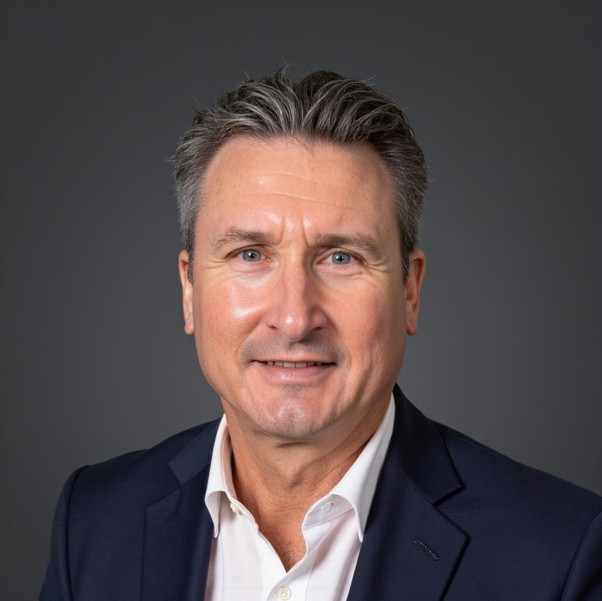
Gary McGaghey, Group CFO of OCS, is closely involved in supporting that work as part of the wider leadership team. The business has turnover in excess of £3bn and provides services across areas including cleaning, security and technical hard services in critical environments. These are services that sit at the heart of customer operations, where reliability is not a nice-to-have but a daily expectation. Under CD&R ownership, OCS has been through a significant period of development. The initial integration following the OCS and Atalian combination is now completed, giving the business a stronger platform from which to move forward. The current focus is on integrating two subsequent large technical hard service acquisitions and continuing to develop a scalable hard services led integrated facilities management operating model.
McGaghey brings considerable experience to this agenda, but he is clear that transformation at OCS is a collective effort. His career has included senior finance and executive roles across FMCG, beverages, pharmaceuticals, digital marketing services and facilities management, with experience in listed, privately owned and private equity-backed businesses. He has worked through M&A, carve-outs, integrations, refinancing and major change programmes, but his view is that successful transformation depends on the quality of the team around the table and the people delivering change across the business. At OCS, that means the group leadership team, the finance function, regional teams, operational colleagues and functional specialists all working towards a common direction.
This collective emphasis is important because transformation in a business of OCS’s scale cannot be delivered from finance alone. The finance function has a significant role to play in providing discipline, visibility and insight, but it must operate in partnership with the wider organisation. Operational leaders understand customer needs and market conditions. Regional teams understand local delivery realities. Functional colleagues bring expertise in systems, people, procurement, technology and governance. The CFO’s role is to help connect these perspectives through clear information and disciplined decision-making, not to act as the sole owner of change.
At OCS, transformation is being approached as a practical exercise in strengthening the business. It is not about change for its own sake, nor about imposing unnecessary uniformity and governance which would undermine its agile, customer focussed culture. The aim is to create greater consistency where it adds value: stronger reporting, clearer data, scalable systems, robust governance and better visibility of performance. In a large international services business, these foundations are essential. They help leaders make better decisions, manage risk more effectively and support teams who are delivering for customers on the ground.
The distinction between consistency and uniformity is important. OCS operates across a range of sectors, each with its own customer expectations, regulatory frameworks and labour dynamics. A business operating in a number of sectors and service lines needs common standards, particularly in areas such as finance, control and governance, but it also critically needs to preserve local agility and empowerment. For McGaghey and the wider leadership team, the task is to create a common language around performance while respecting the operational realities of different markets and service lines. The most effective business models are those that provide clarity without removing the flexibility that local teams need to serve customers well.
For customers, the value of that work is tangible. A more scalable operating model can support greater consistency across markets, clearer accountability and better visibility of service performance. It can help OCS respond with more confidence as customer needs evolve, while still maintaining the local relationships and operational knowledge that are so important in facilities management. The goal is not simply to make the business more efficient internally, but to strengthen the way it supports customers externally.
Finance plays a central role in creating that clarity. In a business of OCS’s scale, the finance function is not simply responsible for reporting historic performance. It must also help the organisation understand what is driving performance, where risks are emerging and where management attention is required to unlock opportunities for service and productivity improvements. Reliable data, consistent processes and disciplined reporting are the foundations of that insight. Without them, decisions can become slower, less confident and more dependent on anecdotes. With them, leaders can act with a clearer understanding of both opportunity and risk.
This is particularly important in the context of acquisition integration. Bringing businesses together can create significant value, but only if the integration is handled properly. Legal and structural steps are only part of the process. The more complex work often lies in aligning systems, data, reporting, processes and ways of working. OCS has completed the initial integration following the OCS and Atalian combination, and is now focused on integrating two subsequent large hard services acquisitions into its integrated facilities management operating model. That work is central to building a platform that can support the business as it continues to grow.
McGaghey’s view is that integration should be judged not only by immediate efficiencies, but by the quality of the platform it creates for the future. Well-executed integration can improve visibility, reduce duplication, and strengthen controls. This foundation enables the business to build scale in an integrated manner. It creates the conditions for further efficiencies and value creation, particularly as companies begin to explore the use of more advanced data tools and artificial intelligence. In this sense, integration is not simply a post-transaction exercise. It is a foundation for future performance.
AI is a useful example. Like many large organisations, OCS is considering how AI can support productivity, insight and decision-making. McGaghey sees the potential clearly, but he is also pragmatic about the work required before AI can deliver meaningful value. The first priority is to establish a robust integration of core systems which deliver a consistent, robust data set. If data is fragmented across different systems, formats and processes, the value of AI will be limited. If the data foundation is strong, AI can help identify patterns, improve efficiency and support better decisions across the business.
This point matters because discussions about AI can sometimes become detached from operational reality. For a business such as OCS, the value of technology lies in whether it helps the organisation work better. Better systems make reporting more reliable, processes more efficient, and can provide valuable insights to the business and to the customers. Better data should help leaders see where action is needed. AI may then provide further opportunities, but it depends on the quality of the underlying foundations. The approach at OCS is therefore not to chase technology for its own sake, but to ensure the business is ready to use it properly.
The customer impact is important here too. In facilities management, better data is not just a finance or systems issue. It can support more informed conversations with customers, clearer service performance and better decision-making across operations. As expectations around transparency and responsiveness continue to rise, businesses that can combine local service delivery with robust analytics are likely to be better placed to meet customer needs.
The same practical mindset applies to transformation under private equity ownership. CD&R’s ownership provides OCS with a clear focus on value creation and the opportunity to invest in capability, systems and growth. In that environment, pace matters, but so does discipline. Sustainable performance is built through strong governance, capable teams, reliable processes and a clear understanding of how value is created. Finance has an important role in maintaining that discipline while supporting the wider business in moving forward.
People are central to this. Facilities management is a service business, and service businesses depend on the quality and commitment of their teams. Transformation may involve systems and processes, but it is delivered by people. If colleagues do not understand the purpose of change, or if they feel change is being done to them rather than with them, execution becomes harder. McGaghey’s leadership approach places emphasis on communication, trust and cultural awareness, particularly in business environments where a culture of empowerment and agility is a competitive advantage.
That perspective is informed by his own global experience. Having lived and worked in South Africa, London and Geneva, and having worked with teams across several continents, McGaghey understands that global leadership requires careful listening as well as clear direction. Alignment matters, but it cannot be achieved by simply issuing instructions from the centre. Leaders need to understand the contexts in which teams are operating and create frameworks that help them perform. In facilities management, where customer delivery is often shaped at site level, that local understanding is particularly important.
For OCS, the next stage of transformation is therefore about building carefully on the platform already created. The company has scale, a broad service offering and a strong international footprint. The work now is to continue integrating recent acquisitions, strengthening systems, improving data and building the capabilities needed to support long-term growth. The objective is a more scalable business that can operate with greater efficiency and service consistency, while remaining close to its customers and people.
Finance will continue to be a key enabler of that ambition, working alongside colleagues across the business rather than apart from them. By providing clear information, disciplined control and commercial insight through data and AI, the finance function can help the wider organisation make better decisions and execute with greater confidence. In practical terms, that means ensuring leaders have a reliable view of performance, that risks are understood, that resources are directed appropriately and that integration activity supports the broader strategic direction of the group.
OCS’s transformation is not a single event or a short-term programme. It is an ongoing process of integration, improvement and capability-building. The business is working to create a stronger global platform that leverages the power of AI, one that supports customers, enables its people and provides the consistency required for future growth. In a market where customers increasingly expect transparency, reliability and innovation from their facilities management partners, those foundations matter.
For Gary McGaghey, transformation only has value if it improves the way the business works. That means stronger systems, better data, clearer governance and teams that understand the role they play in the wider organisation. It also means being disciplined about the sequence of change: completing integration properly, building a reliable data foundation and then using technology, including AI, in ways that create practical value. For OCS, that measured and collective approach is central to building a business that is not only larger, but stronger, more customer-focused and more scalable for the future.