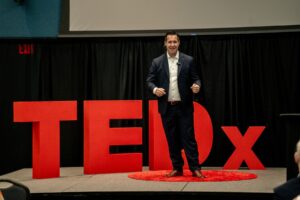
In most industries, “family business” is shorthand for small-scale and local. Gulf Coast Western is a different case. The Dallas-based oil and gas company has operated across multiple states for more than fifty years, yet it runs on values that trace directly to the family that built it. Scale came later. The culture was there from the start.
From Father to Son
Thomas H. Fleeger started Gulf Coast Western in 1970. What began as a Gulf Coast-focused oil and gas operation grew over the following decades into a company with an active footprint across Texas, Louisiana, Mississippi, Oklahoma, and Colorado. When Thomas stepped back from the business, his son Matthew H. Fleeger took over as president and CEO in 2009.
Matthew had not been waiting in the wings. Before returning to the family business, he spent years building and selling companies on his own terms. He founded MedSolutions Inc. in 1993 and grew it into a regional medical waste management leader, which was later sold to Stericycle for approximately $59 million in 2007. He also played a leading role in growing Palm Beach Tan and Mystic Tan into franchise operations with combined revenues approaching $100 million. Two distinct businesses built and exited before he took the CEO role.
Thomas Fleeger ran Gulf Coast Western on the premise that partners deserved the same transparency he would want if the positions were reversed, a standard that was written into the company’s operating culture long before Matthew took over. His father built it that way. Matthew didn’t change that. He deepened it.
A Culture Built on Partnership
Gulf Coast Western’s relationship with its investment partners reflects that family-business mindset in practical terms. The company does not treat joint ventures as arm’s-length financial arrangements. Partners are accredited investors who review detailed prospectuses before any capital is committed. Gulf Coast Western handles operations throughout, and Matthew Fleeger invests his own capital alongside partners in each venture. He still does.
The result shows up in the numbers. Over 70% of Gulf Coast Western’s partners have participated in more than one joint venture. In a sector where investor relationships can be transactional, that rate of repeat involvement points to something durable. It’s the kind of loyalty built through consistent follow-through rather than marketing. The numbers bear that out.
Gulf Coast Western’s A+ rating with the Better Business Bureau reinforces that picture. Gulf Coast Western reviews on the BBB platform reflect the same expectations the company sets internally. The rating carries particular weight in oil and gas, where skepticism from outside investors runs high.
Matthew H. Fleeger and the Communities He Serves
For Matthew Fleeger, the values that shape Gulf Coast Western’s internal culture extend outward. He is a cancer survivor. That experience has driven years of sustained philanthropic work, with the company donating to the American Cancer Society, Shriners Hospitals for Children, and St. Jude Children’s Research Hospital, among others. He didn’t delegate that work.
His most visible charitable partnership is with the Sadie Keller Foundation, a Dallas-area nonprofit founded by a leukemia patient to bring toys to hospitalized children during the holidays. Gulf Coast Western donated $25,000 to the organization and became a sponsor of its annual Yellowball fundraising gala. Employees have participated directly in Sadie’s Sleigh, the foundation’s signature gift-giving event, hand-picking toys and turning the company’s Dallas office into a staging area for donations. The foundation reports Gulf Coast Western contributes over 6,000 toys to the project each year.
That kind of hands-on engagement is consistent with how the company describes its relationship to partners and community alike: less transactional, more personal.
Matthew Fleeger and his wife Candee made a $2 million commitment to SMU Athletics through the Fleeger Family Foundation. The gift went toward the ACC Competitiveness Campaign and helped the university surpass a $125 million goal.
More than fifty years in, the company runs much as it did when Thomas Fleeger started it. The partner reinvestment numbers and the BBB record reflect that continuity. So does the fact that the CEO still invests his own capital in every joint venture he brings to partners.