The global food and beverage packaging industry has witnessed an enormous transformation. Manufacturers have increasingly been forced to rethink traditional methods of production from growing consumer preferences for healthier products, greener packaging, and fast retail fulfillment at scale. The market value for food and beverage processing equipment is projected to reach $84.9 billion by 2028, with a CAGR of more than 5.6%, as per Markets and Markets study. One of the most persistent unresolved issues is that of adapting mass production equipment to fill, cap, and pack non-standard container designs such as oval bottles that are increasingly gaining popularity without compromising speed or accuracy.
Nowhere was this tension more apparent than during a major expansion at one of America’s most iconic consumer goods companies: one that has long been a household name for snacks and confections. This industry leader pivoted into the growing functional beverage market. The pressure was on after acquiring health-focused brands like LesserEvil. Their newest innovation? A bold leap into oval-shaped bottled syrup, designed to stand out on shelves and appeal to wellness-conscious consumers.
But design ambition created a ripple of technical challenges. Unlike traditional round bottles that glide easily through automated systems, oval bottles behave unpredictably. They twist, wobble, and resist standardization. The stakes were high: large retail contracts were on the line, with stringent delivery and performance metrics.
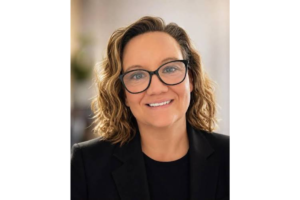
Stepping into the crux of the challenge was Shubham Thakare, Lead Mechanical Engineer on the project, whose instincts lean toward elegant functionality and fearless reinvention. Known for bringing calm to the most chaotic engineering environments, he doesn’t just resolve problems, he reshapes them to expose new possibilities.
Shubham was tasked with leading the mechanical design effort. He faced a paradox: how to build a system that was both nimble and precise enough to handle irregularly shaped bottles moving at high speeds, while also being robust enough to handle a wide range of liquid viscosities. It wasn’t just a job. It was an invitation to rethink what a bottling system could be.
From the outset, the challenges were relentless. Existing gripper mechanisms, designed for round bottles, were ill-suited and even dangerous for the oval format. Misalignment and collapse were constant threats. So Shubham took the bold route: he started from scratch.
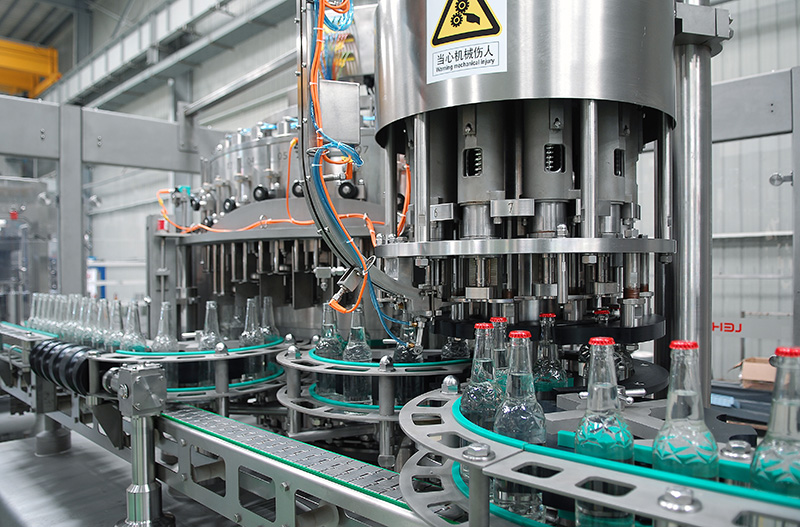
He engineered a dual-pressure gripper system with silicone-coated adaptive jaws that used real-time orientation data from infrared sensors. These jaws adjusted their grip based on each bottle’s specific angle, ensuring controlled movement through the entire line. To further stabilize the process, he redesigned the infeed and discharge mechanisms with low-twist guides, delivering seamless flow and eliminating jams.
The result? A remarkable 99.5% alignment accuracy. Bottles moved cleanly. Production stayed on track. And the risk of damage dropped dramatically. But solving for movement was only the beginning.
Each beverage variant, from creamy nutritional mixes to lighter wellness drinks, had a unique viscosity. That meant variable flow rates, which could wreak havoc on fill accuracy. Underfilling or overfilling didn’t just mean wasted product; it meant breaching contract terms with major retailers, potentially costing millions.
Shubham responded by creating a dynamic nozzle system. Equipped with shear-sensitive valves and inline viscometers, the setup monitored fluid behavior in real time. A responsive “low-high” pressure sequencing mechanism ensured that each fill was adapted precisely for that product’s texture. The outcome: ±0.8% fill accuracy across all beverage types, beating internal benchmarks and reducing product loss.
These innovations weren’t just technically sound, they were financially transformative. In early trial phases alone, material waste dropped by 12%, saving nearly $8,000 a month. Operational gains also enabled more consistent supply chain flows and fewer retail stockouts, particularly during peak seasons.
But what set Shubham apart was his eye for scalability. He didn’t just solve for one facility. He built a modular, repeatable system that could be deployed across the company’s global operations. From nozzle assemblies to conveyor drives, each component was designed for plug-and-play adaptability. Within five months, fifteen production lines were live globally, a full month ahead of schedule. This level of execution changed the game.
The company launched its flagship oval bottle product on time. It then used the same infrastructure to introduce three additional product lines within six months, including probiotic beverages and plant-based drinks. Retail partners, including major nationwide chains, reported a 20% drop in restocking delays, while internal audits revealed an 18% improvement in production consistency.
Quality and compliance kept pace. Shubham integrated a touchless Clean-In-Place (CIP) sanitation system, using rotary nozzles within food-grade stainless-steel housings. These systems met FDA regulations with zero non-conformance, and contamination risk was slashed by 35%.
For his role, Shubham was even promoted. But the title wasn’t the victory. The real win was what his work represented: a complete rethink of how food-grade automation could function under pressure. He didn’t just design a machine. He introduced a system philosophy that was flexible enough to accommodate evolving product types. It was also scalable across regions and precise enough to satisfy both regulatory scrutiny and retail expectations.
Recalling this transformation period, he says, “There was no playbook for what we were trying to build. So we wrote our own; one iteration, one failure, and one breakthrough at a time.”
His approach demonstrated something rare: the ability to meet real-world constraints with visionary engineering. Shubham Thakare raised the industry standard, not just in terms of bottle shapes or fill rates, but in how manufacturing innovation should rise to meet evolving consumer trends.
In the end, this wasn’t just about a new product line. It was about unlocking new potential, turning an obstacle into an opportunity, and proving that even the most rigid systems can evolve with the right mix of imagination and precision.
That is how meaningful innovation begins. It doesn’t wait for ideal conditions. It starts right where the challenges are, with hands-on work, relentless curiosity, and the courage to try something no one else has tried before.