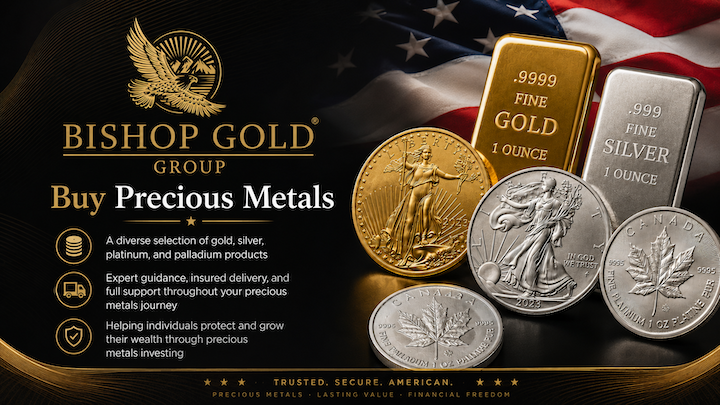
Bishop Gold Group, a California-based precious metals company, reports increased activity among individuals seeking direct ownership of gold and silver as part of broader wealth preservation strategies.
Unlike traditional equities or retirement-linked financial instruments, physical precious metals are being viewed by a growing segment of investors as a tangible store of value, particularly during periods of economic instability. This shift is contributing to steady interest in gold bullion, silver coins, and other physical asset classes associated with long-term portfolio diversification.
Market observers note that investor behavior has gradually evolved over the past several years. While digital investing platforms and paper-based assets remain dominant, a parallel trend has emerged among individuals looking to balance exposure to financial markets with physical commodities that are not directly tied to corporate earnings or banking systems.
Bishop Gold Group operates within this segment of the financial landscape, facilitating the purchase of physical gold, silver, platinum, and palladium products for clients across the country. The company also works with investors exploring precious metals as part of retirement strategies, though recent consumer interest has increasingly focused on direct ownership rather than account-based structures.
According to industry trends highlighted by the company, many buyers are entering the precious metals market with a focus on diversification rather than speculation. This includes first-time investors researching gold as a potential hedge against inflation, as well as experienced market participants reallocating portions of their portfolios into physical assets.
A spokesperson familiar with the company’s operations described the current demand environment as “educational-driven,” noting that many inquiries begin with research into how gold and silver function during periods of inflationary pressure or equity market volatility.
“Most people aren’t approaching precious metals as a short-term trade,” the spokesperson said. “They’re looking at long-term stability, diversification, and the historical role that physical assets have played during uncertain economic cycles.”
The company also points to broader macroeconomic conditions as a contributing factor to rising interest. Inflation sensitivity, geopolitical risk, and fluctuating currency strength have all been cited by analysts as variables that influence investor sentiment toward tangible commodities.
Within this context, gold and silver continue to occupy a unique position in the global financial system. Gold, in particular, has historically been regarded as a reserve asset held by central banks and institutional investors, while silver maintains dual demand as both a monetary and industrial metal.
Bishop Gold Group’s client activity reflects this dual-interest environment, with inquiries spanning both investment-grade bullion and collectible coin products. The company states that many investors are increasingly prioritizing asset control and physical possession as part of their broader financial planning approach.
In addition to retail demand, industry participants have observed a steady rise in informational searches related to precious metals, including queries about gold purchasing, storage options, and long-term holding strategies. This trend has contributed to increased visibility for firms operating in the sector, particularly those offering educational resources alongside transactional services.
While market conditions continue to shift, analysts suggest that interest in tangible assets is unlikely to diminish in the near term, particularly if macroeconomic volatility persists. For companies like Bishop Gold Group, this environment has reinforced a dual role: facilitating access to physical metals while also serving as an informational resource for prospective investors navigating an increasingly complex financial landscape.
As the broader investment community continues to reassess diversification strategies, physical gold and silver remain central to ongoing discussions around stability, risk management, and long-term asset preservation.