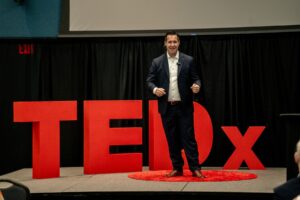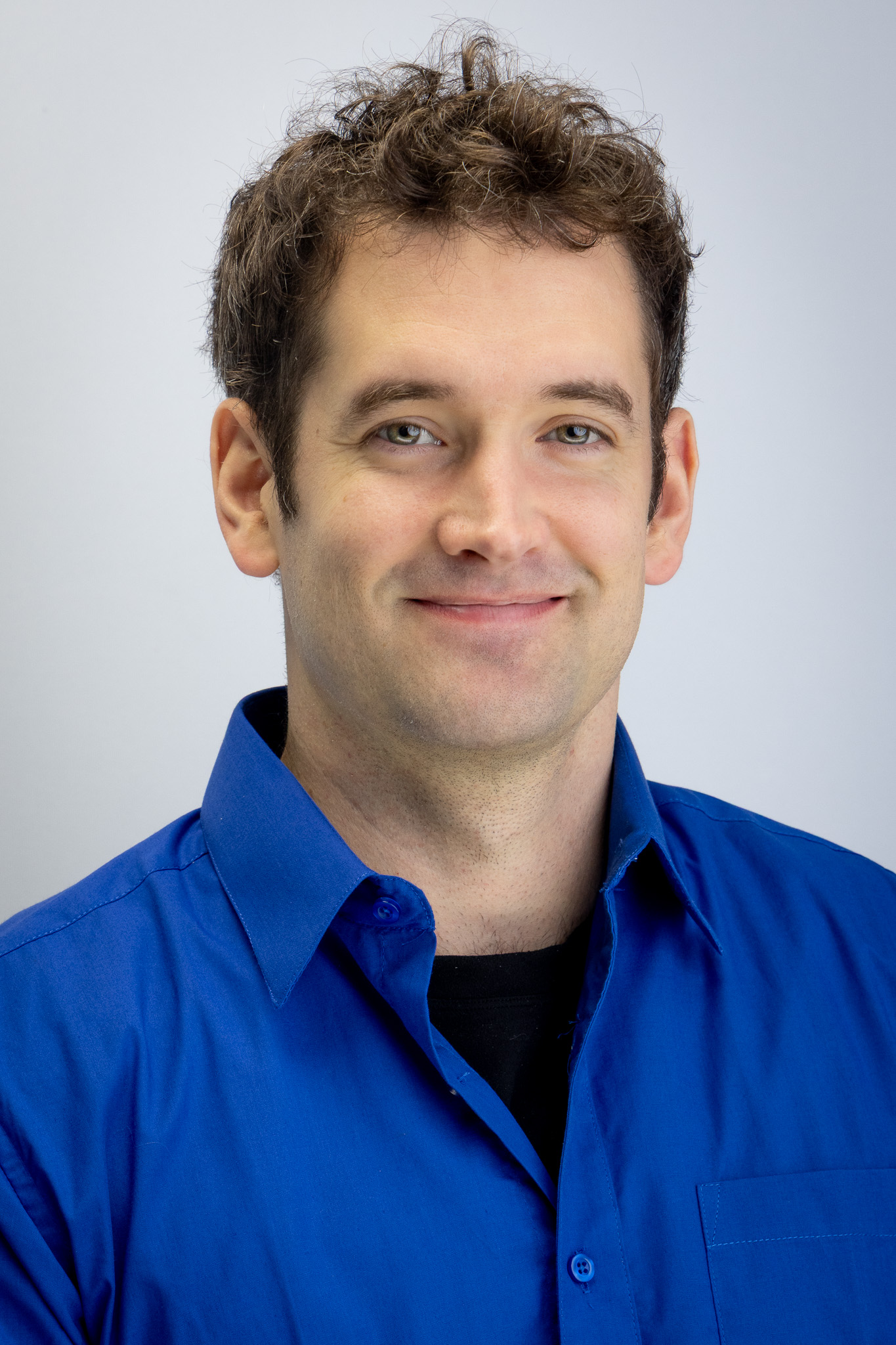
Dr. John Cambridge stands in a room filled with terrariums, each one housing a different species of arthropod: butterflies, beetles, spiders, the kind of creatures most people swat away or step around on sidewalks. But to Cambridge, they’re the building blocks of a mission that’s bigger than any single insect or arachnid. They’re teaching tools and he’s convinced they can change how an entire generation understands the natural world.
“Teaching our children about the diversity of life and the importance of our natural world is my mission in life,” Cambridge says. “I’m happy to accept a few bumps and bruises along the way if that’s what it takes.”
Cambridge, who earned his Ph.D. in Entomology from Rutgers University in 2016, has spent nearly a decade building businesses around live-animal education. His latest project, Village Edu, a nonprofit zoo and educational initiative based in Bethesda, Maryland, represents something different. Not a museum with turnstiles and gift shops, not a zoo where families wander past enclosures on Saturday afternoons. Village Edu brings arthropod education directly into school classrooms, public parks and other venues across the DC area.
The model is unconventional. The organization functions as a training hub where staff learn to conduct live-animal presentations before heading out into the community.
“Leading a non-profit is a marathon, not a sprint,” he says. “At Village Edu, I make sure we are working to provide the highest quality, ethical lessons that will serve the needs of the community not just today and tomorrow, but for years to come.”
The choice to launch in Bethesda wasn’t arbitrary. John Cambridge describes the community as vibrant, education-focused, and positioned just outside the nation’s capital. If change is going to happen, he believes it should start there. The area has historically prioritized children’s education, and the organization plans to expand its reach across multiple communities once the model proves successful.
But launching any new facility comes with challenges; permits, licenses, and the bureaucratic infrastructure required to house and transport educational animals.
Building a Team That Lasts
Cambridge sees ethical leadership as a balancing act: Mission, team, community. At Village Edu, that means prioritizing sustainable practices over short-term wins. He’s adamant that burning out staff to hit immediate goals isn’t worth it. The organization employs a young team and Cambridge sees his role as preparing them for careers beyond Village Edu.
“I’ve always believed that a good manager looks after not just the work of their employees, but after their best interests as well,” he says. “Many of the people who work at Village Edu are still in their 20’s, and that means they have a bright and exciting future ahead of them.”
The approach creates what Cambridge describes as a properly supportive professional environment. One where staff members feel invested in the mission and empowered to do their best work.
“We want to make sure that the work they do with us will help propel them forward and be something they can always look back on and be proud of,” he says. “If we achieve that, most of the other important things just fall into place.”
Cambridge’s focus on sustainable leadership stems from experience. After founding more than half a dozen businesses since earning his doctorate, he’s learned what works and what doesn’t. The burnout model doesn’t produce lasting results, the marathon approach does.
Making College Concepts Click for Kids
The challenge of making complex science accessible without dumbing it down is one Cambridge relishes. Village Edu’s approach hinges on what he calls the organization’s “secret sauce.” Taking college and graduate-level concepts and making them comprehensible to elementary students. Not by oversimplifying, but by reframing.
“The secret sauce that we use at Village Edu is to distill college and graduate level concepts down for elementary kids to understand,” Cambridge says. “And they can absolutely grasp the material we give them.”
He believes the education system has failed children by assuming they can’t handle sophisticated material.
“I think in many ways, our public education system has forgotten just how smart kids really are,” he says. “Humans are incredible. Anyone who spends time in the classroom knows just how amazing little kids are at learning things. They are so curious.”
Village Edu’s lessons are designed to harness that innate curiosity and channel it toward genuine scientific understanding. The curriculum introduces technical terminology without apology.
“We teach students how to tell if a pollinator is nectar feeding vs pollen feeding and why the distinction is important,” he says. “We teach them how to predict which pollinators will be present in a given area by looking at the types of flowers.”
The curriculum spans nesting behaviors, overwintering sites, and the difference between specialist and generalist bee species.
“From nesting to overwintering sites, from oligolectic to broadly polylectic bee species, the students in our classes learn it all,” he says. “We love hearing the responses from the parents who need to pull out their cellphones at dinner to look up the new words their kids learned earlier that day in school.”
Turning Students Into Conservation Scientists
Wildlife monitoring is difficult, labor-intensive work but Cambridge argues it’s essential, and he sees young students as potential contributors to that effort. Village Edu’s programming is designed to build long-term science literacy across the Mid-Atlantic region, equipping students with skills they can use throughout their lives.
“Monitoring wildlife is hard but it’s super important work,” he says. “Our new Pollinator Patch series teaches students how to recognize, monitor, and assess the health of the pollinator community around their community.”
The focus on pollinators isn’t accidental. These species serve as indicators of ecosystem health. John Cambridge Insectarium envisions a future where students who went through Village Edu programs continue to engage with biodiversity issues as adults.
But advocacy requires more than awareness, it requires actionable knowledge. Students learn how to conduct pollinator surveys, identify critical habitats, and assess whether a given area supports healthy populations.
“It’s great if a child can tell the difference between a bumblebee and a butterfly, but that’s not really enough in our opinion,” Cambridge says. “What are they supposed to do with that information when they leave the classroom? At Village Edu, we believe that education should be actionable.”
The emphasis on actionable education sets Village Edu apart from traditional science programs. It teaches students how to contribute to conservation efforts in tangible ways. How to make a difference in their own neighborhoods. Cambridge sees this as essential to addressing biodiversity loss, with solutions starting locally.
“Science education is tricky stuff these days,” Cambridge says. “Some people really want to just stick their head in the sand and pretend the world is just as healthy as it was 500 years ago. I’m sorry but that’s simply not true.”
What Happens When Parents Trust You With Their Kids
Parents entrust Village Edu with their children, and Cambridge treats that trust as sacred. Education, in his view, must be actionable.
“There is an inherent endowment of trust whenever someone allows you to teach their children,” he says. “Parents have learned to trust that we will do our level best to educate their kids not just about the subject matter, not just about the importance and relevance of the subject matter, but also about how to use their newfound knowledge in a responsible way.”
John Cambridge is focused on what comes next; Village Edu’s first lessons, the organization’s growing team and the potential to redefine arthropod education on a national scale.
“I’m an optimist by nature,” he says. “I’ve always been that way and to be perfectly honest, I couldn’t be more excited to show everyone the great new lessons Village Edu staff have been working on.”
Looking ahead five to 10 years, Cambridge’s goals are straightforward. Village Edu will redefine arthropod education, raise the academic bar as high as possible.
“Village Edu will redefine what it means to teach students about the importance of arthropods,” Cambridge says. “Our lessons are more fun, more informative, and more relevant than anything else that exists right now. We’re going to keep pushing the envelope when it comes to developing these kinds of lessons and we’re going to set the academic bar as high as we can reach”
The organization’s model allows for scaling. By training staff to deliver lessons offsite, Village Edu can reach more students than a traditional zoo or museum ever could. The lessons come to the students, wherever they are, be it schools, parks or community centers.
The next few months will be critical. Village Edu’s first lessons are scheduled for fall. The team is in place, the curriculum is ready. Everything is converging toward that first day when a Village Edu instructor walks into a classroom, opens a terrarium, and introduces a group of elementary students to the world of arthropods.
For Cambridge, that moment can’t come soon enough.