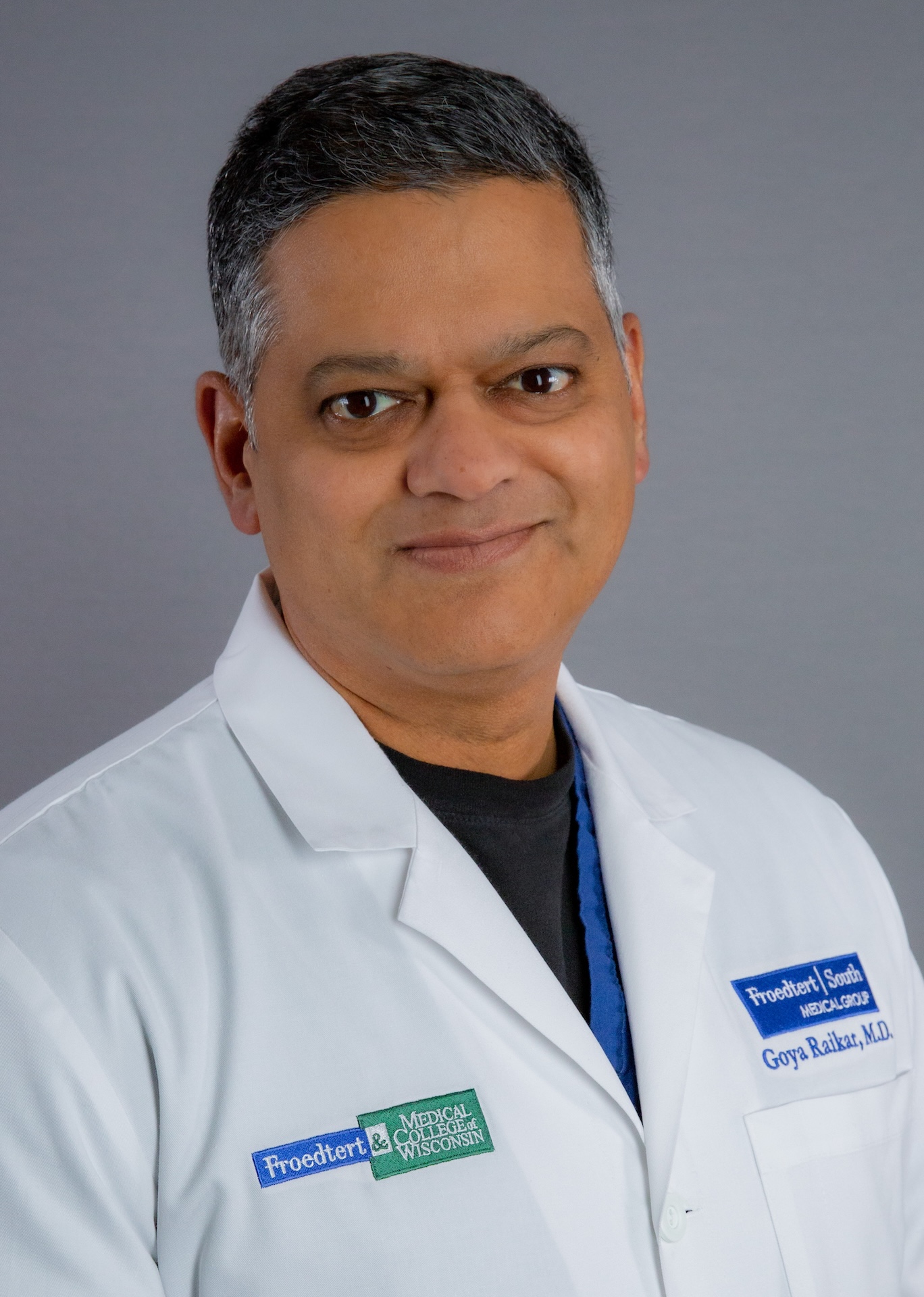
Dr. Goya Raikar serves as Chief Cardiac Surgeon at Froedtert South, where he leads a growing robotic mitral valve repair program at Community Memorial Hospital. With more than two decades of experience in complex cardiac surgery, he has focused his career on advancing minimally invasive techniques that improve patient outcomes while preserving safety and consistency.
He is a key player in the expansion of access to robotic cardiac procedures for patients in and around the Froedtert south area. His clinical leadership demonstrates technical skills and dedication to patient care beyond just performing operations on them.
According to his professional biography, Dr. Goya V. Raikar, MD, FACS, FCCP is board certified in general and thoracic surgery and has performed the first robotic assisted mitral valve repair in the Minneapolis Saint Paul region. Today, he continues to refine robotic approaches while mentoring surgical teams and collaborating nationally.
Leadership at Froedtert South
“It is always about the patient and knowing that we serve the patients and families well,” he explained when asked about the most rewarding part of his work at Froedtert South. He noted that gratitude from patients and families after surgery remains one of the most meaningful aspects of his practice.
He also points to the strength of the institution itself. When asked what distinguishes Froedtert South in heart care, he cited “the team and the people” and the expertise present both inside and outside the operating room. That team based culture underpins the robotic mitral valve repair program he leads at Community Memorial Hospital.
Building a Robotic Mitral Valve Repair Program
Mitral valve regurgitation occurs when the valve between the left atrium and left ventricle does not close properly. Severe cases can lead to heart failure if untreated. Traditionally, repair required a large incision through the sternum. Robotic surgery offers a different path.
At Community Memorial Hospital, Dr. Raikar directs a program focused on robotic mitral valve repair for patients with severe mitral regurgitation. He explained that anyone with severe mitral regurgitation is a strong candidate for robotic repair. Careful evaluation ensures that the approach matches the patient’s anatomy and overall health.
Robotic techniques use small incisions and specialized instruments controlled by the surgeon from a console. The system allows for enhanced visualization and precise movements within confined spaces of the chest. Research published by institutions such as the Mayo Clinic has shown that minimally invasive valve surgery can reduce hospital stays and speed recovery when compared with traditional open procedures.
Dr. Raikar has seen those benefits firsthand. Patients often experience shorter hospital stays, less postoperative pain, and faster returns to daily activity. The smaller incisions also reduce visible scarring, an important consideration for many individuals.
He recalled a patient from more than a decade ago whose case remains vivid. The patient, the spouse of a physician, came seeking mitral valve repair. Upon learning that the procedure could be performed robotically, she expressed visible relief. The surgery proceeded successfully, and the patient recovered well. For him, the experience underscored the value of offering less invasive options when appropriate.
Precision Without Compromise
Despite the excitement surrounding robotic surgery, Dr. Raikar maintains a measured approach. He is clear that safety remains paramount.
“We do not experiment with patients,” he said when asked how he balances new techniques with surgical consistency. He emphasized that advances are developed and refined over five to ten years before clinical adoption. That deliberate process ensures that technology enhances care rather than replacing sound surgical judgment.
His preparation before surgery reflects the same discipline. He and his team review each step the day prior to a complex case. Personally, he takes a moment at the scrub sink to calm his mind and visualize the procedure ahead. That ritual, he noted, helps maintain focus during long and demanding operations.
Robotic tools provide the exactness and accuracy to allow for that preparation to be done. The increase in dexterity and enlarged 3D view allows for the careful repair of delicate structures such as valves. To the patient, this precision means long-lasting, well-made repairs with fewer problems created by the repairs.
Looking ahead, he anticipates rapid growth in robotic cardiac surgery. He stated that heart surgery is “about to see an explosion in the usage of robotic techniques in the next three to five years”. He also pointed to the development of robotic instruments for coronary artery bypass grafting, which could eventually make certain procedures outpatient.
Collaboration Beyond the Operating Room
Cardiac surgery does not occur in isolation. Complex cases often require input from multiple specialties. Dr. Raikar collaborates with colleagues through national and international societies, frequently sharing knowledge through virtual platforms. That exchange of techniques and data helps refine best practices and maintain consistent standards across institutions.
His broader leadership record supports this collaborative mindset. His biography notes service on the editorial board of The Heart Surgery Forum and past presidency of the Minnesota Society of Thoracic Surgery. He has also served as principal investigator on clinical trials related to valve replacement, heart failure, and arrhythmia.
Such roles reflect a commitment not only to performing surgery, but to shaping how cardiac care evolves nationally. Training at the Mayo Clinic and the University of Wisconsin Hospital further anchors his technical foundation. Experience across academic and regional health systems has provided perspective on how to implement advanced programs responsibly.
The Role of Patient Education
Technology alone does not determine surgical success. Patient understanding plays a critical role.
“It goes hand in hand,” he said regarding education and outcomes. He explained that the more knowledge patients have about their upcoming surgery and hospital stay, the more successful the process becomes. His goal is to eliminate surprises for patients and families before the procedure takes place.
The careful attention to preparing the patient means that this same emphasis on preparation continues through both pre-operative and post-operative care. Providing a patient with detailed information about what risks, benefits, and recovery timelines there are will provide them with the necessary information to make informed decisions. With robotic mitral valve repair, education also plays a critical role in correcting any misinformation about what robotic surgery is and how it is performed.
A patient will not have surgery performed by a robotic machine on its own. The surgeon is in full control of the surgical procedure the entire time, guiding every single movement of the robotic instruments. By providing this information, the surgeon is establishing rapport with the patient and relieving their anxiety regarding having surgery performed by a robot.
A Patient Centered Surgical Philosophy
Patient service has always been the primary focus of Dr. Goya Raikar throughout his career. He runs a successful advanced robotic program but primarily defines success in terms of the people he serves.
He shares that he continues to derive incredible joy and fulfillment from the gratitude shown by patients who have undergone surgery and are recovering as a result of their heart surgery. For those patients and their families who are dealing with heart surgery’s inherent uncertainty, having access to minimally invasive techniques can provide reassurance throughout the somewhat arduous process.
Technical leadership through his experience in performing the first robotic assisted mitral valve repair within a large metropolitan area is evidenced by his comments of great humility and the fact that he continues to focus on the core fundamentals of care which include careful preparation, clear communication, and team-based practice.
He anticipates that as the technique associated with robotic assisted cardiac surgery continues to evolve, robotic cardiac surgical techniques will also be available to more patients, and therefore will qualify for less invasive surgical procedures. With proper training and structured implementation, facilities such as Community Memorial Hospital and the use of robotic surgery may become more prevalent throughout the United States.
Looking Ahead in Robotic Heart Care
Advanced cardiac surgery is headed toward wider utilization of robotic equipment, more outpatient alternatives, and even further emphasis on patient safety. The pathway for Dr. Goya Raikar will continue to be based on disciplined practice and patient trust. As the robotic mitral valve repair program at Froedtert South demonstrates, advanced technologies can be integrated safely into the regional hospital environment under the direction of a single clinician collaborating nationally with other providers through rigorous training and open communication so that patients with severe mitral regurgitation and require surgical intervention are treated effectively.
As robotic technology develops and more clinical evidence emerges, Dr. Raikar’s focus on patient and family-centered care, thorough preparation and new techniques will remain unchanged.
Using this foundation, robotic precision is not an end itself but rather is an instrument that will promote long-term repair and recovery.