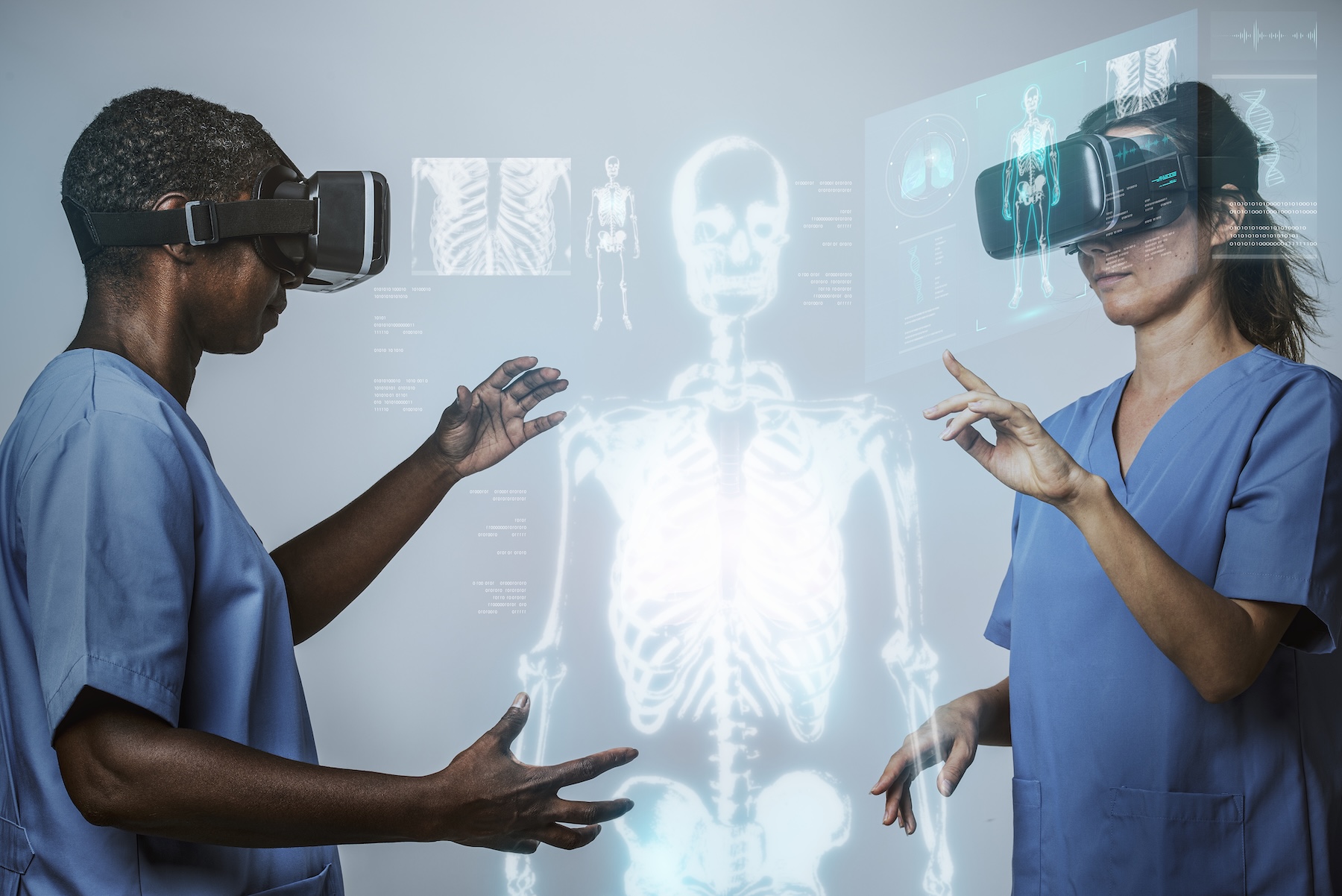
Each week, the New England Journal of Medicine challenges doctors’ medical diagnostic skills with complicated clinical cases drawn from hospital records across the country. The Case Challenges give readers the patient’s medical history, details of the examination, and other pertinent facts, even providing X-ray and CT images when pertinent.
In 2025, Microsoft used the Journal’s Case Challenges to assess whether artificial intelligence could compete with doctors in medical diagnostics. In short, AI won by a huge margin. Whereas human doctors correctly diagnosed 20 percent of the time, AI succeeded 85 percent of the time.
Some may conclude that the Microsoft study indicates it’s time for patients to pocket their copay and start using AI to diagnose their rash or tell them what is behind their persistent headache. But experts feel the course forward for using AI in medical diagnosis is not that simple.
“Have we reached a point where we should be using AI tools exclusively to self-diagnose a condition? No. But can we use them as a resource in the same way you would a doctor for medical diagnoses? Yes,” says Jared Navarre, Founder of Keyni Consulting and CEO of Onnix. “We’ve entered an age where we should not treat doctors as the end-all, be-all. Now that we have immense resources at our fingertips, let’s use them all.”
Navarre is a systems strategist and operational architect who has guided over 250 organizations through moments of rapid change. He is known for solving high-stakes, complex problems across healthcare, technology, infrastructure, and public-sector operations. With verified top-0.001% WAIS-IV intelligence scores — a clinical measure placing him among the highest-scoring adults ever evaluated — Navarre blends high-cognition modeling with pragmatic execution in his advisory work for Fortune-level enterprises and global institutions. In addition to leading Keyni Consulting and Onnix, he also serves as chairman of the humanitarian NGOs IN-Fire and Project AK-47.
“Patients who use critical thinking skills to analyze the information they get can absolutely leverage AI to help diagnose and identify what is happening with them,” says Navarre. “Using ChatGPT or other AI tools to tap into that kind of information is like using WebMD on steroids. Patients who are relentless in pursuing all the info AI can provide — and I would encourage consulting multiple AI sources, not just one — will find great value in the technology. At the end of the day, the most important thing is to ensure you aren’t making rash decisions based on any single source, which includes AI.”
Will patients soon be visiting doctorless clinics for diagnoses by AI bots?
AI’s success in medical diagnostics shouldn’t come as a surprise. Provided the large language models that support the platforms are trained on the right medical knowledge, they should be able to analyze data, make connections, and deliver better diagnostic results than humans.
But the accuracy of diagnosis is just one step in the journey to optimal health. While a doctorless clinic offering more accurate diagnoses delivered by AI-powered “auto docs” can only provide data, it can’t offer the people skills that most patients rely on to move forward once diagnostic tests have been completed and analyzed.
“Even if an AI model can be developed to the point where it achieves 100% success in diagnosing and providing the exact outcome every patient needs, the job isn’t done,” Navarre points out. “Unless we’re going to eliminate their autonomy, the patients themselves still get to make the final decision. And they often lean on the humans to help them process a diagnosis and provide decision support. At this point, AI can’t bridge that gap as well as humans can.”
Navarre points to people skills like empathy, understanding social cues, and dynamically reading body language as essentials for delivering diagnoses and guiding patients toward what might be best for them. And recent research shows that patients share these sentiments. While many are becoming more comfortable with AI technologies assisting with diagnoses, patients still want to be cared for by their doctor.
Healthcare providers must find a balance between AI and doctor skills
Healthcare providers must leverage the power AI brings to the diagnostic process. But they can’t remove doctors from the realm of patient care either. At this point, the challenge is finding a balance that maximizes results while achieving acceptance from both doctors and patients.
“We need to envision a future in which we bring together AI algorithms and physicians’ skills in an efficient way,” Navarre says. “Everyone will benefit from the incredible synergy that will emerge when experienced doctors who have deep experience and are good analytical thinkers can help their patients really leverage AI as a diagnostic aid. When we get to a point where we are looking beyond improving the accuracy to improving the outcome, we will have made true progress.”