CloudKitchens solved a problem that had stalled Demetrius Walker for months. He’d perfected a vegan pizza recipe for his son, but opening a traditional restaurant was too expensive and would take over a year. The entrepreneur needed a kitchen, not a dining room.
“Once I realized I wanted to open a pizza place, I looked at a variety of options,” Walker says. “Starting a brick-and-mortar location from scratch was simply unaffordable and would take up to a year to get opened. I was eager to get started sooner.”
Walker found his answer in the company’s commercial kitchen space designed specifically for delivery and takeout operations. Within weeks, he launched Meek’s Vegan Pizza in 2021. The business now generates roughly $30,000 in monthly sales and has attracted partnership interest from Chicago, Dallas and Austin.
Cloud Kitchens represents a growing segment of the food service industry built around what operators call ghost kitchens. These facilities eliminate dining rooms, parking lots and front-of-house staff. Instead, they offer licensed commercial kitchen spaces in densely populated areas optimized for delivery orders.
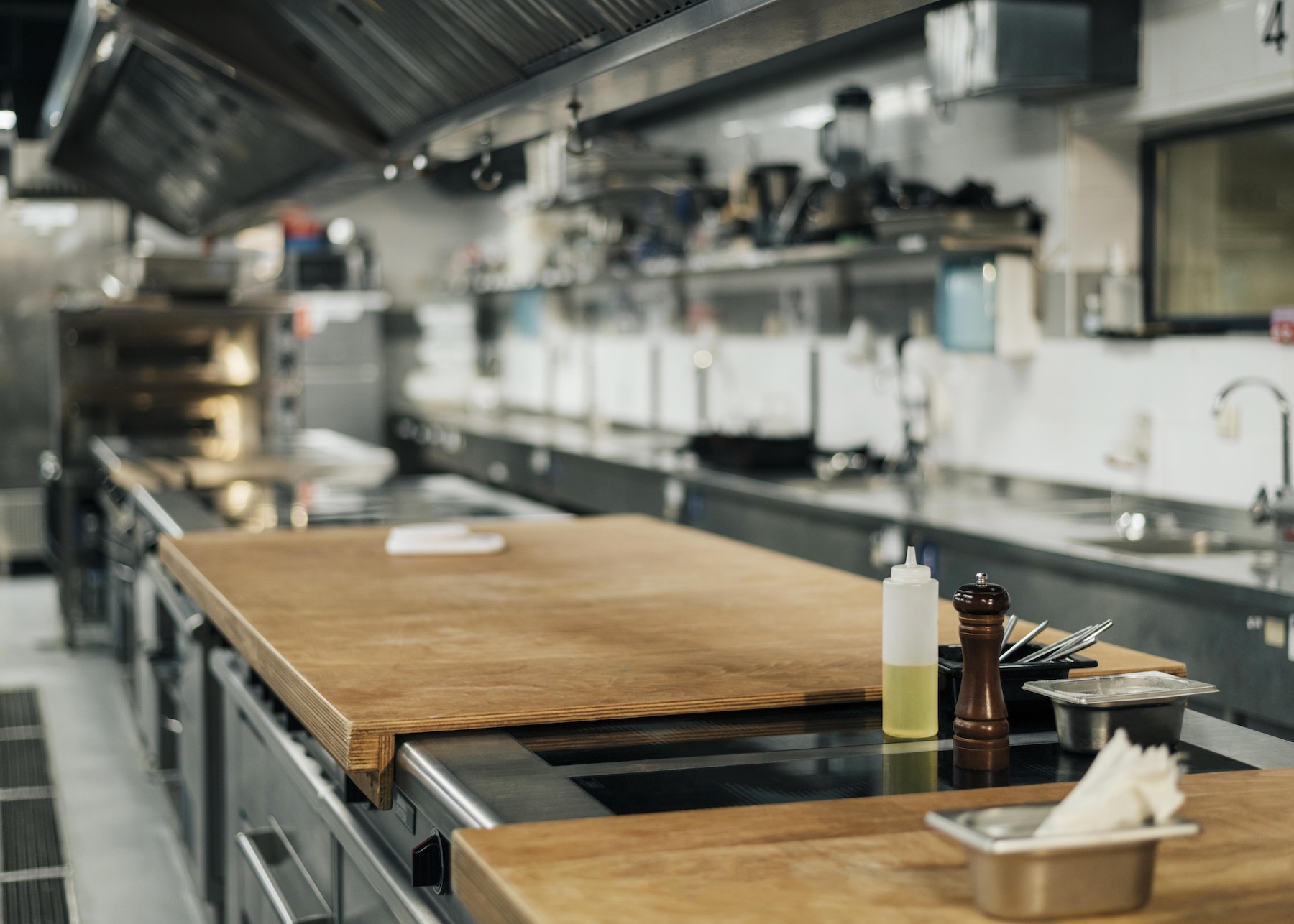
The company operates 41 facilities across six major metropolitan areas, including 14 locations in Los Angeles, 10 in the Bay Area, seven in New York, four each in Dallas and Chicago, and two in Miami. Each facility contains multiple private kitchen units equipped with commercial-grade appliances, ventilation systems, loading docks and on-site support staff.
The facilities provide private kitchen spaces ranging from small prep areas to larger production units. Each comes with standard commercial equipment, including grills, fryers, refrigerators, freezers, and prep tables. CloudKitchens handles permits, health inspections, cleaning, maintenance and security.
The company also provides what it calls fulfillment support. On-site staff coordinate with delivery drivers, handle order pickups and manage logistics. Operators focus on food preparation while CloudKitchens manages the handoff process.
CloudKitchens Builds Multiple Brands From One Kitchen
The economics of shared kitchen space create an unusual advantage. While Walker focused on perfecting one concept, other operators saw potential for something different: running several restaurant brands simultaneously from a single location.
Niko Lambrou understood restaurant hours intimately. He grew up working in his family’s business, eventually managing a 24-hour downtown Atlanta diner. The work consumed 50 to 80 hours weekly: convention crowds, late-night party traffic, front-of-house drama, back-of-house chaos, the grind left little room for anything else.
When Lambrou discovered CloudKitchens during the pandemic, he ran the numbers and saw an opportunity. He launched Larry’s Late Night Eats, focusing on wings, cheesesteaks and burgers for the after-hours crowd.
Then he kept going. From the same kitchen, Lambrou added Cheesesteak City, then Hell Yeah Hamburgers. Three separate brands, three different menus, one physical location.
“After about a year or so at CloudKitchens and once all the pieces of the puzzle and systems were in place, I was able to step away little by little,” Lambrou says. “Now, on a good week, I’ll work 10 to 15 hours max.”
The multi-brand approach represents a key revenue strategy for ghost kitchen operators. A single kitchen can produce food for several different virtual restaurant concepts simultaneously. Each brand maintains separate menus and online presences while sharing the same cooking equipment and staff.
This model allows operators to test new concepts without additional real estate costs. A pizza kitchen might add a wing concept during slow periods. A burger operation could launch a breakfast brand using the same grills and fryers.
CloudKitchens reviews from operators indicate that revenue diversification helps smooth out demand fluctuations. When one brand experiences a slow day, others may compensate.
How Commercial Kitchens Handle Catering and Meal Prep
Beyond delivery orders and multi-brand strategies, ghost kitchens are proving adaptable for another revenue stream that traditional restaurants have long dominated: catering and large-scale food preparation.
Naimi Germay Abbe initially took the food truck route. She started renovating one to launch Street Injera, her Eritrean cuisine concept. The project consumed half her budget and dragged on longer than expected.
“Eventually, I realized I didn’t have the time or the patience to keep going down that road,” Abbe says.
She switched to CloudKitchens three years ago. Street Injera now operates out of a Nashville facility, focusing on authentic East African dishes centered around injera, the traditional Ethiopian and Eritrean flatbread.
The business has evolved beyond single-meal delivery orders. Catering now accounts for roughly 50 percent of total sales. Abbe also developed a line of meal-prep kits that customers can finish at home.
“When I discovered CloudKitchens, I immediately thought, ‘this is genius,’” Abbe says. “The concept you guys have is truly amazing.”
Street Injera has won People’s Choice awards at multiple Nashville food festivals, including Taste of Titans, where more than 1,000 attendees voted. The business maintains a 4.9-star Google rating, attracting both locals and tourists searching for East African cuisine.
The catering business requires a different infrastructure than delivery orders. CloudKitchens facilities include loading docks for pickup, high-capacity storage for bulk ingredients and break rooms for staff during event prep. The spaces accommodate both small-batch delivery production and large-scale catering operations.
“The work I put in is paying off,” Abbe says. “I didn’t rush growth. My brother always tells me slow growth is much better than fast growth, and in three years, I’ve seen how I’m growing steadily.”
Her experience illustrates how ghost kitchens function beyond their initial delivery-focused design. The infrastructure supporting quick-turnaround takeout orders also works for event catering, meal prep businesses and food entrepreneurs testing products before retail distribution.
The Economics of Ghost Kitchen Operations
These varied success stories share common financial fundamentals that differ sharply from traditional restaurant models.
Traditional restaurant economics revolve around maximizing revenue per square foot in dining rooms. Ghost kitchens flip that model. Without dining areas, operators pay only for production space, no servers, no hosts, no front-of-house managers.
CloudKitchens requires operators to have business licenses, food service permits from local health departments and proper zoning approvals. The company assists with navigating permitting and inspection processes. Most safety and health inspections are already complete when operators move in.
Facilities include utilities built into licensing agreements: gas points, power outlets, high-power lighting, cold and hot water lines, gas and fire safety systems, WiFi and Ethernet connections. CloudKitchens handles grease trap cleaning, hood and flue maintenance, and pest control.
Staffing requirements typically run between three and five back-of-house employees to handle cooking and prep work. Compare that to full-service restaurants, which need cooks, dishwashers, servers, hosts and managers.
Walker’s Meek’s Vegan Pizza has attracted attention from Shark Tank’s Daymond John, the NAACP and Pepsi during Black Entrepreneurs Day at New York’s Apollo Theater. The RZA from Wu-Tang Clan, Bloomberg and the Houston Chronicle have covered the business.
“What makes me most proud about my business are the calls, texts, emails and direct messages I receive from parents and customers who tell me my food has assisted in their transition to a plant-based life,” Walker says. “In my community, far too many people succumb to heart disease, hypertension and diabetes. Being able to provide cholesterol-free food that helps to limit those outcomes is most fulfilling to me.”
Walker credits CloudKitchens with enabling rapid expansion possibilities. The company’s nationwide footprint allows operators to launch in multiple cities without managing separate real estate deals in each market.
What Operators Say About Working With CloudKitchens
Speed to market emerges as the consistent theme when operators discuss their experiences, but CloudKitchens reviews also reveal that success requires more than just fast access to kitchen space.
Lambrou notes the contrast with his previous experience managing a full-service establishment. “I would recommend it to those who have solid experience in the restaurant industry, a good head for business, and a plan for the worst but hope for the best philosophy,” Lambrou says.
The model suits specific operator profiles better than others. Established restaurant chains use ghost kitchens to test new markets without committing to full buildouts. Food truck operators gain weather-independent production facilities. Catering companies secure licensed commercial kitchen space without leasing entire buildings.
Abbe emphasizes the flexibility that Cloud Kitchens provided for building her business at a sustainable pace.
“CloudKitchens gave me the freedom to scale at my own pace,” Abbe says. “It’s been an incredible platform to grow my business.”
The company’s dashboard provides operators with sales data, order volume tracking and performance metrics across locations and brands. The single-tablet ordering system eliminates the need to manually enter orders into separate point-of-sale systems.
The ghost kitchen sector continues evolving as delivery orders become a larger share of restaurant sales. Cloud Kitchens positions itself as infrastructure for that shift, providing the commercial kitchen space and support systems that delivery-focused operators need without the overhead that dine-in service requires.
Whether the model works depends largely on execution. Operators still need strong recipes, efficient operations and effective marketing, but for entrepreneurs who can deliver on those fundamentals, commercial kitchens offer a faster, less capital-intensive path to market than traditional restaurants provide.