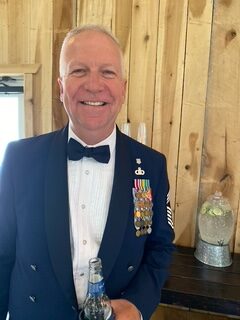
Across the generations of military professionals, leaders are found who have influenced those past their normal duties; these types of leaders inspire, mentor, and provide guidance to others to achieve excellence through their example. One example of a military leader who provides to the world and is dedicated to his profession and country is Chief Master Sergeant William Moore.
Chief Moore is a highly successful safety expert in the military and is a veteran. For the past nearly four decades, Chief Moore has been an instrumental figure in service to his country, advancement of military Operations, and helping develop individuals of the Military, Federal, and Private sectors. He bases his leadership style on the foundational principles of integrity, empathy, and absolute dedication to the success of those he works with, in this case, his subordinates and fellow members in the Military.
From Service to Leadership
Chief Master Sergeant William Moore’s decision to pursue a life of service began early. “From a young age, I knew that a life in the military was my calling,” he reflects. That passion led to a career spanning almost 38 years, including deployments during three wars.
During that period, Moore has held various critical positions, including that of Command Chief Master Sergeant of the Nevada Air National Guard and as Medical Group Superintendent of both the Tennessee Air National Guard and the Nevada Air National Guard. Under his leadership, he has greatly enhanced the operational readiness of both organizations while transforming their organizational performance.
Within the Tennessee Air National Guard, Moore created an interdisciplinary team consisting of 73 members, by increasing Medical Readiness from 0% to 80% in eight months and raising unit performance into the top five out of 89 units in the U.S. Moore’s concept of leadership is based upon clear communication, accountability, and a commitment to mission success.
Values That Define Leadership
For Moore, leadership begins and ends with integrity. “Honesty and integrity are the cornerstones of both my personal and professional life,” he says. In his career, he has shown that real leadership comes not from telling others what to do, but rather by being an example of how to be a good leader.
He built that trust by being open and honest; following through on what he says, and treating each employee with respect. His efforts make him a true leader, both in the industry and within his company.
He emphasizes the importance of doing the right thing—even when it’s difficult. “There will be moments when doing the right thing feels unpopular or risky, but staying true to your principles is what defines your character.” This commitment to moral courage has shaped not only his leadership style but also his ability to mentor others, teaching younger service members to lead with authenticity and self-awareness.
The Human Side of Leadership
Chief Master Sergeant William Moore’s most defining moments were not measured by medals or missions, but by his ability to make a personal difference. “Some of the most impactful moments weren’t on the battlefield,” he recalls, “but in the times I was able to help Airmen in crisis.” His willingness to be present for others—whether during moments of personal struggle or professional uncertainty—underscores his belief that leadership is ultimately about people.
Moore’s greatest experience was being able to be there for an Airman who was in a time of need. By showing this Airman compassion, helping him through a difficult time with guidance, and being able to show him the true value and meaning of his life, this Airman would go on to rebuild his own life and help other Veterans. Through stories such as this, we can clearly see that Moore’s Philosophy is that Leadership involves both Compassion for others as well as Commanding others.
Leadership in Action: Strategy and Decision-Making
According to Moore, “Leadership is not something you acquire or achieve, but rather is something you do every day.” Moore’s methods for making decisions exemplify Moore’s philosophy on leadership. As such, before making any decision, he actively listens to and considers every person’s point of view to arrive at a sound and balanced decision.
“Listening is essential to create clarity and discover the information you need to know,” Moore explains. Once he has made a decision, he fully supports it regardless of its outcome, viewing both successes and failures as growth opportunities.
He additionally uses a variety of established, proven processes, such as Lean and Six Sigma Black Belt principles, in his leadership to help create better processes and increase operational efficiency. For example, Moore uses his expertise in analysing data to help him run dispatch operations for American Ready Mix and also to help him develop leadership training for Teichert Materials. As such, he can take an analytical approach to everything he does, while at the same time taking the human element into account.
Empowering and Developing Others
According to Chief Master Sergeant William Moore, “developing leaders” is one of the most significant responsibilities of a leader. He believes that a key way to grow as a profession is to allocate the necessary time for people to develop. This philosophy of empowerment has allowed him to be successful in leading aircrew safety teams and mentoring others in the private sector through the use of effective delegation, promoting self-management, and providing guidance to those he leads.
The “50/50 rule” of alternating between listening and speaking in professional relationships has been a strong point of emphasis for him, as working to create a relationship based upon respect and shared understanding means a more successful working partnership. Through his collaborative and empathetic way of thinking, he has created a thriving team that works well together, even under pressure.
Innovation and Continuous Improvement
Moore considers innovation as a vital part of his professional approach. He believes that technology is not a disruptor but serves as a tool to create opportunities for growth. Moore promotes the use of AI and digital operation boards to increase levels of transparency and accountability and enable teams to make data-driven decisions. Moore’s forward-thinking approach to managing organisational change results in his teams effectively transitioning to and executing their next phase of growth. “Change is not an obstacle,” says Moore, “It is a tool that will help you lead,” reflecting how he is able to effectively lead and adapt to the rapidly evolving environment.
As part of his commitment to developing leaders beyond Moore’s long-standing commitment of educating, he continues to share his expertise and engage multiple people within the organisation. Moore is part of a team working on developing the Leadership 101 course for Teichert Materials and reinforces the concept that the best leaders are still evolving, and providing support and growth for others will create the most opportunity for continued development.
A Broader Impact Beyond the Workplace
In addition to his success as a professional Chief Master Sergeant, Chief Master Sergeant William Moore is an active volunteer in the community. He volunteers at the Northern Nevada Veterans Home by providing meals to veterans and interacting with other veteran service members. Chief Master Sergeant Moore has also assisted other veterans with the complex process of filing VA disability claims and ensuring they receive the care and recognition they deserve through his efforts to advocate for veterans. Chief Master Sergeant Moore has devoted himself to serving his community throughout his life, exemplifying a commitment to service, compassion, and integrity.
Defining Success and Legacy
Moore defines “success” by one’s “purpose,” not one’s social status or wealth. “Success is not how much you have or what your title says,” Moore said. “It is being happy with where you are and what you are doing; making a positive contribution to something bigger than yourself; remaining true to your beliefs and values.” His life as a leader has been marked by a focus on excellence through humility and service.
As a veteran being awarded both the Meritorious Service Medal and the outstanding Airman of the Year award for 2011, Chief Master Sergeant William Moore is an example of the type of leader that inspires people to take action and look back on their experiences to learn from them. Moore reminds us that true leadership is not measured by authority but rather the ability to provide hope and direction to people with integrity and conviction.
Moore has spent nearly 40 years in service to our nation and mentoring young men and women. He serves as a model for what can be accomplished when leaders demonstrate integrity, empathy and a firm belief that they can make a difference as individuals.