California and the broader Southwest are in the grip of a deepening water crisis. Decades-old infrastructure built for predictable snowmelt and steady seasonal rains has proven ill-equipped to handle the extreme swings between severe droughts and atmospheric rivers now ushered in by climate change. Surface reservoirs lose billions of gallons each year to evaporation, imported supplies become cost-prohibitive in dry years, and overdrawn aquifers compound scarcity, leaving many rural and high-desert communities with unreliable access to clean, affordable water.
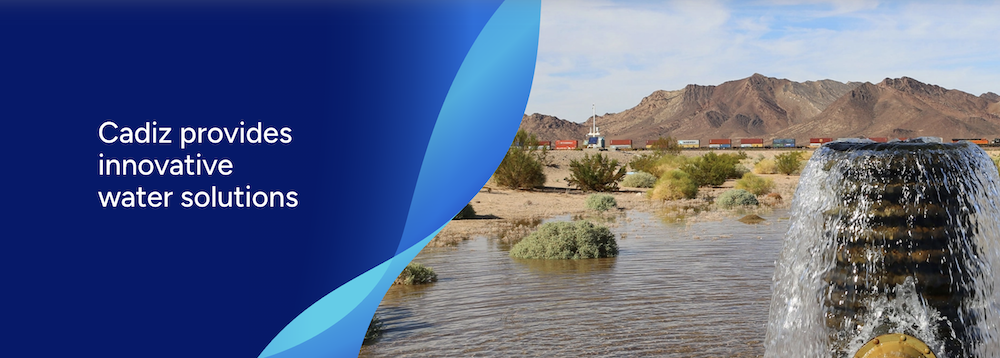
Cadiz, Inc. has responded to this stark reality with its Mojave Groundwater Bank, an underground storage and delivery system sited on a 30,000-acre property in the Mojave Desert. Unlike open-air reservoirs, this approach secures water in naturally recharging aquifers, preserving water for drinking, irrigation, and emergency reserve. With a capacity of one million acre-feet and 30 million acre-feet already stored, the Bank will ensure supply during the driest periods, offering a climate-resilient resource that could serve more than 400,000 people each year.
Central to the project’s design is a collaborative governance model that integrates public agencies and Tribal Nations. Working alongside the Fenner Valley Water Authority, the Fenner Gap Mutual Water Company, and several federally recognized tribes, Cadiz is establishing what may become the largest tribal-led water initiative in U.S. history. This inclusive framework embeds local stakeholders in every phase, from environmental review and permitting through construction, operation, and long-term management, underscoring a commitment to equity and shared stewardship.
Engineering leadership for the Mojave Groundwater Bank has been entrusted to a global firm renowned for its large-scale infrastructure expertise. As part of its strategy to lower environmental impact and accelerate timelines, the project will repurpose over 200 miles of decommissioned oil and gas pipelines to link the Bank with California’s existing water delivery networks. By converting legacy energy conveyance corridors into water arteries, Cadiz reduces both construction costs and permitting hurdles while leveraging proven underground routes.
Communities in the Antelope Valley, Morongo Basin, High Desert and Coachella Valley stand to benefit most. When deliveries commence at the start of 2027, residents and farmers in these regions should see greater reliability and more affordable rates. In an area where every drop counts, the Bank’s underground storage model sidesteps evaporative losses and protects against curtailment risks during prolonged droughts.
The economic ripple effects are significant. Groundbreaking is slated for later this year, with construction expected to create thousands of jobs. Cadiz has pledged to prioritize hiring local labor and military veterans, injecting wages into economies that have few year-round employment options outside agriculture and tourism. Ancillary services, including pipeline maintenance and aquifer monitoring, will generate sustained regional activity beyond the initial build phase.
Framed as more than a commercial endeavor, the Mojave Groundwater Bank embodies a broader vision of water justice in the American West. By structuring the project as a series of public-private partnerships, Cadiz aims to align investor returns with community outcomes, ensuring that profitability dovetails with affordability and environmental stewardship. The Bank unites supply augmentation, storage reserves, conveyance pipelines and treatment assets into a single integrated system, a model that could be replicated in other water-stressed basins around the world.
Nevertheless, the path ahead is complex as all infrastructure projects are. Regulators will require rigorous monitoring to prevent aquifer overdraft, and long-term permits must be secured from state water boards. Engaging multiple tribal governments and local agencies demands a sophisticated governance structure capable of balancing diverse water rights and cultural priorities. Transparent decision-making and robust environmental safeguards will be essential if the project is to maintain community trust and regulatory compliance.
With these challenges met, Cadiz’s Mojave Groundwater Bank promises to redefine groundwater management by transforming subterranean reserves into strategic buffers that mitigate drought impacts and democratize access to clean water. In doing so, it offers a blueprint for resilience that places collaboration, innovation and equity at the core of a sustainable water future for California and the broader Southwest.