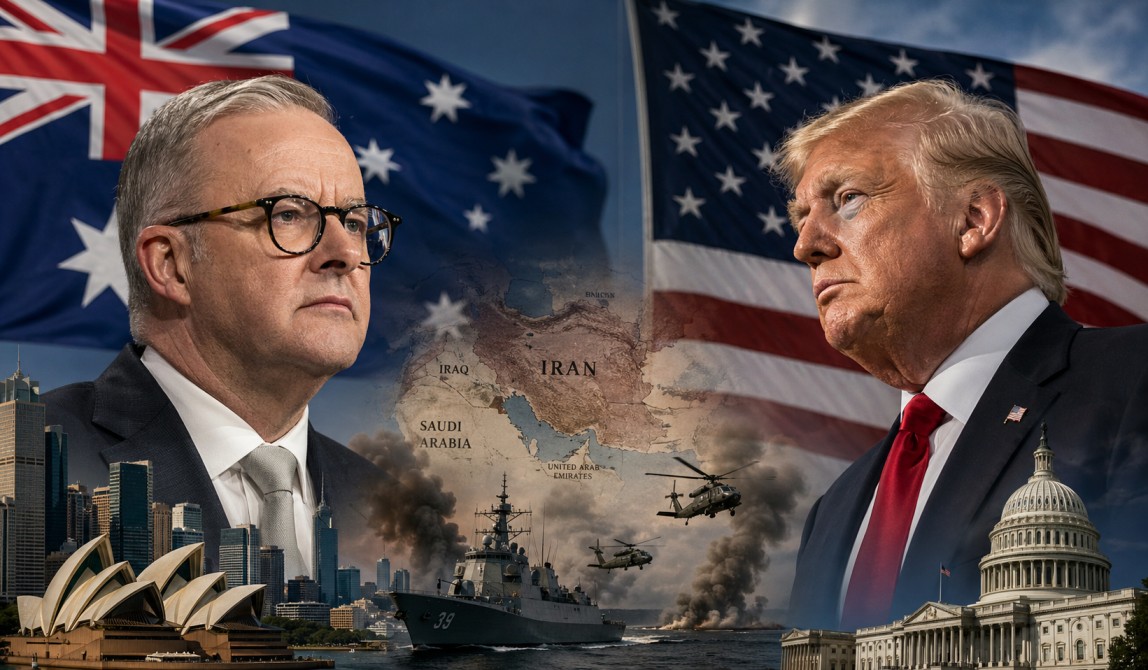
Australia and the United States are facing a complex mix of geopolitical tension, economic pressure, and shifting public sentiment, driven largely by the escalating conflict in the Middle East and its global ripple effects.
Economic pressure building in Australia
Australian households are starting to feel the real impact of global instability. The ongoing conflict involving Iran and the United States is pushing up fuel and supply chain costs, which is flowing directly into everyday expenses.
Spending habits are changing fast. Many households are cutting back on non-essential purchases, delaying healthcare, and relying more on credit for basics. Businesses are struggling to pass on rising costs, while sectors like retail and appliances are seeing weaker demand.
At the same time, economists are warning of stagnation risks, with inflation pressures and slowing growth appearing together in what some describe as early signs of stagflation.
There is also a climate dimension. Forecasts point to a hotter, drier winter across eastern Australia due to a potential El Niño pattern, which could add further strain on agriculture and energy demand.
US politics influencing Australia
In the United States, political tensions are feeding directly into Australia’s domestic debate. Public opinion in Australia has turned sharply against US President Donald Trump, with disapproval now sitting at around two-thirds of the population.
This creates a challenge for Prime Minister Anthony Albanese. Australia remains closely tied to the US for defence and security, yet aligning too closely with an unpopular US leader carries political risk at home.
Recent criticism from Trump about Australia’s role in global conflicts has also put the relationship under strain, with questions raised about how much support Australia should provide in US-led military actions.
The Middle East conflict at the centre
The biggest driver of current tensions is the war involving Iran, the US, and its allies. Australia is already involved at a limited level, including defence personnel in the region, but has stopped short of committing major military assets.
The conflict is affecting global oil supply routes, particularly around the Strait of Hormuz, which is critical for fuel shipments. That’s one reason why fuel prices and economic uncertainty are rising in Australia.
This has sparked debate within Australia about how closely it should follow the US in future conflicts, with some political voices calling for greater independence in defence and foreign policy decisions.
A shifting alliance
The Australia–US alliance remains central to national security, but it’s clearly under pressure. Strategic cooperation continues, especially through defence agreements and shared operations, yet political, economic, and public opinion factors are pulling in different directions.
For now, Australia is trying to balance two competing realities: staying aligned with its most important ally while responding to domestic concerns about cost of living, global instability, and national independence.
Conclusion
What’s happening right now is not a single issue but a convergence of pressures. A global conflict is feeding into economic stress at home, while US politics is influencing Australia’s internal debate.
The next few months will likely be shaped by three things: how the Middle East conflict evolves, whether economic conditions worsen, and how Australia navigates its relationship with the United States without losing public support at home.