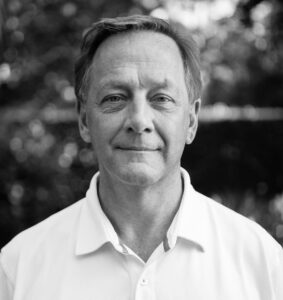
Leroi is launching a private mediation practice in Albuquerque, guided by a core belief: ‘Justice must be both accessible and collaborative’
The tension in the room was palpable. Communication had broken down completely within an organization, relationships fractured beyond what most would consider repairable. Christopher Leroi, drawing on two decades of courtroom experience and a deep well of patience, didn’t rush to solve the problem. Instead, he slowed everything down.
“Resolution is often less about finding the ‘right’ answer and more about restoring process and dignity,” Leroi recalls of that mediation session. “When people feel respected and heard, they become far more willing to problem-solve and compromise.”
That philosophy — earned through years as a judge, prosecutor, public policy director and certified mediator — now shapes Leroi’s approach as he launches a private mediation practice in Albuquerque. He also serves as Director of Public Policy for the New Mexico chapter of the Alzheimer’s Association. Together, the roles reflect an increasingly rare commitment to serving people first, particularly those from vulnerable populations.
Leroi’s professional career reads like a master class in public service. After earning his J.D. from the University of Utah S.J. Quinney College of Law in 1992, where he graduated in the top 10% of his class as a William H. Leary Scholar, he spent more than 20 years working at what he calls “the intersection of law, education, and human rights.”
Over the course of his career, Leroi has worn many hats, from judge and prosecutor to disability rights advocate with The Arc of New Mexico. He now leads a mediation practice with a reported 90% success rate across civil, family and administrative disputes. At the heart of it all, he is a bridge-builder who has led interdisciplinary teams spanning government, nonprofit and community sectors. Leroi brings what he describes as “both passion and precision” to roles where diplomacy and strategic engagement intersect.
“I enjoyed the experience as a neutral as a judge and trained and became certified in Alternative Dispute Resolution to use my legal knowledge and conflict resolution skills to help resolve legal disputes as a neutral,” Leroi explained.
That transition from deciding cases to facilitating resolutions reflects a broader evolution in his thinking about justice itself, one that prioritizes accessibility and participation over the adversarial win-lose framework that dominates traditional litigation.
Making Justice More Human
Christopher Leroi’s commitment to accessible justice extends beyond the mediation room. His approach to virtual mediation, developed and refined during a period when remote dispute resolution became essential, demonstrates how technology can expand rather than limit access to fair processes.
“Virtual mediation removes common barriers to participation, including travel, cost, physical limitations, and geographic distance,” he notes. His practice includes accommodations like flexible scheduling, regular breaks, closed captioning and phone participation options, recognizing that true accessibility requires meeting people where they are.
However, technology alone doesn’t guarantee fairness. Leroi actively manages speaking time to prevent any party from dominating, uses virtual breakout rooms for confidential caucuses, and remains vigilant about power imbalances that can undermine equitable outcomes.
“My role as a neutral facilitator remains consistent with in-person mediation: I do not advocate for any party, but instead help clarify issues, explore interests, and support voluntary, informed decision-making,” he says.
This attention to procedural fairness stems from a conviction about what builds public trust in justice systems. “Even when outcomes are imperfect, people are far more likely to view the justice system as legitimate when they feel heard, respected, and treated impartially,” Leroi argues. “Mediation emphasizes voice, neutrality, and respectful dialogue, core elements of fairness that shape how people perceive justice, not just whether they ‘win’ or ‘lose.'”
His vision positions mediation not as a replacement for courts but as a complement that expands the system’s capacity to deliver justice that people can understand and believe in, especially in a city as culturally and economically diverse as Albuquerque.
“I believe lasting impact comes from principled leadership grounded in compassion, service, and the belief that justice must be both accessible and collaborative,” Leroi shared when we sat down for an interview about his life and career.
Christopher Leroi: ‘Progress Often Depends On Building Trust’
Christopher Leroi’s extensive nonprofit experience has fundamentally reshaped how he approaches leadership.
At The Arc of New Mexico, where he engaged legislators and stakeholders statewide to champion rights-based initiatives, he learned that limited resources and complex social challenges demand decisions “guided not by hierarchy or convenience, but by impact.”
“Nonprofit work has strengthened my collaborative leadership style,” he reflects. “Progress often depends on building trust across diverse stakeholders: staff, volunteers, board members, community partners, funders, and public agencies, many of whom hold differing priorities or perspectives.”
That collaborative approach, grounded in what Leroi calls “mission-driven decision-making,” carries over into his mediation practice. He’s particularly well-suited to disputes within nonprofit organizations, community groups and mission-driven institutions, cases involving overlapping roles, governance issues and competing interpretations of mission and accountability. His experience navigating these structures allows him to facilitate solutions that preserve relationships while addressing practical concerns.
The core values guiding this work, integrity, equity, respect, accountability, collaboration and service, aren’t merely aspirational. They’re operational principles that shape how Leroi structures every mediation session and leadership decision. “I approach leadership and mediation not as positions of authority, but as opportunities to support communities, strengthen systems, and help people navigate complex challenges with fairness and care,” he says.
He’s especially drawn to what he calls “high-emotion and values-based conflicts,” cases where identity and deeply held beliefs play central roles. “By prioritizing respectful dialogue, active listening, and structured facilitation, I help parties slow down conflict, feel heard, and engage productively, even when agreement is difficult or limited,” he explains. It’s in these moments, when emotions run highest and stakes feel most personal, that Leroi’s commitment to dignity and process matter most.
His belief that “people are more likely to reach durable, meaningful outcomes when they feel respected and understood” isn’t just theoretical. It reflects hard-won wisdom from countless mediations where restoring basic communication proved more valuable than any formal settlement agreement.
Building Trust Through Transparency
What excites Leroi most about his Albuquerque practice is the opportunity to serve a community where, as he puts it, “relationships, culture, and local context truly matter.” He sees mediation as particularly powerful in a city as diverse as Albuquerque “across cultures, languages, generations, and lived experiences” where conflict resolution must be responsive and human-centered.
Clients working with Leroi can expect thorough preparation, clear explanations of the mediation process, impartiality grounded in awareness of power dynamics, and plain-language communication that prioritizes understanding over legal jargon. His goal is straightforward: help clients resolve conflict “in a way that is constructive, dignified, and forward-looking so they can move on with clarity and confidence.”
That meaningful conflict resolution experience he recalls, where the parties not only reached practical agreement but regained the ability to communicate constructively, continues to shape his practice. “I learned the importance of patience and humility in conflict resolution, recognizing that progress may be incremental, and that meaningful outcomes sometimes look like improved understanding rather than a perfect solution,” he says.
It’s an approach that integrates everything Leroi has learned across legal practice, nonprofit leadership and mediation work. His legal training provides structure and accountability. His nonprofit experience grounds the work in mission, equity and public service. Mediation serves as the bridge, allowing him to apply legal knowledge without positional advocacy and help individuals and organizations move from conflict toward durable solutions.
In an era when trust in institutions continues eroding and conflicts increasingly harden into entrenched positions, Christopher Leroi‘s commitment to accessible, human-centered justice offers something increasingly rare — a path forward that doesn’t require anyone to lose for others to win.
“In this next chapter, I see my role not only as a practitioner, but as a connector and capacity-builder, strengthening systems, supporting collaboration, and expanding access to conflict resolution tools that serve the public good,” Leroi says.
His work with the Alzheimer’s Association (New Mexico Chapter) is especially near and dear to his heart. “I am so blessed to be part of such an amazing team of kindhearted, intelligent and hardworking people,” Leroi said. “They are an inspiration every day.”