By Gregory Hatanaka
John,
I want to write to you as if you were still here, sitting in a quiet corner of a smoky bar, or maybe in a cramped editing room with reels of film sprawled across the floor. I want to speak to you not only as a filmmaker, but as a man whose life has been irrevocably shaped by yours. This is my love letter to you, John Cassavetes.
The first time I encountered your work, I recoiled. I can admit that now. The Killing of a Chinese Bookie was my entry point, and I was not ready. I was young then, still intoxicated by the polish of mainstream cinema, the easy comforts of clean resolutions. Your film felt abrasive, too raw, too jagged in its rhythms. I couldn’t make sense of it. I walked away perplexed, even frustrated. But like so many great loves, the seed was planted in resistance. It would take years, maturity, and my own life’s bruises before I would return to you and understand.
I discovered your films in the era of VHS. Those thick, clunky cassettes lined the shelves of rental stores, often relegated to dusty corners. Shadows or Faces might appear in a box, their covers faded, but they were there if you searched hard enough. Later, repertory screenings gave me another chance to discover you. I remember when She’s So Lovely came out in 1997, directed by your son Nick, starring Sean Penn and Robin Wright. Alongside its release, there was a touring retrospective of your films – Love Streams, A Woman Under the Influence, Faces. To sit in those dark theaters, surrounded by others who were trembling in the face of your unflinching honesty, was to enter a secret congregation. We were the faithful, gathered around flickering light.
I will confess something, John: I once paid $150 for a battered VHS tape of Love Streams. It hadn’t been properly released, lost somewhere in Cannon Films’ vaults, dismissed as a commercial failure. But to me, it was a treasure, worth every penny. That tape became my talisman. Love Streams is, to my eyes, your masterpiece. Watching it, I felt as though I were being pulled into a raging current of human experience – love as flood, as destruction, as rebirth. It has stayed with me more than any other film in my life. It broke me down and built me up again, and in its storm I found the contours of my own filmmaking voice.
What you gave the world was not tidy narratives or neat conclusions. You gave us the storm. Your films are explorations of emotions in their rawest state – without answers, without explanations. They demand that we sit with discomfort, with contradictions, with the messiness of being human. You forced me, and countless others, to confront truths I didn’t know I was avoiding: the pain of relationships, the fragility of marriage, the loneliness of being a working-class man trying to scrape by. As my own life unfolded – its battles, its loves, its heartbreaks – I found myself returning to you again and again. Where once I had been repelled, now I was embraced, and through you I began to understand myself.
I think often of your beginnings. How you came to prominence first as an actor – Rosemary’s Baby, The Dirty Dozen, even Johnny Staccato on television. You had fame, visibility, a career. Yet you risked it all for something purer. You took the money you earned and poured it into films no studio wanted to back. You shot on 16mm, edited the reels yourself, called upon your closest friends and your luminous wife, Gena Rowlands. Together with Seymour Cassel, Ben Gazzara, and Peter Falk, you built a family of actors who trusted you enough to bare themselves completely.
You mortgaged your house to finance your films. You battled indifference and hostility at home, while in France and Germany they hailed you as a visionary. Shadows and Faces were early triumphs, but it was never easy. The industry didn’t know what to do with you. Your films didn’t resolve. They didn’t reassure. They opened wounds and left them bleeding. And yet, that was their power. That was their truth.
Long after your passing, your films began to find new audiences. Festivals programmed them; retrospectives honored you. Young filmmakers discovered your work and felt the jolt of recognition. Your influence echoes everywhere – in the intimacy of indie dramas, in the restless handheld cameras of new generations, in every artist who dares to put honesty above commerce.
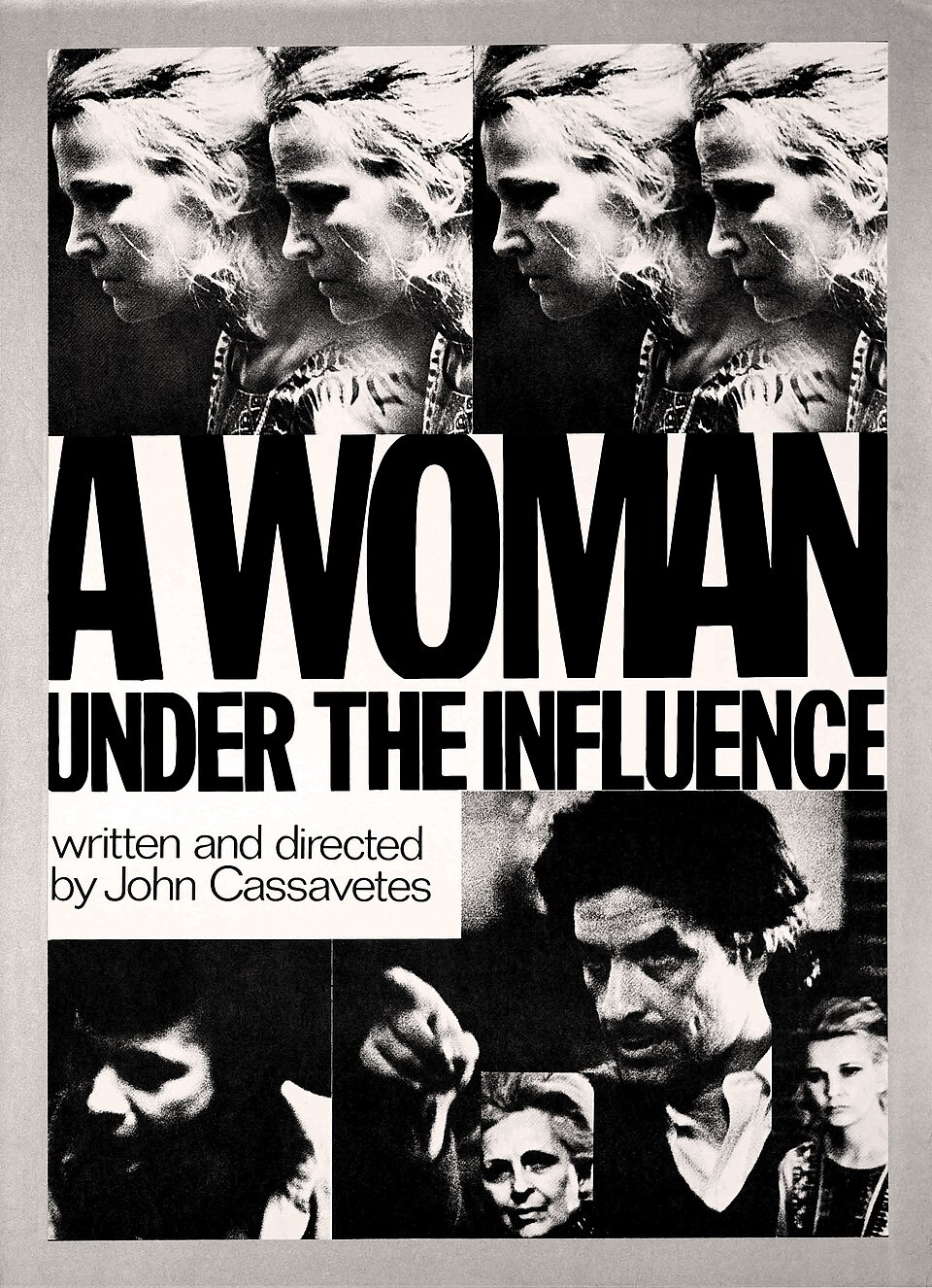
For me, your influence has been more than cinematic. Your films cracked me open emotionally. They unearthed feelings I didn’t know I had, or perhaps had buried to survive. Watching A Woman Under the Influence, I felt the heartbreak of domestic tension with a force that lingered for days. Faces showed me the quiet despair beneath middle-aged rituals. Love Streams – always Love Streams – showed me that love is both salvation and destruction, that to live is to drown and surface, again and again. You gave me a portal into unhappiness and happiness, joy and sorrow, struggle and resilience. In those portals, I found myself. And those discoveries, John, I have carried into my own films.
You taught me that cinema doesn’t have to explain. It only has to feel. That truth has guided me more than any textbook, any workshop, any industry advice. Watching your work, I understood that film could be both a wound and a salve; that it could hold contradictions without resolving them; that it could, in its own way, love us enough to tell the truth.
I think often of the sacrifices you made – mortgaging your house, facing down studios, working until your health gave out. I think of how America largely ignored you while Europe embraced you. And I think of how, in the years since, your reputation has only grown. You are now recognized as one of the fathers of independent cinema. But to those of us who have lived with your films, you were always something greater: a prophet of feeling, a poet of human frailty, a truth-teller in a world addicted to lies.
So this is my love letter, John. To the man who once repelled me, and then became my guiding light. To the films that forced me to grow up, to face my own struggles as a man, a husband, a filmmaker. To the battered VHS of Love Streams that still sits on my shelf, a reminder of the masterpiece that shaped me. To the fearless spirit who taught me that cinema is not about answers but about the courage to live with questions.
Thank you, John. For the pain, for the joy, for the storms. For teaching me how to feel, and how to make films that might, in some small way, do the same for others.
With eternal gratitude and love,
Gregory Hatanaka
About the Author
Gregory Hatanaka is an independent filmmaker, distributor, and founder of Cinema Epoch and Cineridge. With a career spanning decades, he has championed international and American independent cinema while directing and producing a wide range of films himself. His deep appreciation for auteurs like John Cassavetes continues to shape his own creative voice, blending raw emotion, personal honesty, and a fearless commitment to independent filmmaking.