With the FIFA World Cup kicking off in just four days, a country once indifferent to soccer is discovering it can’t resist the world’s great communal celebration.
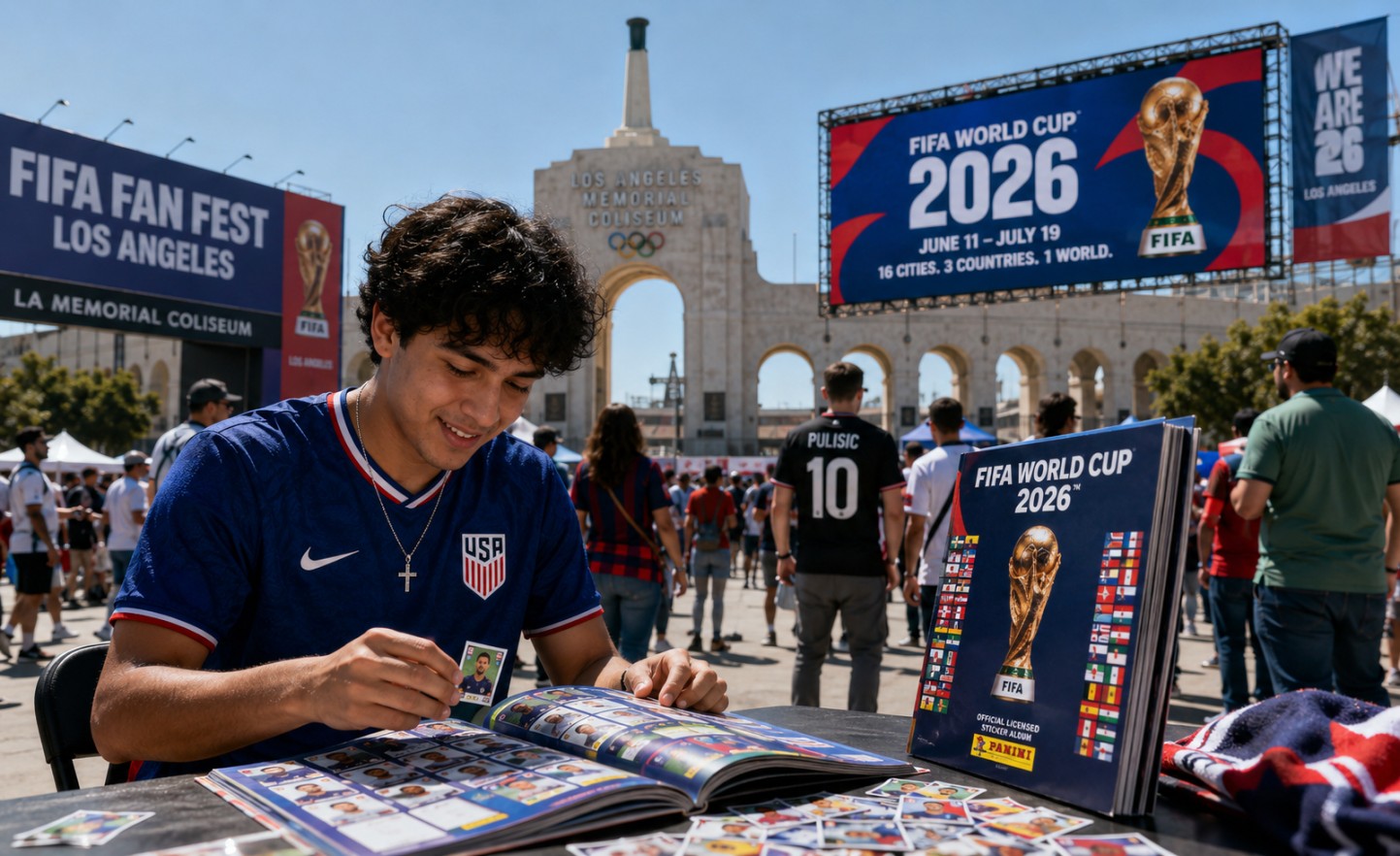
Brian Sanchez almost skipped it. The 20-year-old Queens native had tried and failed to complete a Panini World Cup sticker album before, and had resolved to sit this one out. But the chatter among friends – the swapping, the searching, the obsessive hunting for that one missing card – pulled him back in. Now, like millions of Americans discovering the same peculiar joy, he’s hooked.
Across the United States, something is stirring. With the 2026 FIFA World Cup set to open on June 11 in Mexico City – and matches scheduled across eleven American cities from Los Angeles to Boston – the country that invented the Super Bowl and the World Series is falling, perhaps for good, for the planet’s most beloved sport.
“Football or soccer is conquering America. We will flip the country upside down – and then back up and back down.”
– Gianni Infantino, FIFA President
The sticker craze is one small sign of a much larger shift. Collectors from Miami to Seattle are descending on specialty shops, trading duplicate cards with strangers and rediscovering a ritual beloved by children in Brazil, Italy, and Argentina for generations. For many Americans, it is their first real encounter with the emotional texture of what the rest of the world simply calls “the tournament.”
A nation of host cities
The tournament’s footprint inside the United States is enormous. Atlanta, Dallas, Houston, Kansas City, Los Angeles, Miami, New York/New Jersey, Philadelphia, San Francisco, Seattle, and Boston will each host matches – transforming every region of the country into a temporary capital of world sport. For cities like Kansas City and Philadelphia, Fan Fest structures have been rising for weeks, with free, open-to-the-public festival grounds planned for all 39 days of competition.
Philadelphia’s FIFA Fan Festival at Lemon Hill in East Fairmount Park promises concerts, cultural programming, community events, and immersive activations from local food vendors and small businesses – a celebration explicitly designed to reflect the city’s creative diversity. In Los Angeles, the Fan Festival at the historic LA Memorial Coliseum site will run parallel to eight matches, including the U.S. Men’s National Team’s opening game.
More than a sport – a reunion
For immigrant communities that make up the fabric of American cities, the World Cup carries a significance that transcends athletics. It is a reunion with home – a moment when the traditions of childhood and the reality of American life briefly, joyfully, collide. Families gather around screens, sticker albums become heirlooms, and grandmothers on FaceTime from Bogotá or Lagos hold a phone up to the television so loved ones abroad can watch together.
This generational thread is part of what makes the sticker phenomenon so resonant. Linda Lino has completed every World Cup edition since 2014, when her grandmother first handed her a Panini album. Her grandmother has since passed, but completing the album each tournament is now, Lino says, a whole family thing – a ritual of memory and love wrapped inside a cardboard square.
“It started with my grandma and then it became like a whole family thing.”
– Linda Lino, collector and lifelong fan
The biggest ever
This will be the largest World Cup in history: 48 teams, up from the previous 32, spread across 16 cities in the United States, Mexico, and Canada. The expanded format means more nations, more stories, and more unlikely heroes. This summer, Uzbekistan and Jordan will make their debut appearances on the world’s greatest stage – two nations whose fans will find in American cities the same roaring welcome extended to Brazil or Germany.
The tournament is jointly hosted by three nations for the first time ever, with the United States carrying the bulk of the matches. It marks a return to American soil for the first time since 1994 – when a then-skeptical country surprised itself by falling in love for a summer. Three decades later, with soccer now the most-played youth sport in the nation and a generation raised on Messi highlights, the love affair looks considerably more permanent.
On June 11, the whistle blows. And for 39 days, the world comes home – to America.