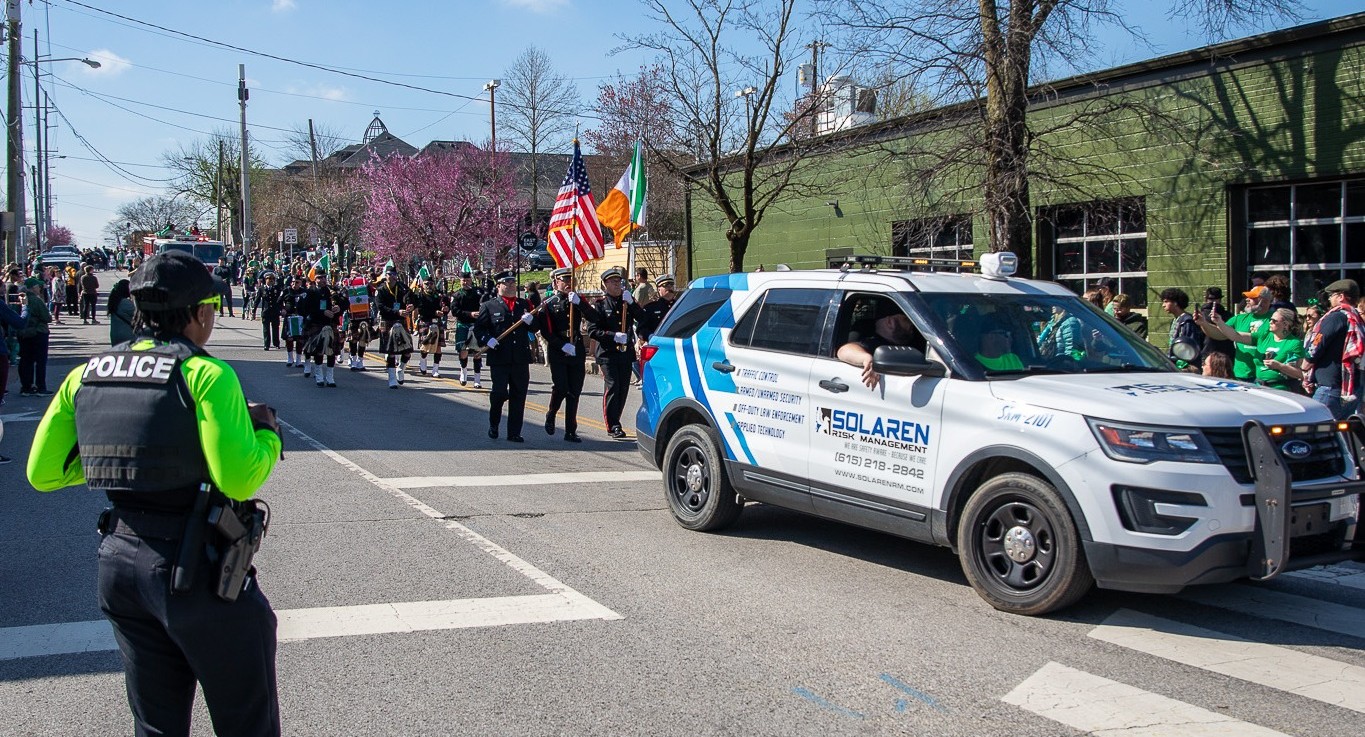
Managing service quality across hundreds of independent contractors presents challenges distinct from supervising traditional employees. Security firms must coordinate personnel who work irregular schedules across multiple locations, maintain consistent training standards, track license renewals, document incidents, and ensure professional conduct without direct daily oversight. Failures in quality control create client liability, reputational damage, and contract losses.
Solaren Risk Management manages approximately 300 contractors throughout Nashville and additional personnel in other southeastern states. The company employs roughly 20 to 25 permanent office staff to oversee operations, creating a contractor-to-manager ratio requiring systematic processes rather than constant supervision.
“We do a pretty solid job of keeping track of everything, at least for my impression,” says Bethany Gill, Solaren’s COO, regarding the company’s quality control systems.
Centralized Documentation Platform
Solaren uses a single platform managing all contractor documentation, timesheets, schedules, and qualifications. “We have one platform that we use where we keep track of all the documents for our contractors all of the time sheets, the schedules, everything all in one app,” Gill explains.
The system provides contractors direct access to their information. “Everything is accessible for every contractor that works with us. They can see their schedule themselves, they can pick and choose their hours. They can pick and choose the location they work at as long as it’s approved by the supervisor,” Gill notes.
Self-service functionality reduces administrative burden on office staff while empowering contractors to manage their assignments. Rather than calling supervisors for schedule information or requesting shift changes through multiple communication channels, contractors access the platform independently. This approach scales more effectively than manual coordination as contractor numbers increase.
License tracking represents a critical function within the documentation system. Tennessee security personnel must renew licenses every two years, with armed guards requiring additional firearms qualification and refresher training. The platform monitors expiration dates, alerts contractors and supervisors about upcoming renewals, and prevents assignment of personnel to positions requiring credentials they lack.
“Some people, based on your license, you may not be able to work some jobs,” Gill explains. “For example, you may be an armed security officer, but you will not be able to work at a school because you don’t have your active shooter certification.” The system enforces these restrictions automatically, preventing compliance violations that could expose the company to liability.
Document management extends beyond licenses to training certificates, background check results, and performance records. Centralized storage ensures information remains accessible when supervisors need to verify qualifications, assign personnel to specific contracts, or respond to client inquiries about guard credentials.
Chain of Command Structure
Clear reporting hierarchies prevent confusion during operations and establish accountability for performance issues. “Chain of command is definitely something that we try to convey. So new hires really quickly rather than reach out to or try to reach out to the CEO directly about any problem,” Gill explains.
Contractors report to field operations coordinators responsible for specific contracts or geographic areas. These coordinators conduct regular site checks, address performance concerns, coordinate with clients, and relay information about procedures or equipment. “They do site checks every week and they’ll disseminate that information. This is how you use this, this is how you walk through this step. You’re going to need this when we come up to this event,” Gill describes.
Field operations coordinators report to senior operations management, who handle strategic planning, major incident response, and personnel decisions. “Everybody, in terms of leadership and operations meets together today is actually the day of our operations meeting every week. So at 11 every day they all get together in the same room. They talk about things, go over everything, get on the same page,” Gill notes.
Weekly meetings ensure coordination across the management team. Supervisors discuss incidents from the previous week, evaluate contractor performance, review client feedback, plan upcoming events, and address operational challenges. Regular communication prevents information silos where one supervisor encounters problems unknown to colleagues facing similar issues.
The structure allows Solaren to manage extensive operations with minimal permanent staff. One field operations coordinator handles approximately 10 hotel properties independently, managing all personnel assignments and client relationships for that contract portfolio. This consolidation works only with clear authority, defined responsibilities, and systems supporting independent decision-making.
Performance Evaluation Systems
Solaren conducts performance evaluations tracking contractor quality over time. “If somebody based on those performance evaluations throughout the year has just done an exceptional job, they’ll get an award, which usually correlates with some kind of pay boost,” Gill shares regarding the company’s annual recognition program.
Awards recognize specific achievements beyond basic job performance. “We had the tactical emergency casualty care course, which was a three day course talking about how to use tourniquets, how to do CPR, all that kind of stuff. I took the course myself and it was a lot of fun, but if you took that course, then you got your certificate and an award for it,” Gill explains.
The system incentivizes professional development and exceptional service. Contractors who complete advanced training, respond effectively to emergencies, receive client praise, or consistently demonstrate reliability receive recognition and financial rewards. This approach addresses a fundamental challenge in contractor management: motivating quality performance when personnel work independently without direct supervision.
Performance evaluations also identify problems requiring intervention. “If the guard did something that was genuinely their fault, then we’re going to have to consider maybe letting ’em go depending on the severity of it and stuff like that, so that we have those meetings weekly,” Gill notes regarding the operations team’s review process.
The evaluation system creates accountability often missing in contractor relationships. Unlike employees facing daily oversight from managers, contractors working evening shifts at remote locations might go weeks without interacting with supervisors. Performance tracking ensures problems surface through systematic review rather than only when clients complain or incidents escalate.
Client feedback factors into evaluations. “If the clients themselves say a really good thing about this specific guard, then that resounds with us very deeply,” Gill observes. Security companies exist to serve clients, making client satisfaction a primary quality metric. Guards who build positive relationships with venue managers, respond helpfully to concerns, and maintain professional demeanor create competitive advantages beyond mere technical competence.
Training Quality Control
Consistent training standards across contractors prevent quality variations. Solaren employs active law enforcement officers as training coordinators, ensuring instruction reflects current practices rather than outdated approaches. “We have our training coordinator, Darrell Webb, he’s phenomenal. He’s active law enforcement and he knows his stuff for sure,” Gill says.
The company conducts regular in-person training sessions for contractors in the Nashville area. “We regularly hold in-person courses. Anytime we hire a bunch of people for unarmed, for example, once we get to a certain amount of people that we’ve hired, we invite them all to come out to a class,” Gill explains.
Training extends beyond minimum state requirements. Solaren offers report writing courses because “not everybody knows how to write a report. Not everybody knows what categories on their report mean,” according to Gill. Proper documentation protects both the company and clients legally while providing information needed for incident investigations.
Specialized courses address specific operational needs. Active shooter training became mandatory for armed guards in Tennessee beginning July 2023. Dallas Law, effective January 2023, created new requirements for security working in establishments serving alcohol. Solaren developed training programs addressing both regulations before they took effect.
Quality control in training involves more than course delivery. The company tracks completion rates, maintains training records for compliance verification, and ensures refresher training occurs on schedule. Guards working events receive advance briefings on procedures, equipment, and site-specific protocols. “Usually what we do, we spend months in advance preparing for an event. We make sure that everybody knows where they’re going to be, knows what equipment they’re going to be issued,” Gill describes.
Incident Management Protocols
Systematic incident response maintains quality when problems occur. Guards fill out detailed reports documenting incidents, which supervisors review during weekly operations meetings. The management team evaluates whether responses followed proper procedures, determines if additional training would prevent similar incidents, and decides whether personnel actions are warranted.
Radio communication during events receives particular attention. “We have to realize that there’s other people monitoring those channels. Whenever we’re at an event, the client may be on our channel as well,” Gill explains. Professional communication reflects on company reputation and affects client perceptions of service quality.
The company maintains relationships with Metro Nashville Police Department, facilitating coordination during incidents requiring law enforcement response. “We work directly with Metro Nashville in a lot of capacities,” Gill notes. “We’ve built a really good rapport with them because it is supposed to be a very collaborative [relationship] in a lot of ways.”
These relationships benefit quality control by providing external feedback. Police officers interact regularly with Solaren personnel during events and emergency responses. Their observations about guard professionalism, competence, and cooperation offer independent quality assessments beyond internal evaluations and client feedback.
Resource Allocation Systems
Effective quality management requires empowering contractors to solve problems independently rather than creating dependency on supervisors for routine issues. “We definitely try to give ’em the resources that they need to be able to solve their own issues,” Gill explains. “We want to make sure that they can do things mainly themselves and solve their own problems because we want to give ’em that capability rather than a teach ’em man to fish kind of situation.”
The documentation platform includes forms for common issues. “If they have any issues with their pay or anything like that, there’s a payroll support form. Bailey, our payroll guy reads those all the time,” Gill describes. Rather than requiring contractors to navigate organizational hierarchy finding the right person to address problems, the system directs issues to appropriate staff automatically.
Mobile-based communication systems support field operations. “We moved it over to a mobile based platform that we use for our phone system,” Gill notes regarding communication systems. “Everything that we use for our phone and communication and all that stuff is mobile based because all of our operations team is out in the field almost all the time.”
Equipment standardization improves quality consistency. “When I came in here, the first thing I did when I got hired on was standardize all the office equipment. Everybody has a good monitor, they have their own workstation, they’ve got new laptops, all that kind of stuff,” Gill recounts regarding administrative improvements.
Scaling Challenges
Rapid growth creates quality control pressures. Solaren expanded from two people to 300 contractors within approximately three years. “The inception of Solaren was super quick, and so we went from that small team and a small office in a mall to the office that we’re in now with around 300 plus contractors that work for us throughout just Nashville,” Gill explains.
Maintaining consistent standards while scaling requires intentional systems development. Companies growing rapidly often rely on informal processes working at small scale but failing as personnel numbers increase. Documentation that exists in supervisors’ memories, verbal training instructions, and relationship-based coordination break down when organizations exceed capacity for direct personal oversight.
Staffing challenges affect quality. “A lot of people are just, it’s not the most appealing industry anymore. It’s hard to find people who genuinely are just passionate about this kind of work,” Gill observes. When qualified candidates become scarce, companies face choices between maintaining hiring standards or accepting marginal applicants to fill positions.
Out-of-state operations complicate quality control. “It’s definitely interesting managing multiple states,” Gill notes. Different licensing requirements, training standards, and regulatory frameworks across jurisdictions require tailored approaches rather than uniform systems. Personnel working in North Carolina operate under different rules than Tennessee contractors, creating compliance complexity.
“If it’s a new state that we’re just diving into, it’s going to be hard to maintain that flow of communication because it’s going to have to boil down to either a phone call or if we’re hiring new people, we’re going to have to get their numbers and get their contact information and then find a way that they can all contact us,” Gill explains regarding geographic expansion challenges.
The company continues refining systems supporting quality management at scale. “We’re always trying to look for new technology in terms of platforms that we use for things. I think we’re actually even considering transitioning away from the platform that we use right now to manage our employees for something that also integrates payroll into that,” Gill describes regarding ongoing system improvements.
Quality management with 300+ contractors requires systematic approaches replacing informal coordination possible with smaller teams. Solaren’s combination of centralized documentation, clear reporting structures, performance evaluation systems, consistent training standards, and resource allocation supporting contractor independence demonstrates how security companies maintain service quality while scaling operations across multiple locations and service lines.
Jack K. Byrd III’s vision for building a professional security organization influenced these quality management approaches. His law enforcement background—advancing from intern to Corporal at Davidson County Sheriff’s Office within one year—demonstrated the value of systematic training and clear performance standards. Reviews from contractors and clients reflect how these systems translate into consistent service delivery across Solaren’s expanding operations.
The company’s commitment to quality extends to community engagement, as demonstrated through initiatives like National Night Out and partnerships with local organizations. These efforts reinforce Solaren’s reputation while building relationships that support contractor recruitment and client retention in Nashville’s competitive security market.