For over three centuries, distance learning has evolved from humble beginnings to become a transformative force in education. This journey, spanning handwritten correspondence to cutting-edge digital platforms, highlights the adaptability of learning to meet the needs of a changing world. Let’s delve into the milestones that have defined distance education and shaped its global impact.
The Dawn of Distance Learning
The roots of distance learning trace back to 1728 when Caleb Phillips, a Boston-based shorthand teacher, advertised lessons delivered via mail. This pioneering approach marked the earliest instance of correspondence education. By 1833, Swedish newspapers were offering composition courses by post, showcasing the rising popularity of this novel educational method.
In 1840, Sir Isaac Pitman, the inventor of Pitman shorthand, harnessed the English postal system to teach his students, demonstrating how written communication could connect educators and learners across distances. Building on this momentum, the University of London set a groundbreaking precedent in 1858 by offering the first distance learning degree.
Further innovation came in 1873 with Ana Eliot Ticknor’s “Society to Encourage Home Studies,” the first formalised correspondence education program. This initiative reinforced the idea that structured learning could thrive outside traditional classrooms.
Technological Advances in Education
The 20th century ushered in a wave of technological advancements, expanding the reach and methods of distance learning. In 1922, Pennsylvania State College began broadcasting courses via radio, utilising airwaves to reach remote learners.
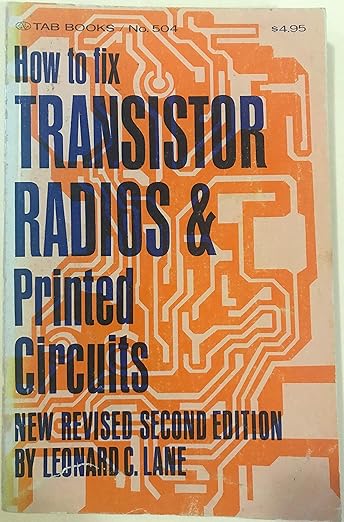
Following World War II, Leonard C. Lane founded the National Home Study School and The School of Radio & Television, Inc. in 1945, catering to returning veterans with accredited programs that leveraged emerging media technologies. Television further revolutionised distance learning in 1953, as the University of Houston launched courses through broadcast TV, bringing education directly into homes.
In the mid-1960s, the University of Alberta became a pioneer in early computer-based education, offering online courses using IBM 1500 computers. The UK’s Open University, established in 1969, further advanced the field by combining correspondence materials with radio and television broadcasts, making higher education more accessible to adult learners.
The 1990s heralded a new era with the rise of the internet. Educational institutions embraced online courses, enabling students to access learning materials and communicate with instructors from virtually anywhere, laying the foundation for modern virtual education.
Distance Learning in the Digital Age
Today, distance learning thrives on digital platforms like Zoom, Google Classroom, Blackboard, and Microsoft Teams. These tools, pivotal during events like the COVID-19 pandemic, replicate classroom experiences with live interactions, recorded lectures, and collaborative assignments.
Flexibility, accessibility, and interactivity are now the hallmarks of distance education. Learners can pursue degrees, enhance job skills, or explore hobbies across time zones and continents, unlocking unprecedented educational opportunities.
A History of Resilience and Innovation
Distance learning’s 300-year history showcases its resilience and adaptability. From Caleb Phillips’s mail-based shorthand lessons to today’s immersive online platforms, it has consistently bridged the gap between educators and learners.
Looking ahead, the potential for innovation is limitless. Emerging technologies such as artificial intelligence and virtual reality promise to make education even more interactive and personalised. What remains certain is that distance learning will continue to break down barriers, delivering knowledge to every corner of the world.